

COMPLEX CASES · REVISION · SECOND OPINIONS
Previous Treatment
Hasn’t Worked — What Next?
When treatment has not produced the expected result, the next step is usually not simply to repeat the same treatment. Specialist assessment can help clarify what was done previously, what has changed and which options remain reasonable to consider.

Operative reports, pathology, implant details and previous investigation results can be particularly useful.
A DIFFERENT TYPE OF ASSESSMENT
Revision starts by understanding why the first treatment did not achieve the desired outcome
Previous surgery can change tissue planes, blood supply, scarring and anatomy. Previous medical treatment may also change symptoms without addressing the underlying problem.
That means a revision or second-opinion consultation often requires a different approach from the original assessment. The aim is to understand the original diagnosis, what treatment was performed, what happened afterwards and what problem exists now.
What was the original problem?
The first diagnosis, investigations and reasons for treatment need to be understood.
What was actually performed?
Operative reports and treatment records may contain information that is not obvious from the current appearance or symptoms.
What is the problem now?
Persistent disease, recurrence, scarring, mechanical problems and treatment complications require different approaches.
Is further treatment worthwhile?
Revision is considered only after potential benefit, alternatives and additional surgical risk are assessed.
FIND THE RELEVANT PATHWAY
What treatment or surgery have you already had?
Choose the situation that most closely matches your current problem.
MALE FERTILITY
Previous fertility treatment or sperm retrieval
Persistent azoospermia, previous unsuccessful TESE/TESA, failed sperm retrieval, previous hormonal treatment or continued infertility after treatment.
Explore fertility revision pathway →REPRODUCTIVE MICROSURGERY
Previous vasectomy reversal or reproductive reconstruction
Persistent azoospermia, low sperm numbers, recurrent obstruction or fertility that has not returned after previous reconstruction.
Explore reproductive reconstruction →PEYRONIE’S DISEASE
Persistent or recurrent curvature after treatment
Remaining curvature, hourglass deformity, shortening, recurrence after surgery, erectile dysfunction or a new functional problem.
Explore Peyronie’s revision →PENILE IMPLANTS
Existing penile implant problem
Mechanical failure, difficult pump position, loss of rigidity, pain, malposition, infection, erosion, previous explant or multiple revisions.
Explore implant revision →RECONSTRUCTIVE UROLOGY
Problems after penile, genital or urethral surgery
Scarring, tethering, recurrent narrowing, skin problems, altered anatomy, urinary difficulty or functional problems after previous surgery.
Explore reconstructive revision →AFTER CANCER SURGERY
Reconstruction after penile cancer treatment
Graft problems, scarring, urinary spraying, stenosis, altered penile anatomy or functional concerns after previous cancer surgery.
Explore cancer reconstruction →ERECTILE FUNCTION
Erectile dysfunction despite previous treatment
Tablets, injections, vacuum therapy or other treatments have not provided adequate or reliable erections. The expanded section below now links directly to eight detailed ED next-step pages.
Explore ED next-step pathways →NOT SURE WHERE TO START?
Build your Andrology Case Summary
Organise your previous investigations, treatment and current problem before deciding which pathway is most relevant.
Open Case Navigator →DEFINE THE CURRENT PROBLEM
“It didn’t work” can mean several different things
Distinguishing these situations is an important part of planning what happens next.
The original problem persists
Treatment may not have achieved the intended biological, anatomical or functional result.
The problem has returned
Initial improvement may have occurred before recurrence, re-obstruction or deterioration over time.
A new problem has developed
Scarring, erectile dysfunction, pain, malposition, narrowing or another complication may now be more important than the original condition.
The treatment works, but function is unsatisfactory
A technically functioning reconstruction or device may still produce difficulty with use, urination, sexual function or comfort.
MALE FERTILITY
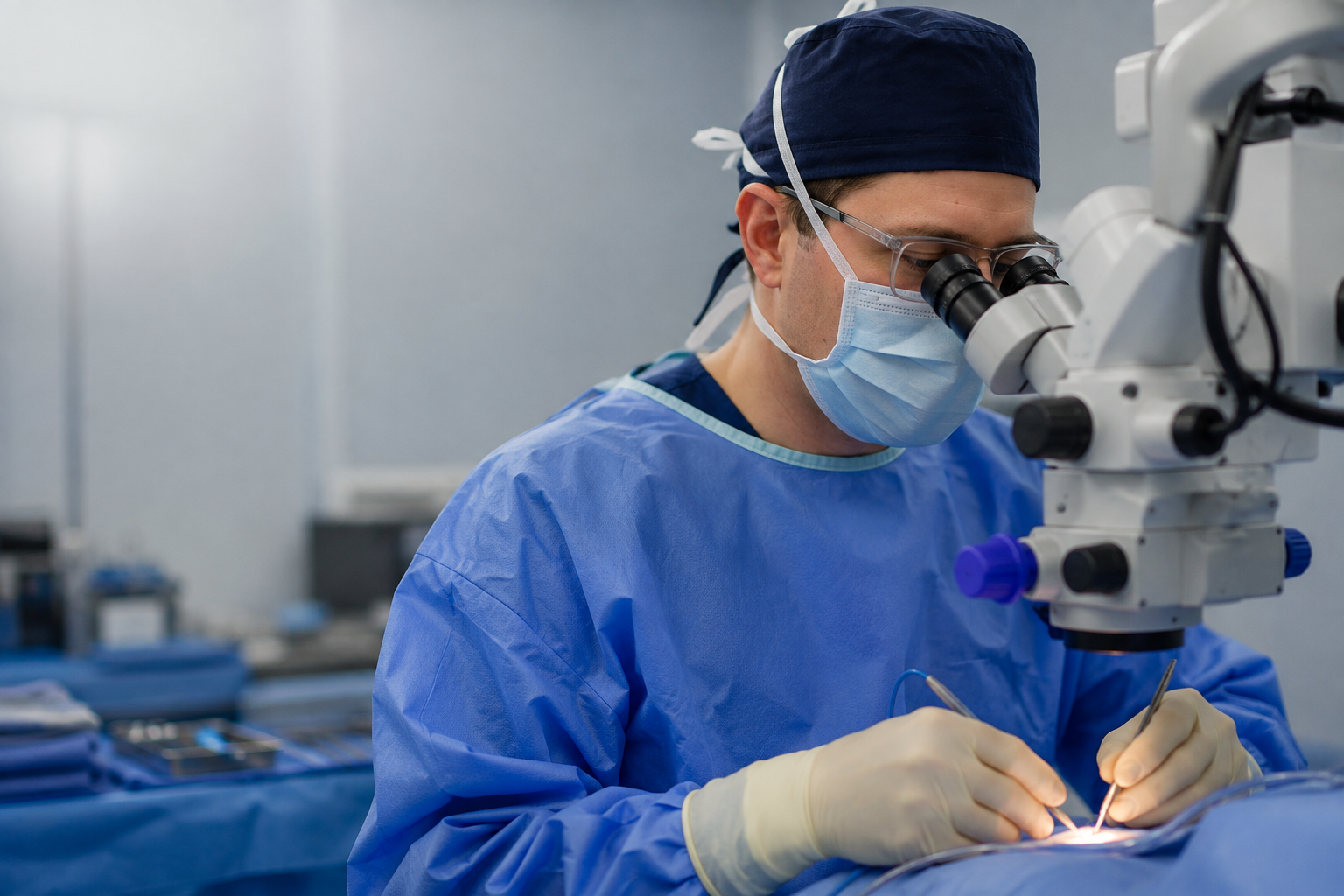
Previous fertility treatment or sperm retrieval has not produced the expected result
Male fertility treatment sometimes involves more than one stage. An unsuccessful sperm retrieval, persistent azoospermia or failure of semen parameters to improve does not by itself explain why the previous treatment was unsuccessful.
Reasons for review may include
- previous TESA or TESE did not identify sperm
- previous MicroTESE was unsuccessful
- sperm were previously retrieved but are no longer available
- azoospermia persists despite previous medical treatment
- semen parameters remain severely abnormal
- the underlying cause of infertility remains uncertain
- fertility treatment plans have changed


REPRODUCTIVE MICROSURGERY
Fertility has not returned after previous reconstruction
Following vasectomy reversal or another reproductive reconstruction, persistent azoospermia or deterioration in sperm numbers can reflect several different biological or anatomical situations.
Assessment may consider
- time since the original vasectomy
- operation performed at the previous reversal
- semen results immediately after surgery and over time
- whether sperm initially returned to the ejaculate
- possibility of recurrent obstruction
- partner fertility and reproductive timeframe
- whether repeat reconstruction or sperm retrieval with IVF/ICSI warrants discussion
PEYRONIE’S DISEASE
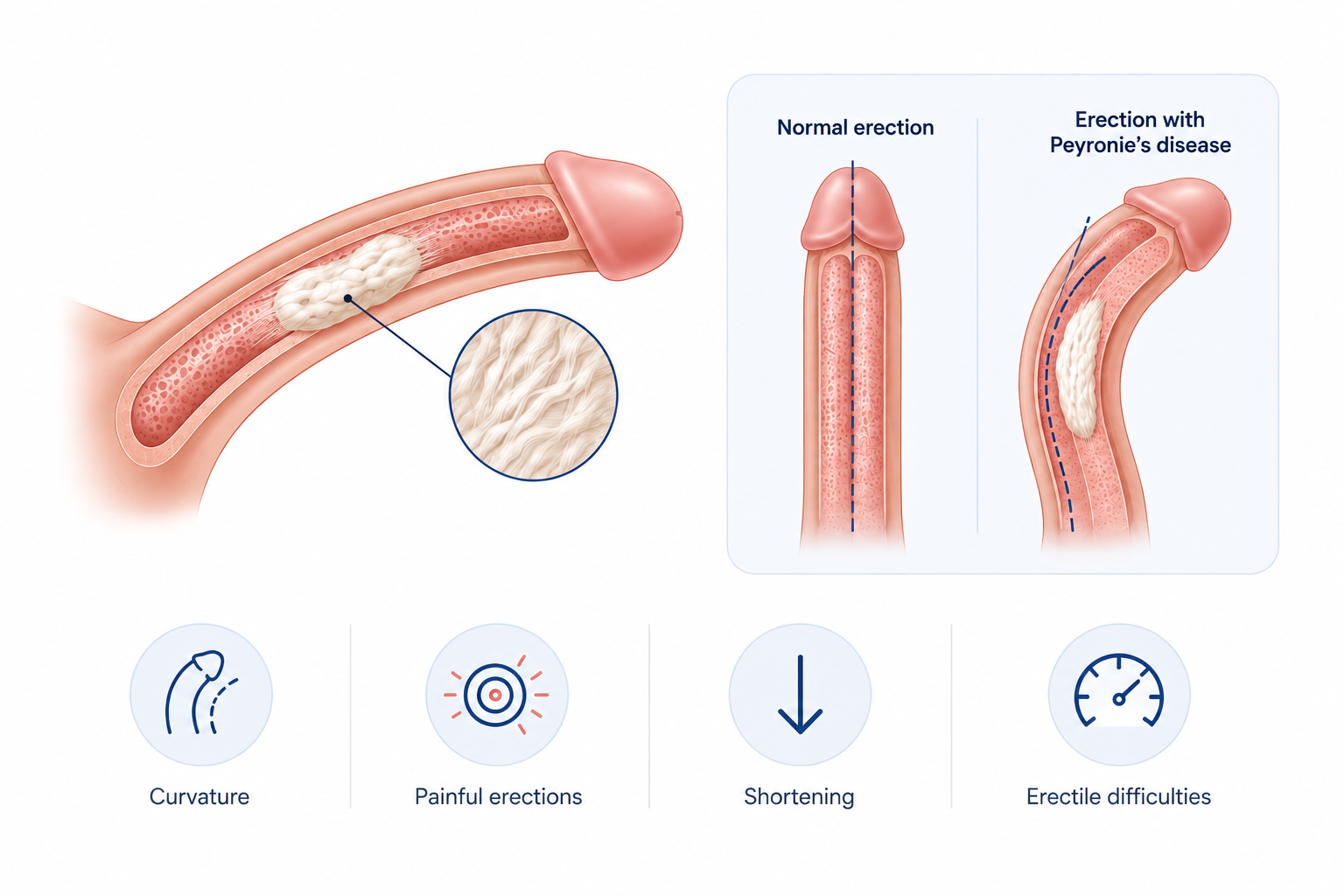
Curvature or deformity remains after previous treatment
Previous treatment can change penile length, curvature, scar distribution and erectile function. Revision planning therefore begins with the current deformity rather than simply repeating the original operation.
Reasons for reassessment may include
- persistent curvature
- recurrent curvature after surgery
- hourglass or indentation deformity
- hinge instability
- significant perceived shortening
- erectile dysfunction after previous treatment
- problems following plication or grafting
- combined deformity and erectile dysfunction
PENILE IMPLANT REVISION
Your penile implant no longer works as expected
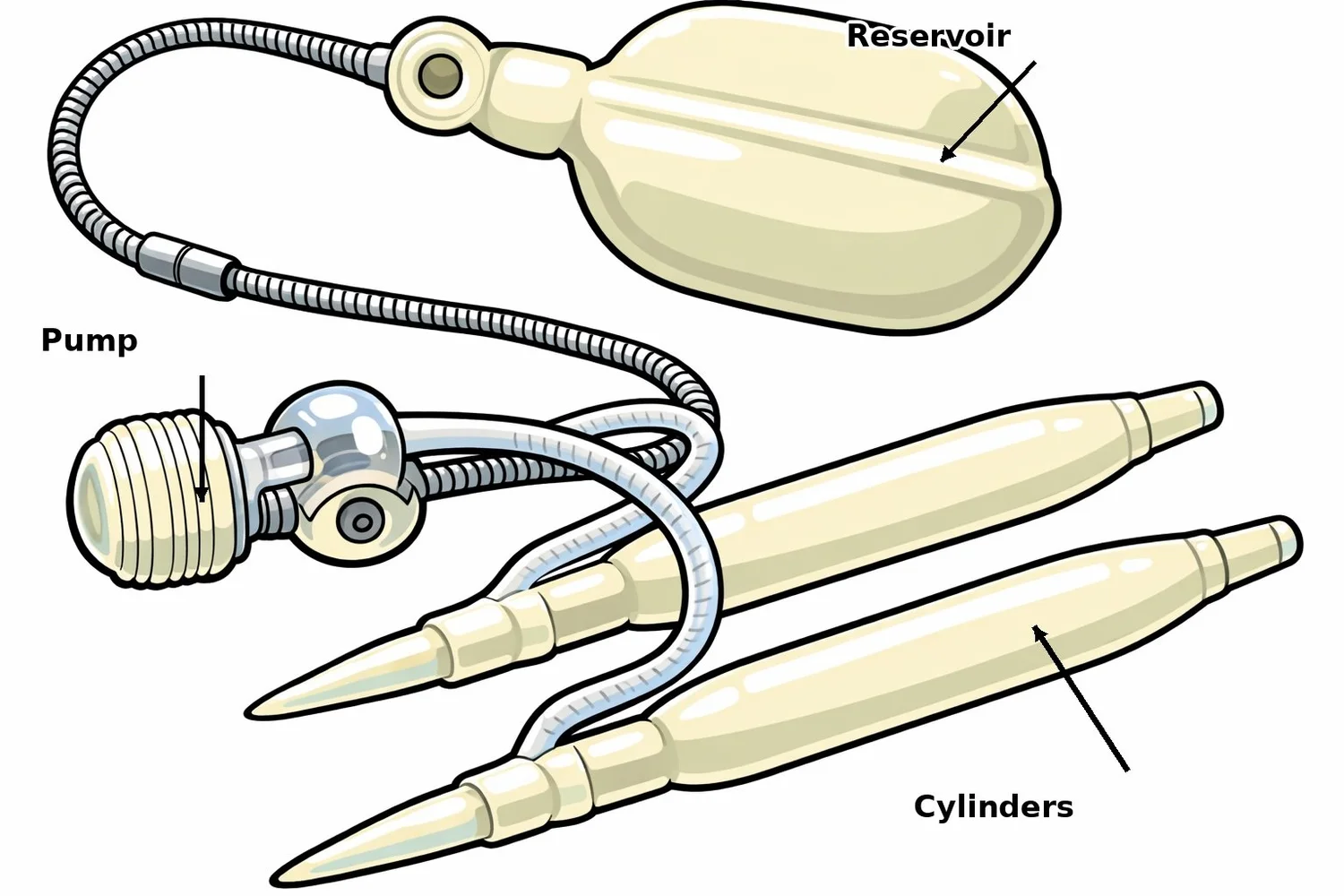
A penile implant can be mechanically functional but still require assessment because of pain, positioning, difficulty using the pump or interaction with scar tissue. Other problems involve true mechanical failure, erosion or infection.
Common reasons for assessment
Increasing penile or scrotal pain, redness, swelling, wound discharge, fever, skin breakdown or exposure of an implant component should not wait for routine online review.
PENILE & GENITAL RECONSTRUCTION
Previous surgery has changed the anatomy
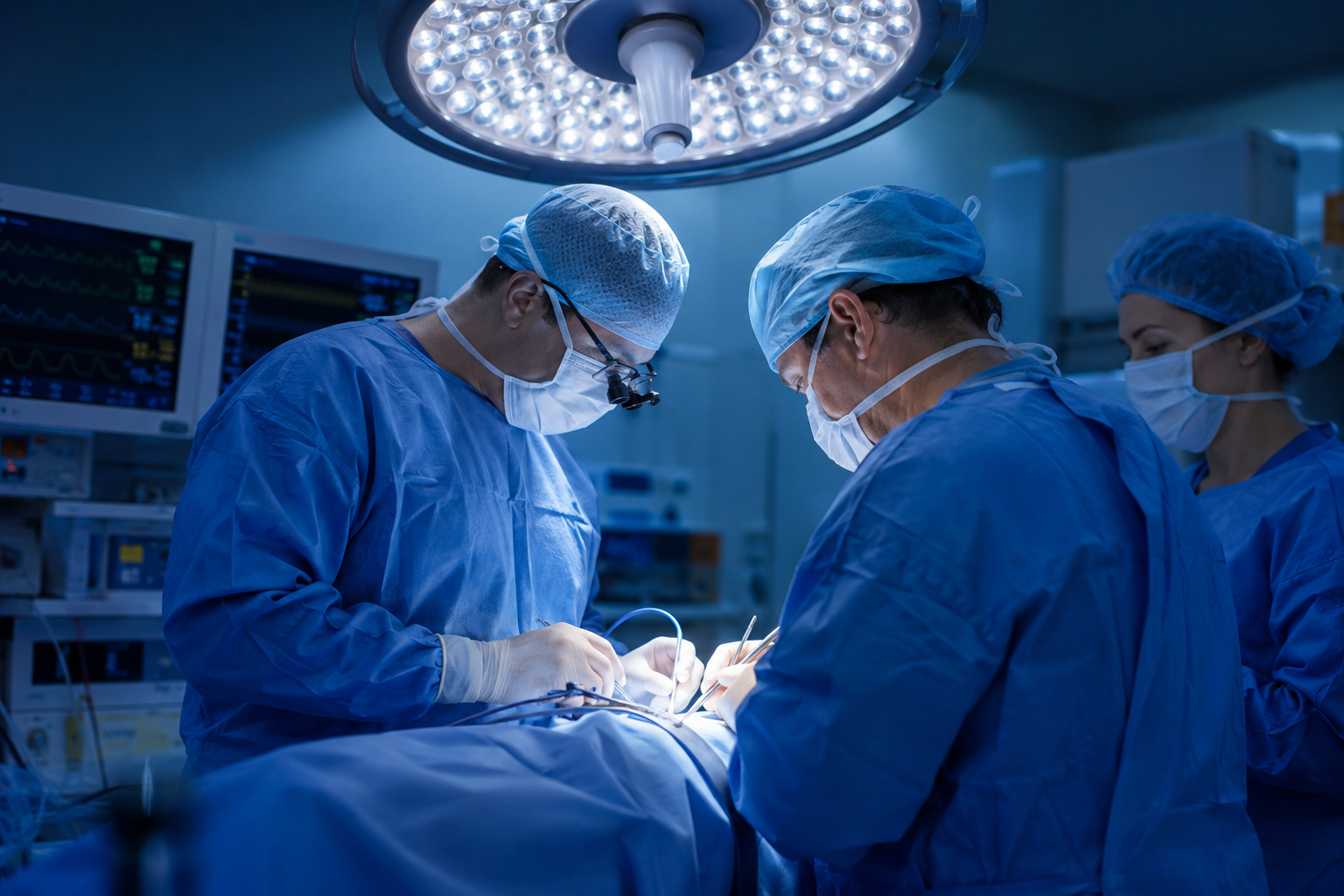
Revision reconstructive surgery can be more complex than an original operation because normal tissue planes may have been replaced by scar tissue and previous surgery may have altered skin, blood supply, urethral position or surrounding structures.
Revision may require assessment for
- recurrent or persistent scarring
- skin deficiency or tethering
- altered penile or genital anatomy
- urinary narrowing or spraying
- functional difficulty after circumcision or genital surgery
- previous graft or flap problems
- prosthetic or implant-related reconstruction
- multiple previous operations

AFTER PENILE CANCER TREATMENT
Urinary, skin or functional problems after cancer surgery
Following penile cancer surgery, reconstruction must be considered in the context of the original pathology, previous operation, remaining tissue and ongoing cancer surveillance.
Problems that may warrant reconstructive assessment
- graft contraction or unstable graft coverage
- painful or tethered scarring
- distal penile distortion
- urinary spraying
- meatal or urethral narrowing
- difficulty with hygiene
- sexual or erectile functional concerns
- problems following previous reconstruction

ERECTILE DYSFUNCTION
Erectile dysfunction treatment has not provided reliable function
When tablets, injections or other non-surgical treatments no longer provide satisfactory erections, reassessment can clarify the severity of erectile dysfunction, previous treatment response and which options remain reasonable to discuss.
NEW DETAILED ED NEXT-STEP PATHWAYS
Which situation sounds most like yours?
The eight pages below answer the most common high-intent questions that arise after first-line erectile dysfunction treatment has not provided a satisfactory result. They sit underneath this broader revision page rather than replacing the existing ED pathway.
ED Tablets Not Working — What Happens Next?
For men who have tried sildenafil, tadalafil or another oral treatment but still do not have erections that are sufficiently firm, reliable or sustainable.
Explore what happens after tablets →Penile Injections for ED — What If They Don’t Suit Me?
For men who find injections painful, inconvenient, unpredictable or unacceptable despite their ability to produce an erection.
Explore options beyond injections →Penile Implant vs Penile Injections
Compare an on-demand injection-based treatment with a surgically implanted option when tablets are no longer sufficient or acceptable.
Compare injections and implant surgery →Severe / Treatment-Resistant Erectile Dysfunction
For men with significant erectile dysfunction despite appropriate attempts at more than one non-surgical treatment or where non-surgical treatment is unsuitable.
Explore severe ED assessment →Erectile Dysfunction After Prostate Cancer Treatment
A broader pathway covering erectile dysfunction following prostate cancer treatment, including surgery, radiotherapy and multimodal cancer therapy.
Explore ED after prostate cancer →Erectile Dysfunction After Radical Prostatectomy
A focused pathway for men whose erectile function has not adequately recovered following radical prostatectomy.
Explore post-prostatectomy ED →When Should You Consider a Penile Implant?
For men trying to understand when erectile dysfunction has reached the point where penile implant surgery is reasonable to discuss.
Understand when implant surgery enters the discussion →Penile Implant After Prostatectomy
Detailed information for men considering penile prosthetic surgery when erectile dysfunction persists after radical prostatectomy.
Explore penile implant after prostatectomy →This is the clearest entry point when oral medication has been tried but erections remain inadequate or unreliable.
Useful when injections work incompletely, are poorly tolerated, or the burden of treatment is the main reason for reassessment.
These pages separate general post-treatment ED from the more specific recovery and implant considerations after radical prostatectomy.


BEFORE A COMPLEX-CASE CONSULTATION
Previous records can matter more than new tests
It is often useful to understand what has already been done before arranging additional investigation.
Previous operation reports
Particularly important after revision, implant, reconstructive or cancer surgery.
Pathology and laboratory reports
Including cancer pathology, semen analyses, hormones or relevant microbiology.
Implant or device details
Manufacturer, model, date of implantation and implant identification card where available.
Relevant imaging
Bring reports and, where appropriate, access to the original images.
Previous specialist correspondence
This can provide useful context about the original diagnosis and decision-making.
COMPLEX-CASE ASSESSMENT
What happens when previous treatment has not worked?
Reconstruct the history
Establish the original problem, diagnosis, previous treatment and timeline.
Review previous records
Operative reports, pathology, implant information and previous investigations are reviewed where available.
Define the current problem
Examination and selected investigation determine what anatomical or functional issue exists now.
Separate options from assumptions
Observation, non-surgical treatment, revision, reconstruction or a different pathway may each be considered depending on the findings.
Discuss realistic goals
Revision surgery cannot always recreate anatomy or function present before the first operation. Expected benefit and limitations need to be clear.
NOT SURE WHICH PROBLEM MATTERS MOST?
Build your case before your consultation
The Andrology Case Navigator can organise your previous treatment, investigations and current symptoms into a consultation preparation summary.
REGIONAL · INTERSTATE · INTERNATIONAL
Travelling for assessment after previous surgery?
Complex revision cases can involve significant travel. Where clinically appropriate, existing records may be reviewed before travel so the likely assessment requirements can be considered in advance.
Gather records
Gather previous operative and treatment records where available.
Initial consultation
Initial consultation may be possible by telehealth where clinically appropriate.
In-person assessment
An in-person examination may still be required before any surgical decision can be made.
Plan treatment and follow-up
Treatment and follow-up can be planned around travel where practical.

COMPLEX ANDROLOGY & RECONSTRUCTIVE UROLOGY
Specialist assessment with Dr Jack Crozier
Dr Jack Crozier is a Brisbane urologist and fellowship-trained andrologist with subspecialty practice in male reproductive, penile and reconstructive urology.
His practice includes male infertility and reproductive microsurgery, Peyronie’s disease, penile implant surgery and revision, genital reconstruction and selected complex problems after previous urological surgery.

WHEN THE NEXT STEP IS UNCLEAR
Start by understanding what happened before
A second opinion can help define the current problem, review previous treatment and determine whether further intervention is worthwhile.