


Surgical Sperm Retrieval: PESA, TESA, TESE & MESA
When suitable sperm cannot be obtained from the ejaculate, sperm may sometimes be retrieved directly from the epididymis or testicle for use with IVF and ICSI.
The most appropriate retrieval technique depends on why sperm are absent or extremely limited — particularly whether the problem is a blockage or reduced sperm production.
What is surgical sperm retrieval?
Surgical sperm retrieval describes several procedures used to obtain sperm directly from the male reproductive tract when suitable sperm cannot be obtained from the ejaculate.
Depending on the underlying problem, sperm may be retrieved from the epididymis — where sperm are stored after leaving the testicle — or directly from the testicle.
Retrieved sperm are assessed by an embryology laboratory and, when suitable, may be used with assisted reproductive treatment, most commonly IVF with intracytoplasmic sperm injection (ICSI).
A man with normal sperm production but a blockage usually requires a different approach from a man whose testicles produce sperm only in small isolated areas.

Why might sperm retrieval be considered?
Surgical sperm retrieval is not one treatment for one condition. It may form part of several different fertility pathways after the underlying cause has been assessed.
Obstructive azoospermia
Sperm production may be relatively preserved, but a blockage prevents sperm from reaching the semen.
Causes include previous vasectomy, epididymal obstruction, vasal obstruction and some congenital reproductive tract abnormalities.
Fertility after vasectomy
Couples seeking pregnancy after vasectomy may consider both microsurgical vasectomy reversal and sperm retrieval with IVF/ICSI.
Non-obstructive azoospermia
When sperm production is severely impaired, sperm may remain only within small areas of the testicle.
MicroTESE is generally the preferred surgical retrieval technique in this setting.
Congenital reproductive tract abnormalities
Some men are born without part of the sperm transport system, including congenital absence of the vas deferens.
Genetic assessment may also be important.
Anejaculation or retrograde ejaculation
Neurological conditions, diabetes, previous surgery and other causes can interfere with normal ejaculation. Non-surgical retrieval methods may be considered first, but surgical sperm retrieval may have a role in selected men.
Selected complex fertility situations
Surgically retrieved sperm may occasionally be considered in selected complex male-factor infertility situations, particularly where assisted reproductive treatment is planned.
It is not routinely required for every abnormal semen analysis.
PESA, TESA, TESE and MESA: what is the difference?
These abbreviations describe different ways of retrieving sperm. They are not interchangeable. The most appropriate technique depends on sperm production, the location of any obstruction, previous surgery and the couple's reproductive plan.
PESA
A fine needle is passed through the scrotal skin into the epididymis to aspirate fluid that may contain sperm.
- Usually no open incision
- Used in selected obstructive azoospermia
- Sperm may be suitable for ICSI
- Another technique may be required if retrieval is inadequate
MESA
The epididymis is examined surgically under magnification and fluid is collected from suitable epididymal tubules.
- Used in selected obstructive azoospermia
- Performed using microsurgical magnification
- May retrieve larger quantities of epididymal sperm
- May facilitate sperm cryopreservation when adequate sperm are obtained
TESA
A needle is passed into the testicle to obtain tissue containing seminiferous tubules, which is then examined for sperm.
- Percutaneous rather than open surgery
- May be used in selected obstructive cases
- Can be used when epididymal retrieval is unsuitable
- Not generally the preferred definitive technique for NOA
TESE
A small incision allows testicular tissue to be sampled directly and examined by the fertility laboratory for sperm.
- Direct testicular tissue retrieval
- May be used in obstructive azoospermia
- Different from MicroTESE
- MicroTESE is generally preferred for NOA
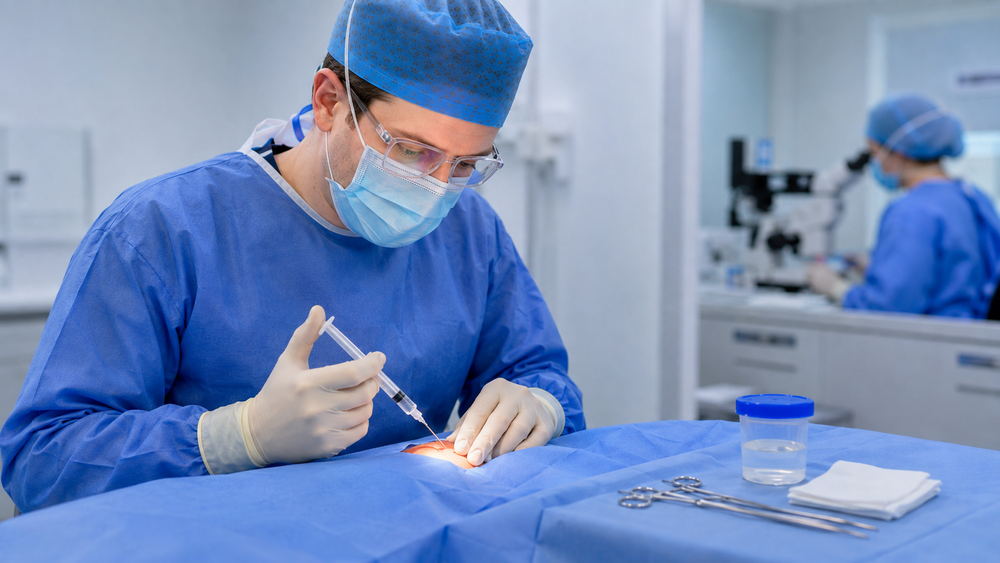
TESA
Percutaneous testicular sperm aspiration.
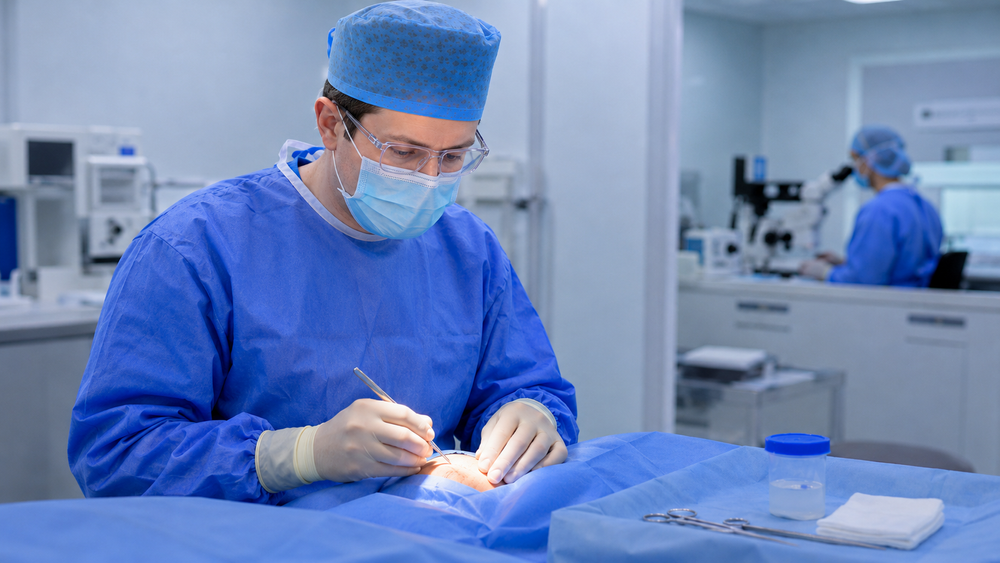
TESE
Surgical retrieval of testicular tissue for sperm assessment.
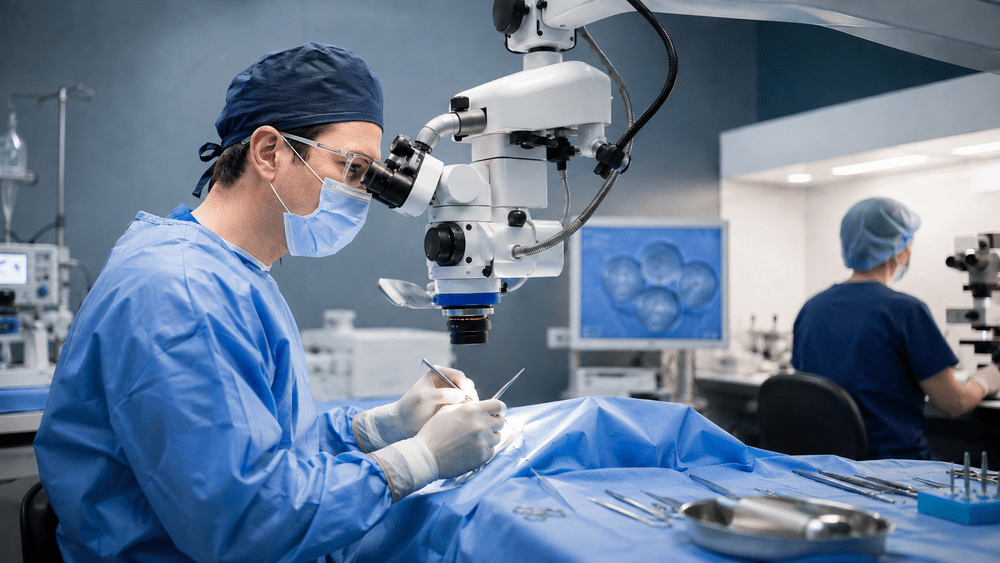
MicroTESE
Microsurgical testicular sperm retrieval for non-obstructive azoospermia.
| Procedure | Sperm source | Technique | Typical clinical setting |
|---|---|---|---|
| PESA | Epididymis | Percutaneous needle aspiration | Selected obstructive azoospermia |
| MESA | Epididymis | Microsurgical epididymal aspiration | Selected obstructive azoospermia |
| TESA | Testicle | Percutaneous needle aspiration | Selected obstructive cases |
| TESE | Testicle | Open testicular tissue extraction | Obstructive azoospermia and selected other situations |
| MicroTESE | Testicle | Microsurgical exploration using an operating microscope | Non-obstructive azoospermia |
It is designed for men with significantly impaired sperm production where small isolated areas of sperm production may remain within the testicle. Learn about MicroTESE →

Obstructive or non-obstructive azoospermia?
Before choosing a sperm retrieval procedure, one of the most important questions is whether sperm are being produced but blocked from reaching the semen, or whether sperm production itself is significantly reduced.
Obstructive azoospermia
Sperm production may be relatively preserved, but there is a blockage somewhere in the reproductive tract.
- Previous vasectomy
- Epididymal obstruction
- Vasal obstruction
- Congenital absence of the vas deferens
- Ejaculatory duct obstruction
Non-obstructive azoospermia
Sperm production within the testicle is severely impaired and sperm may remain only within small focal areas.
MicroTESE is generally the preferred surgical sperm retrieval technique for non-obstructive azoospermia.

Vasectomy reversal or sperm retrieval + IVF/ICSI?
For men seeking another child after vasectomy, sperm retrieval is only one pathway. Microsurgical vasectomy reversal may restore sperm to the ejaculate and provide an opportunity for natural conception.
Microsurgical vasectomy reversal
Reconnects the reproductive tract so sperm may return to the semen.
- May allow natural conception
- May suit couples wanting more than one pregnancy
- Can avoid IVF solely because of the vasectomy if successful
- Recovery of sperm takes time
Sperm retrieval + IVF/ICSI
Sperm are obtained from the epididymis or testicle and used with assisted reproduction.
- May suit couples already requiring IVF
- May be relevant when reproductive timing is important
- Avoids waiting for sperm to return after reconstruction
- Requires an IVF pathway for the couple
The decision should consider both partners, including female age, ovarian reserve, other fertility factors, desired family size, reproductive timeline and personal preferences.
How are surgically retrieved sperm used?
Surgically retrieved sperm are most commonly used with IVF using ICSI.
During ICSI, an embryologist selects an individual viable sperm and injects it directly into a mature egg.
This means assisted reproductive treatment may sometimes proceed even when only relatively small numbers of suitable sperm are available.
Fresh or frozen sperm?
In some men — particularly those with obstructive azoospermia — sufficient sperm may be retrieved for cryopreservation and future ICSI treatment.
In other situations retrieval may be coordinated with the female partner's egg collection.
The strategy should therefore be discussed with the treating fertility specialist and embryology laboratory before surgery whenever possible.

Your surgical sperm retrieval journey
The operation itself is only one part of treatment. Establishing the diagnosis and coordinating retrieval with the couple's wider fertility pathway are equally important.
Male fertility assessment
Semen analyses, fertility history, medical and surgical history, medications and previous reproductive treatment are reviewed.
Establish the likely cause
Where azoospermia is present, the key question is whether there is a blockage, impaired sperm production or another reproductive problem.
Complete targeted investigations
Depending on the situation this may include repeat semen testing, reproductive hormones, genetic testing, imaging or targeted investigation for reproductive tract obstruction.
Compare fertility pathways
Where relevant, reconstruction is compared with sperm retrieval and IVF/ICSI rather than automatically proceeding to one option.
Coordinate with the IVF laboratory
Retrieval technique, timing, laboratory arrangements, cryopreservation and required consent or infection screening can be organised where applicable.
Sperm retrieval
PESA, TESA, TESE, MESA or MicroTESE is performed according to the diagnosis and reproductive plan. Retrieved material is assessed by the fertility laboratory.
Recovery and fertility planning
Follow-up focuses on recovery and the next stage of assisted reproductive treatment. If sperm are not obtained, the result and available alternatives are reviewed.
Could the sperm pathway be reconstructed instead?
Sperm retrieval bypasses an obstruction. In selected men, however, the obstruction itself may be treatable.
Depending on its location, possible options may include microsurgical reconstruction, vasectomy reversal or treatment of a confirmed ejaculatory duct obstruction.
Reconstructive treatment and sperm retrieval with IVF/ICSI should therefore be considered as alternative pathways where appropriate rather than viewing sperm retrieval as the only option.
Recovery and possible risks
Recovery differs according to whether sperm are obtained using a percutaneous needle technique, an open testicular procedure or microsurgery.
What can I expect afterwards?
- Temporary scrotal discomfort
- Bruising or swelling
- A small incision or puncture site depending on the procedure
- Supportive underwear may be helpful
- Temporary restriction of strenuous exercise and heavy lifting
- Return to work depends on the procedure and occupation
Potential complications
- Pain
- Bleeding or haematoma
- Infection
- Swelling
- Scarring
- Injury to epididymal or testicular tissue
- Failure to retrieve suitable sperm
- Anaesthetic complications where relevant

Dr Jack Crozier
Dr Jack Crozier is a Brisbane urologist and fellowship-trained andrologist with a subspecialty focus on male infertility, reproductive microsurgery and surgical sperm retrieval.
His advanced andrology fellowship training at University College London Hospitals included male infertility, sperm retrieval, reproductive microsurgery and complex andrological surgery.
Travelling to Brisbane for sperm retrieval?
Patients with azoospermia or complex male infertility may need to coordinate investigations, surgery and assisted reproductive treatment across different locations.
Where clinically appropriate, existing semen analyses, hormone results, genetic testing, imaging, fertility clinic records and previous operation reports may be reviewed before major travel arrangements are made.
This may help establish whether PESA, TESA, TESE, MESA, MicroTESE, reconstructive surgery or another fertility pathway is likely to be relevant before treatment is scheduled.

Explore male fertility treatment options
Azoospermia
Understand why no sperm may be found in the semen and how obstructive and non-obstructive causes are assessed.
MicroTESE
Microsurgical sperm retrieval for appropriately selected men with non-obstructive azoospermia.
Vasectomy Reversal
Compare microsurgical reconstruction with sperm retrieval and IVF/ICSI after vasectomy.
Ejaculatory Duct Obstruction
Learn about investigation and treatment of selected distal reproductive tract obstruction.
Semen Analysis Interpreter
Review common semen analysis measurements with a plain-English educational explanation.
Male Infertility & Reproductive Urology
Explore male fertility conditions, surgical treatment pathways and patient tools.
Surgical sperm retrieval FAQs
What is the difference between PESA and TESA?
PESA retrieves sperm-containing fluid from the epididymis using a needle. TESA passes a needle into the testicle to obtain tissue containing seminiferous tubules. Both are percutaneous techniques, but they retrieve sperm from different locations.
What is the difference between TESE and MicroTESE?
Conventional TESE removes one or more samples of testicular tissue. MicroTESE uses an operating microscope to search within the testicle for seminiferous tubules that appear more likely to contain sperm. MicroTESE is generally the preferred surgical retrieval approach for non-obstructive azoospermia.
Is MESA better than PESA?
Neither is automatically better for every patient. PESA is percutaneous, while MESA uses open microsurgical access to the epididymis and may allow larger quantities of epididymal sperm to be collected. The appropriate technique depends on the diagnosis and reproductive plan.
Can sperm be retrieved after a vasectomy?
Yes. Men generally continue producing sperm after a vasectomy. Sperm may be retrieved from the epididymis or testicle for use with IVF/ICSI. Microsurgical vasectomy reversal is another option and should also be considered where appropriate.
Should I have vasectomy reversal or sperm retrieval?
The answer depends on the reproductive circumstances of both partners. Important factors include female age and fertility, ovarian reserve, reproductive timeline, whether IVF is required for another reason, desired family size and preference for natural conception.
Can TESA be used for non-obstructive azoospermia?
TESA is not generally the preferred definitive sperm retrieval technique for non-obstructive azoospermia. Because sperm production may occur only in small focal areas, MicroTESE is generally preferred.
Can retrieved sperm be frozen?
Often, but not always. Whether sperm can be cryopreserved depends on the number and viability of sperm obtained and the fertility laboratory's assessment.
How many sperm are needed for ICSI?
ICSI involves injecting an individual viable sperm into each mature egg selected for treatment. There is not one fixed surgical retrieval target because not every retrieved sperm will necessarily be suitable for injection or cryopreservation.
Does finding sperm guarantee IVF will work?
No. Successful sperm retrieval is one part of the reproductive process. Fertilisation, embryo development, implantation, pregnancy and live birth depend on multiple male, female, embryological and treatment-related factors.
What happens if no sperm are found?
The next step depends on the diagnosis and which retrieval technique was used. Previous investigations, hormones, genetics, surgical findings and laboratory results can be reviewed before deciding whether another retrieval technique or a different reproductive pathway is reasonable.
Do I need a testicular biopsy before sperm retrieval?
A separate diagnostic testicular biopsy is generally not required simply to distinguish obstructive from non-obstructive azoospermia. History, examination, semen results, reproductive hormones and targeted investigations can usually guide this assessment.
Will sperm retrieval affect testosterone?
The potential effect depends on underlying testicular function and the type and extent of retrieval performed. Men with non-obstructive azoospermia may already have impaired testicular function, so hormonal assessment may be appropriate in selected patients.
Will sperm retrieval affect erections or ejaculation?
Sperm retrieval procedures involve the epididymis or testicle rather than the structures primarily responsible for erections, orgasm or ejaculation. Temporary discomfort during recovery can affect sexual activity in the short term.
Can I arrange sperm retrieval if I live interstate or overseas?
Potentially. Existing fertility investigations may be reviewed as part of planning before travel where appropriate. Surgical timing also needs to be coordinated with the fertility clinic and embryology laboratory.

Which sperm retrieval technique is right for you?
If you have azoospermia, have previously had a vasectomy, have been advised to consider sperm retrieval or are planning IVF/ICSI, specialist male fertility assessment can help determine whether PESA, TESA, TESE, MESA, MicroTESE, reconstruction or another pathway is most appropriate.
Medical information disclaimer: This page provides general educational information and does not replace individual medical advice, diagnosis or informed consent. The appropriate sperm retrieval technique depends on the underlying cause of infertility, previous treatment, examination and investigation findings, laboratory requirements and the reproductive circumstances of both partners. Not every patient with azoospermia or an abnormal semen analysis requires surgical sperm retrieval. Surgical retrieval of sperm, successful use of retrieved sperm, fertilisation, pregnancy and live birth cannot be guaranteed.