Penile, Genital &
Urinary Reconstruction
Specialist assessment of complex penile, genital and urethral conditions, including urethral stricture, buried penis, genital scarring, penoscrotal webbing, lymphoedema, prosthetic problems and complications following previous surgery.
Reconstructive problems are rarely defined by a procedure alone. Assessment focuses on the anatomy that exists now, what has been done previously, and how the problem affects urinary, sexual and genital function.
General educational information only. Individual examination and clinical assessment are required to determine the diagnosis and whether reconstructive treatment is appropriate.
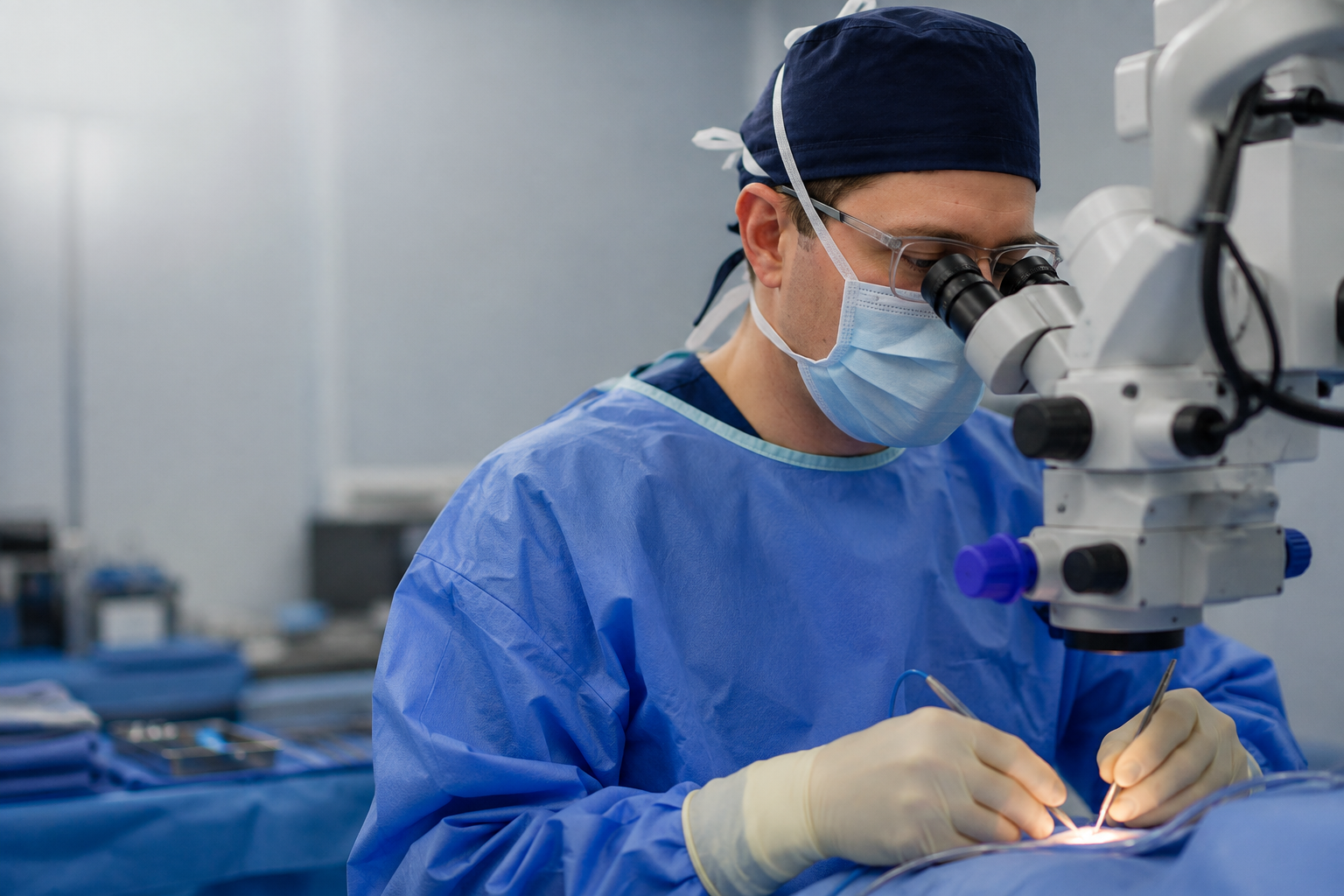
Previous treatment changes the anatomy
Surgery, infection, recurrent narrowing and scar formation can alter tissue planes and affect which reconstructive options remain available.
Problems can involve several structures
The urethra, penile skin, foreskin, penoscrotal junction, scrotum and surrounding tissues may contribute to the same clinical problem.
Function guides reconstruction
Urination, hygiene, comfort, erections, sexual function and tissue quality are considered alongside the visible anatomy.
Looking for something specific?
Search the complete clinical website using either a medical term or everyday language. You do not need to know the exact diagnosis.
First define the problem.
Then decide what needs fixing.
Reconstructive urology is not one operation. It includes a range of procedures used when urinary or genital anatomy has been narrowed, scarred, damaged, removed or altered by disease or previous treatment.
Some patients have a relatively isolated problem such as a urethral stricture. Others have several overlapping issues involving penile skin, foreskin, the urethral opening, scrotum, prosthetic surgery or previous genital reconstruction.
This makes the starting question particularly important: what is the anatomy now? The next operation should not automatically be a repeat of the previous one.
Not every reconstructive problem requires surgery
Observation, treatment of skin disease, wound care, further investigation or another non-operative strategy may be reasonable depending on the diagnosis and individual circumstances.

Reconstruction is anatomy-led.
Similar symptoms can arise from very different anatomical problems. Planning therefore combines the clinical history, examination and selected investigations rather than choosing an operation from the symptom alone.
Define the abnormal segment
Location, length, cause, degree of narrowing, previous procedures and tissue quality can all change the reconstructive strategy.
Preserve what can still be used
Healthy skin, urethral tissue and surrounding structures may be important for reconstruction. More surgery is not automatically better surgery.
Reassess function after repair
A technically successful reconstruction still needs to be considered in terms of urinary function, comfort, healing and the patient's individual goals.
What can we help with?
Choose the problem that most closely matches your situation. Each dedicated page explains assessment, investigations and possible treatment pathways in more detail.
Urethral Stricture & Urethroplasty
Recurrent or complex narrowing of the urinary channel, including assessment after previous dilation, urethrotomy or urethral surgery.
Explore urethral reconstructionAdult Acquired Buried Penis
Assessment of penile concealment associated with skin deficiency, scarring, lymphoedema, previous surgery or surrounding tissue.
Explore buried penis reconstructionLichen Sclerosus & Genital Scarring
Inflammatory scarring affecting foreskin, penile skin, the urinary opening or urethra, including associated narrowing.
Explore lichen sclerosusComplex Circumcision & Foreskin Problems
Problems where previous circumcision, scarring, skin disease or limited healthy skin can make surgery more complex.
Explore complex circumcisionPenoscrotal Webbing & Scrotoplasty
Congenital or acquired webbing, ventral tethering and a high attachment of scrotal skin to the underside of the penile shaft.
Explore penoscrotal webbingScrotal Lymphoedema
Persistent genital swelling and tissue thickening affecting mobility, hygiene, penile exposure, urinary function or surrounding structures.
Explore scrotal lymphoedemaPenile Cancer Reconstruction
Reconstructive considerations following penile cancer surgery, including skin coverage, grafting, urinary reconstruction and revision.
Explore cancer reconstructionPenile Implant Revision
Assessment of mechanical failure, difficult cycling, pain, component position, infection, erosion or complex anatomy after previous implant surgery.
Explore penile implant revisionTesticular Implant Revision
Assessment when a testicular prosthesis is painful, sits too high, has migrated, is significantly asymmetric or develops another implant-related problem.
Explore testicular implant revision
One visible problem may be part of a broader reconstruction.
Penoscrotal webbing is a useful example. A high scrotal attachment can occur on its own, but it can also coexist with limited ventral penile skin, circumcision-related tethering, buried penis or previous surgery.
Similarly, apparent foreskin disease can coexist with narrowing of the urinary opening or a longer urethral stricture.
Reconstruction therefore considers the entire affected area rather than treating each visible feature in isolation.
Repeated treatment is not always the same as definitive reconstruction.
A urethral stricture can recur following dilation or internal urethrotomy. When narrowing is recurrent, long, inflammatory or otherwise complex, defining the anatomy becomes particularly important before another procedure is selected.
Urethroplasty is not one standard operation. The reconstructive technique depends on factors such as where the stricture is located, how long it is, previous procedures, tissue quality and the underlying cause.
- Location and length of narrowing
- Previous dilation or urethrotomy
- Previous urethroplasty
- Trauma or previous pelvic surgery
- Lichen sclerosus or genital skin disease
- Previous radiation treatment
- Urinary and sexual function
- Tissue quality and possible graft requirements
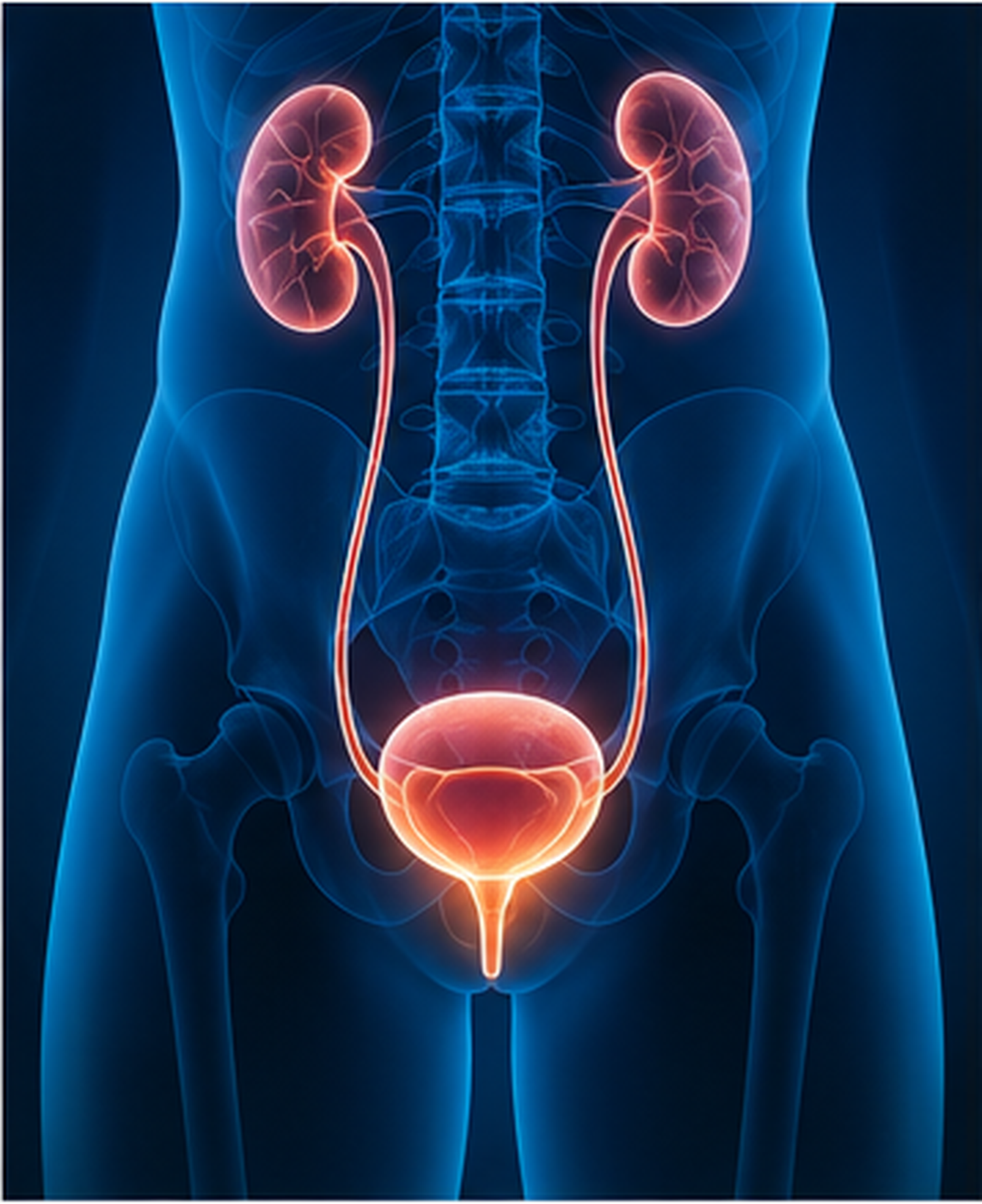
Urinary function depends on more than the visible genital anatomy
Symptoms may arise from the urethra, bladder outlet or other parts of the urinary tract, which is why appropriate investigation may be required before reconstruction.

The operation is determined by the anatomy.
Reconstructive surgery can range from a focused repair to a more complex procedure involving tissue rearrangement, grafts, staged reconstruction, prosthetic revision or treatment of several structures.
The objective is not simply to perform the largest operation. It is to define the clinical problem and select an approach proportionate to the anatomy, symptoms, previous treatment and functional goals.
Revision starts with understanding what has already been done.
Scar tissue, previous implant pockets, grafts, infection and altered tissue planes can make a second operation fundamentally different from the first. Operative reports and implant information can therefore be particularly useful.
Penile implant problems
Assessment may be appropriate for mechanical failure, loss of inflation, difficult cycling, pain, abnormal component position, erosion, infection or another concern following previous penile implant surgery.
Testicular implant problems
Pain, high position, migration, asymmetry, infection, erosion or significant concerns about position or size can be assessed before deciding whether another procedure is reasonable.
Scarring, tethering or altered penile skin
Previous circumcision or genital surgery can leave deficient skin, scar tethering, altered anatomy or an associated penoscrotal problem requiring reassessment rather than simply repeating the original operation.
Reconstruction after penile cancer treatment
Grafts, scars, urinary narrowing, tissue loss or altered function following penile cancer surgery may require reconstructive assessment while cancer treatment and surveillance remain the priority.
Has previous treatment not worked as expected?
The dedicated revision pathway is designed for persistent or recurrent problems after penile, implant, fertility or reconstructive treatment and helps organise the next assessment around what has already been tried.
Complex does not automatically mean more surgery.
The purpose of reconstructive assessment is to determine whether further treatment is likely to improve the current problem and, if so, what scale of intervention is proportionate.
In some situations observation, further investigation or treatment of an underlying skin or urinary condition is more appropriate than another operation.

From defining the problem to planning treatment
Complex reconstruction is usually best approached in stages: understand the history, establish the anatomy and only then decide which management options are reasonable.
Understand the history
Previous procedures, trauma, infection, catheterisation, skin disease, urinary symptoms and sexual function are reviewed.
Define the anatomy
Examination and selected investigations can establish which structures are involved, the extent of scar tissue and what healthy tissue remains available.
Discuss reasonable options
Surgery is not automatically required. Alternatives, expected limitations and potential risks are considered according to the findings.
Plan treatment & follow-up
More complex reconstruction may involve grafts, staged treatment, a urinary catheter, wound care and structured follow-up.

Why see Dr Jack Crozier?
Dr Jack Crozier is a Brisbane urologist and fellowship-trained andrologist with subspecialty practice in penile, genital, urethral and reconstructive urology.
His practice includes urethral reconstruction, complex penile and genital surgery, buried penis, genital skin disease, penoscrotal reconstruction, penile cancer reconstruction, prosthetic surgery and selected revision procedures.
Previous records can be particularly valuable.
Reconstructive and revision assessment often depends on understanding what was present before previous treatment and exactly what was done.
You do not need to have every item before arranging an appointment, but available records can reduce unnecessary repetition and help establish the sequence of previous treatment.
Previous operative reports
Implant identification or device information
Urethrograms, cystoscopy reports or urinary imaging
Pathology reports where relevant
Previous specialist correspondence
Details of grafts, flaps or previous reconstruction
Travelling to Brisbane for reconstructive urology?
Complex reconstructive problems often benefit from reviewing previous treatment before further surgery is planned.
Where clinically appropriate, existing information may be reviewed as part of planning before major travel arrangements are made.
Skin quality, scar tissue, tissue mobility and the current anatomy cannot always be determined remotely.

Common reconstructive questions
Explore more focused information about problems that commonly lead patients to seek reconstructive assessment.
Complex circumcision and problems after previous surgery
Read more → Genital skinTightening, splitting, scarring and lichen sclerosus
Read more → Penile reconstructionAdult acquired buried penis and penile concealment
Read more → Urinary narrowingUrethral stricture and reconstructive urethroplasty
Read more → Prosthetic revisionTesticular implant position, pain and revision assessment
Read more → Penile prosthetic revisionProblems following previous penile implant surgery
Read more →Questions about reconstructive urology
What is reconstructive urology?
Reconstructive urology deals with structural problems affecting the urinary or genital tract. This can include urethral stricture, scarred or deficient genital skin, buried penis, penoscrotal webbing, genital lymphoedema, complications of previous surgery and selected prosthetic or genital reconstruction.
Do all urethral strictures need urethroplasty?
No. Management depends on symptoms, the location and length of the narrowing, its severity, previous treatment and individual circumstances. Observation or selected endoscopic treatment can have a role in some situations, while reconstruction may be considered in others.
Why does previous surgery make reconstruction more difficult?
Previous operations can alter normal tissue planes, create scar tissue, change blood supply and reduce the amount of healthy tissue available. The original operative report can therefore be particularly useful when planning revision.
Does reconstructive assessment always mean I will need surgery?
No. Assessment is intended to define the problem. Depending on the diagnosis, observation, treatment of an underlying skin condition, further investigation or another non-operative strategy may be appropriate.
Can problems after circumcision be revised?
Selected functional problems following circumcision can be assessed for revision. The amount and quality of remaining penile skin are important because simply removing additional skin can sometimes make an existing problem worse.
What if I have both a buried penis and urinary narrowing?
These conditions can coexist. Correcting penile concealment does not automatically correct a narrowed urinary opening or urethral stricture, so both components may need to be assessed before treatment is planned.
Can penile implant problems be assessed as part of reconstructive urology?
Yes. Previous penile implant surgery can alter tissue planes and create scar tissue. Mechanical failure, difficult cycling, pain, malposition, erosion, infection or concerns after previous revision require assessment of the specific problem before another operation is considered.
Men considering their first implant can instead visit the dedicated Penile Implant Surgery page.
What should I bring if I have already had several operations?
Available operative reports, implant information, pathology, urethral imaging, cystoscopy reports, previous specialist correspondence and details of grafts or other reconstruction can all be useful. You do not need to delay making an appointment simply because some records are unavailable.
Can I seek assessment if my previous surgery was performed elsewhere?
Yes. Previous surgery performed elsewhere can be reviewed. Where possible, previous operative reports and investigations can help establish what was done and what anatomy is likely to be present now.
Can interstate or international patients be assessed?
Potentially. Existing records can help with initial planning before major travel arrangements are made. An in-person examination is still necessary for many penile and genital reconstructive conditions before definitive treatment can be recommended.
Some urinary or postoperative problems require prompt assessment
Complete inability to pass urine, fever with significant urinary symptoms, rapidly increasing pain or swelling, wound discharge, skin breakdown or exposure of an implant component should not wait for a routine website enquiry.
Seek appropriate urgent medical assessment according to the severity of the symptoms.
Have you been told your urinary or genital problem is complex or recurrent?
A reconstructive assessment can help define the current anatomy, review previous treatment and clarify which further investigations or management options may be reasonable for your circumstances.
Medical information on this page is general in nature and does not replace individual medical assessment. Investigation and treatment recommendations depend on the diagnosis, examination findings, previous treatment, relevant investigations and individual circumstances. Reconstructive and prosthetic surgery can involve potential benefits, limitations and risks that require individual discussion and informed consent.
Explore More About Penile, Genital & Urinary Reconstruction