

Penile Implant
Revision Surgery
Specialist assessment for penile implants that have stopped working, become difficult to operate, changed position, become painful or developed complications after previous surgery.
Revision surgery is different from first-time implantation. The first step is to establish what has changed, whether the implant itself is responsible and what previous surgery has done to the surrounding anatomy.

Mechanical failure
Loss of inflation, rigidity, normal deflation or another change in device function.
Infection or erosion
Pain, redness, discharge, wound change, skin breakdown or component exposure.
Position problems
Pump, cylinder or reservoir concerns despite an otherwise functioning prosthesis.
Complex revision
Previous infection, explantation, repeated surgery, fibrosis or altered anatomy.
What has changed with your penile implant?
Penile implant revision is not one operation and not every implant concern requires another procedure. A useful assessment starts by identifying the specific change from your previous implant function.
It no longer inflates properly
You may notice loss of rigidity, incomplete inflation, difficulty transferring fluid or a significant change from how the implant previously worked.
It will not deflate normally
Difficulty returning the implant to its usual deflated state can relate to operation technique, the pump or another mechanical component.
The pump feels different
A pump may become difficult to locate, harder to squeeze, painful or noticeably different in position.
The implant position has changed
Cylinder asymmetry, inadequate distal support, pump malposition or reservoir-related problems may require assessment.
There is pain or a wound concern
Increasing pain, redness, swelling, discharge, skin breakdown or component exposure should not simply be assumed to be normal.
A previous implant was removed
Previous infection, explantation or multiple revisions may produce significant corporal fibrosis and change later reimplantation.

Revision begins with understanding the existing implant
Penile implant revision refers to further surgery involving an existing or previously placed penile prosthesis.
The procedure may be relatively focused — for example, repositioning a component — or it may involve removal and replacement of the entire prosthesis. Previous infection or major fibrosis can make the operation substantially more complex.
Useful information to bring
- Penile implant identification card, if available
- Manufacturer and implant model
- Date of the original implantation
- Previous operation reports
- Details of any earlier revisions
- Records relating to previous implant infection or removal
- Relevant prostate, pelvic or penile surgery information
My penile implant has stopped working
A persistent loss of normal inflation, rigidity or deflation deserves assessment, particularly when the implant previously worked reliably.
First establish whether it is true mechanical failure
Difficulty cycling a prosthesis does not always mean a component is broken. Pump position, technique and certain valve-related problems can occasionally mimic mechanical failure.
Examination usually includes establishing exactly how the device behaviour has changed and cycling the implant where appropriate.
My pump is hard to squeeze →Does the entire implant need replacing?
Not necessarily. In selected situations it may be possible to reposition or replace an individual component.
However, retaining older components also means those components remain subject to future mechanical failure. Device age, the component involved, previous operations and infection risk all contribute to the decision.
Pump malfunction
New difficulty compressing the pump, abnormal refill or inability to cycle the device normally.
Fluid loss
Loss of fluid or another hydraulic problem can reduce inflation or prevent the implant reaching its previous rigidity.
Component failure
Tubing, connectors or another component within an inflatable system can occasionally develop a mechanical problem.
Some penile implant problems should not wait
Suspected prosthesis infection or erosion requires prompt medical assessment. Established implant infection commonly requires more than observation or antibiotics alone.
If you are interstate or overseas, seek urgent assessment where you are rather than delaying care while organising travel to Brisbane.
- Increasing penile or scrotal pain
- Increasing redness or swelling
- Wound discharge
- Fever or systemic illness
- Skin breakdown over the implant
- Exposure of any prosthesis component
What happens if an implant is infected?
Management depends on the extent of infection, tissue condition, systemic illness, erosion and operative findings.
An established infection commonly requires removal of infected prosthetic material together with appropriate antimicrobial management.
Can another implant be placed immediately?
In selected circumstances, immediate penile prosthesis salvage may be considered. This involves removing the infected prosthesis, treating the operative spaces and inserting a replacement device during the same operation.
Salvage is not appropriate in every clinical situation and requires individual assessment.
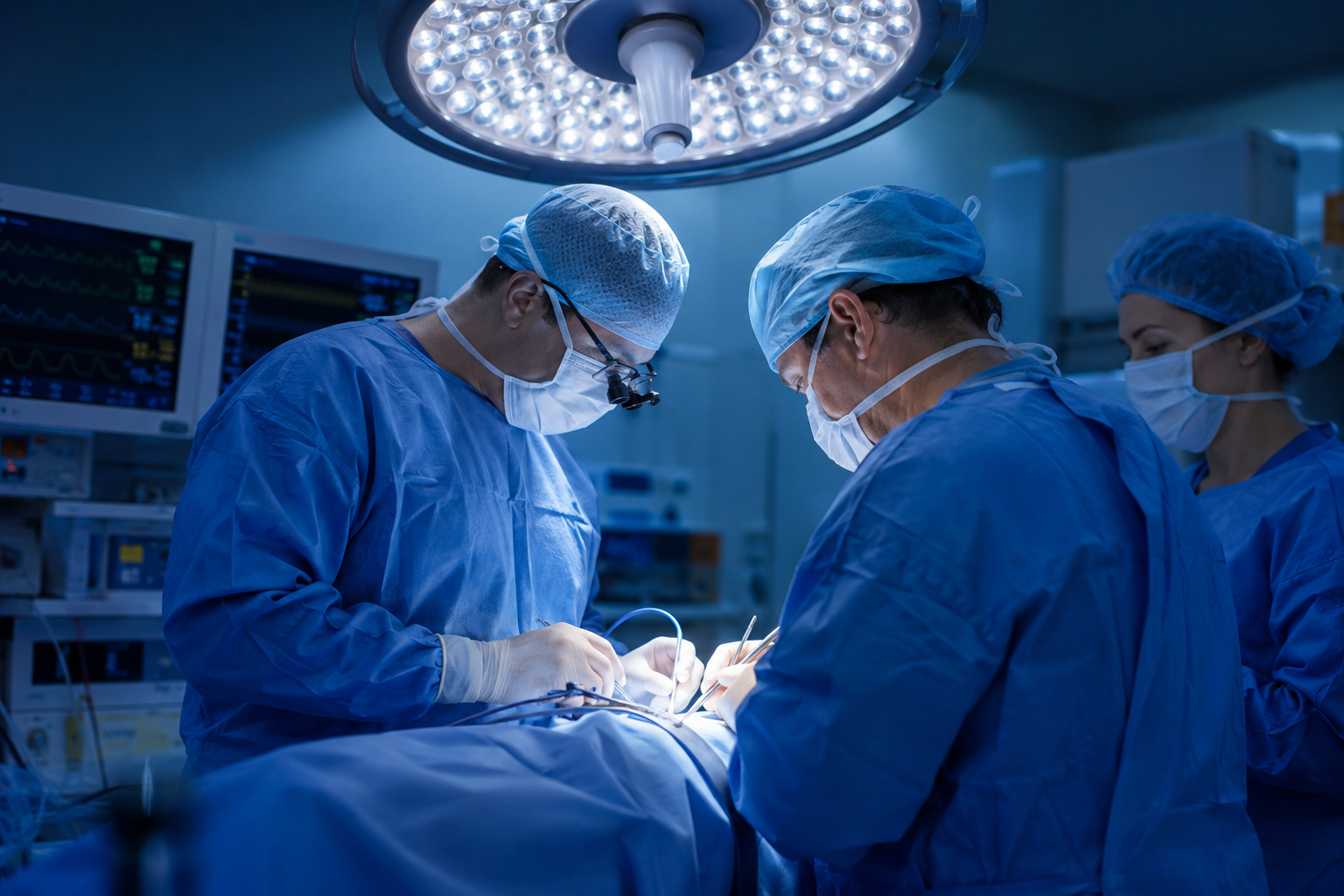
Revision after infection, removal or multiple previous operations
Reimplantation may become more difficult when previous infection, implant removal or repeated operations have produced significant scar tissue.
Fibrosis within the corpora cavernosa can reduce the space available for replacement cylinders and make dissection and corporal dilation more challenging.
The aim is to safely restore a functional prosthesis where appropriate while minimising injury to the urethra and surrounding tissues.
Explore Reconstructive UrologyInfection history can affect both anatomy and the timing of another prosthesis.
Explantation can be followed by significant corporal scar formation.
Each operation can alter normal tissue planes and future surgical options.
Penile shape, erectile anatomy and available corporal space may all need consideration.
Prostate and other pelvic surgery may affect reservoir anatomy and surgical planning.
What about penile length during revision surgery?
A penile implant is designed primarily to provide rigidity. It should not be considered a penile enlargement procedure.
Long-standing erectile dysfunction, Peyronie’s disease, previous infection, implant removal and corporal fibrosis can all affect penile dimensions and the internal space available for replacement cylinders.
Where fibrosis is significant, the priority is safe placement of an appropriately sized prosthesis rather than trying to achieve a predetermined penile measurement.
Read the main penile implant guide →The implant can work mechanically but still cause a problem
Positioning concerns involving the pump, cylinders or reservoir require a different assessment from straightforward mechanical failure.
Scrotal pump
A pump that sits high, is difficult to locate, causes persistent discomfort or cannot be operated reliably may require review.
Pump moved or sits too high →Cylinders
Cylinder asymmetry, crossover, inadequate distal support, unusual positioning or interaction with scar tissue may occasionally require revision.
Reservoir
Reservoir displacement, herniation or another reservoir-related complication can require assessment. Previous pelvic surgery may influence how the problem is approached.
What happens at a penile implant revision consultation?
Revision planning should begin with diagnosis rather than assuming another operation is automatically required.
Define exactly what has changed
When did the problem begin? Does the implant still inflate and deflate? Is there pain, deformity, a wound problem or a change in pump position?
Assess and cycle the implant
The penile prosthesis, scrotal pump, surrounding tissues and relevant anatomy can be examined. The implant may be cycled where appropriate.
Review previous surgery
Implant details, operative reports, previous revisions, prostate or pelvic operations and infection history are incorporated where available.
Decide what should happen next
The next step may be observation, assistance with implant operation, component repositioning, partial revision, complete replacement, implant removal, salvage or complex reconstruction.
There is no single standard penile implant revision operation
Several different pieces of information influence whether a focused revision or a more extensive procedure is reasonable.
Reason for revision
Mechanical failure, infection, erosion and component position require different strategies.
Previous surgery
Previous penile, prostate, pelvic and prosthetic surgery may substantially change the anatomy.
Scar tissue
Corporal fibrosis can influence cylinder placement, device selection and operative complexity.
Infection history
Previous or current infection can alter both the timing and nature of further prosthetic surgery.
Existing prosthesis
Implant type, device age and the condition of individual components influence surgical planning.
Your priorities
Ease of use, functional goals, anatomy and previous experience form part of shared decision-making.
Revision problems often overlap with reconstructive andrology
Dr Jack Crozier is a Brisbane urologist and fellowship-trained andrologist whose subspecialty practice includes erectile dysfunction, penile prosthetic surgery, Peyronie’s disease and penile and genital reconstruction.
His advanced andrology fellowship training at University College London Hospitals included penile prosthetic surgery, Peyronie’s disease surgery and complex reconstructive andrology.
In revision cases, this allows prosthetic function, penile anatomy, fibrosis, deformity, previous surgery and potential reconstructive requirements to be considered together.

Recovery depends on why revision was required
A straightforward replacement for mechanical failure may have a different recovery from surgery involving infection, substantial fibrosis or reconstructive work.
Early recovery
Initial management focuses on wound care, swelling, discomfort, urinary function and early detection of unexpected problems.
Activity
Physical activity restrictions depend on the procedure performed and individual recovery.
Implant use
Timing of implant activation, inflation, deflation and cycling is individualised according to healing and the operation performed.
Sexual activity
Sexual activity should resume only when healing is adequate and specific postoperative guidance has been provided.

Revision after implant surgery performed elsewhere
Penile implant problems can be assessed even when the original operation was undertaken elsewhere in Queensland, interstate or overseas.
Where clinically appropriate, reviewing existing information before major travel arrangements may help establish which records or investigations are likely to be useful.
What if previous treatment has not worked as expected?
A second operation should not simply repeat the first. Previous surgery can change anatomy, scar tissue, component position and the options that remain.
Penile implant and reconstructive information
Penile implant revision FAQs
How long does a penile implant last? +
There is no fixed lifespan that applies to every penile implant. Contemporary prostheses can function for many years, but they contain mechanical components and may eventually require revision, replacement or removal.
Does needing revision mean my original implant surgery failed? +
Not necessarily. A mechanical device can eventually develop a problem after a long period of satisfactory function. Other revision indications include component position, infection, erosion and problems related to previous scar tissue.
Can just the penile implant pump be replaced? +
Sometimes. Whether isolated component replacement is reasonable depends on the implant, device age, the specific problem, compatibility and the condition of the remaining components. Complete replacement may be preferable in other circumstances.
Can a pump that has moved simply be repositioned? +
Potentially. A pump that is genuinely malpositioned and causing functional difficulty or discomfort can sometimes be repositioned. However, not every high or asymmetric pump is abnormal or requires surgery.
Can I change implant type when having revision surgery? +
Potentially. Revision can provide an opportunity to reconsider the prosthesis configuration, but anatomy, hand function, previous surgery, fibrosis and the reason for revision all influence what options are reasonable.
Is revision surgery more difficult than first-time implantation? +
It can be. Previous surgery may produce scar tissue, alter tissue planes and change normal anatomy. Previous infection or explantation can result in substantial corporal fibrosis.
Can an infected penile implant be replaced immediately? +
In selected clinical situations immediate prosthesis salvage may be considered, involving removal of the infected implant and insertion of another prosthesis during the same operation. It is not suitable for every infection and requires individual surgical assessment.
Can another implant be inserted after a previous infection? +
Sometimes. Previous infection or explantation may cause fibrosis and make subsequent implantation more complex. Infection history, tissue condition, timing and current anatomy all need consideration.
Can you assess an implant inserted by another surgeon? +
Yes. Penile implant problems can be assessed when the original operation was performed elsewhere. Implant identification, operative reports and previous infection information are useful where available, but not having every original document does not necessarily prevent assessment.
Concerned about an existing penile implant?
If your implant has stopped working, become difficult to operate, changed position or developed another problem, assessment can help establish the cause and whether revision surgery is appropriate.