

Penile Implant Surgery Brisbane
Specialist assessment for men considering penile implant surgery for erectile dysfunction, including first-time implantation, severe or treatment-resistant ED, erectile dysfunction after prostate cancer treatment, Peyronie’s disease with erectile dysfunction and complex surgical planning after previous penile or pelvic treatment.

Which penile implant pathway applies to you?
Penile prosthetic surgery is not one single clinical situation. Previous treatment, erection quality, penile anatomy, curvature, scarring and previous implant surgery can substantially change the discussion.
Considering your first implant?
Understand when implant surgery may enter the erectile dysfunction treatment discussion, implant designs and realistic expectations.
When should you consider an implant? →Already have a penile implant?
Mechanical failure, pump problems, pain, altered position, infection, erosion or loss of rigidity require a different pathway.
Go to implant revision →ED with penile deformity?
Erectile function and penile deformity should be considered together when curvature, narrowing, hourglass deformity or instability is present.
Explore Peyronie’s disease →Travelling to Brisbane?
Review which records may be useful and which travel arrangements can usually wait until your likely treatment pathway is clearer.
International implant pathway →Not sure whether you are at the implant stage yet?
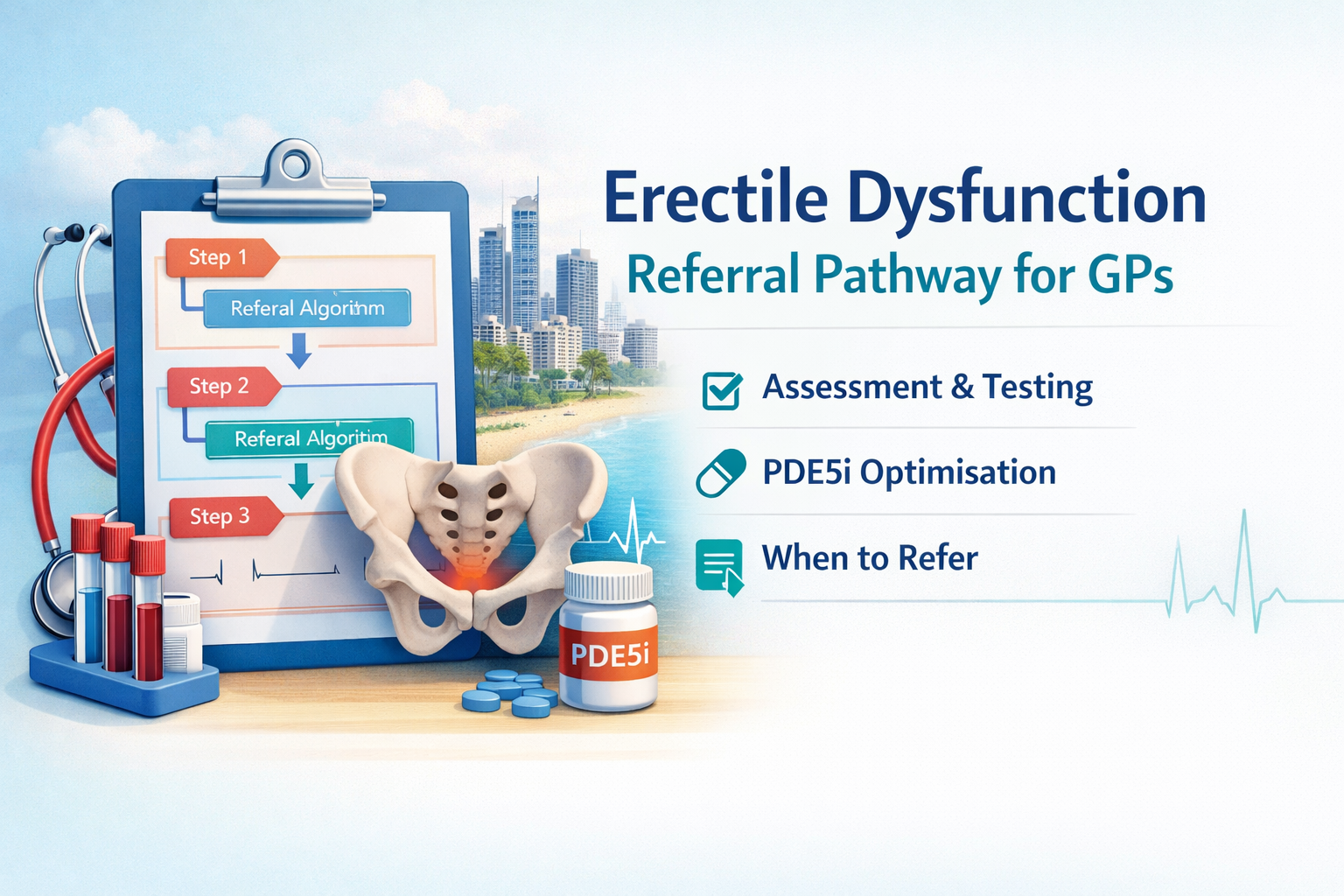
These focused pages sit before the implant decision and help patients navigate unsuccessful tablets, injection treatment, severe ED and persistent ED after prostate cancer treatment.
ED Tablets Not Working
What to review and what treatment options may reasonably come next.
Explore →Injections Don’t Suit Me
Alternatives when injections are ineffective, poorly tolerated or impractical.
Explore →Treatment-Resistant ED
Persistent erectile dysfunction despite appropriate standard treatment.
Explore →Implant vs Injections
Compare the practical differences between repeated injection treatment and surgery.
Compare →What is a penile implant?
A penile implant, also called a penile prosthesis, is an implanted medical device used to provide penile rigidity for sexual activity.
The implant is placed surgically within the erectile chambers of the penis. Implant surgery may enter the discussion when significant erectile dysfunction remains problematic despite other reasonable treatment options, when those treatments are unsuitable, or when a patient prefers a surgical option after appropriate assessment and counselling.
The implant creates rigidity mechanically. It therefore does not rely on the same erectile blood-flow response required for tablets or penile injections.
- Completely implanted within the body
- Designed to provide mechanical penile rigidity
- Inflatable and malleable designs are available
- Does not require an ED tablet or injection before each sexual encounter
- Device selection requires individual assessment
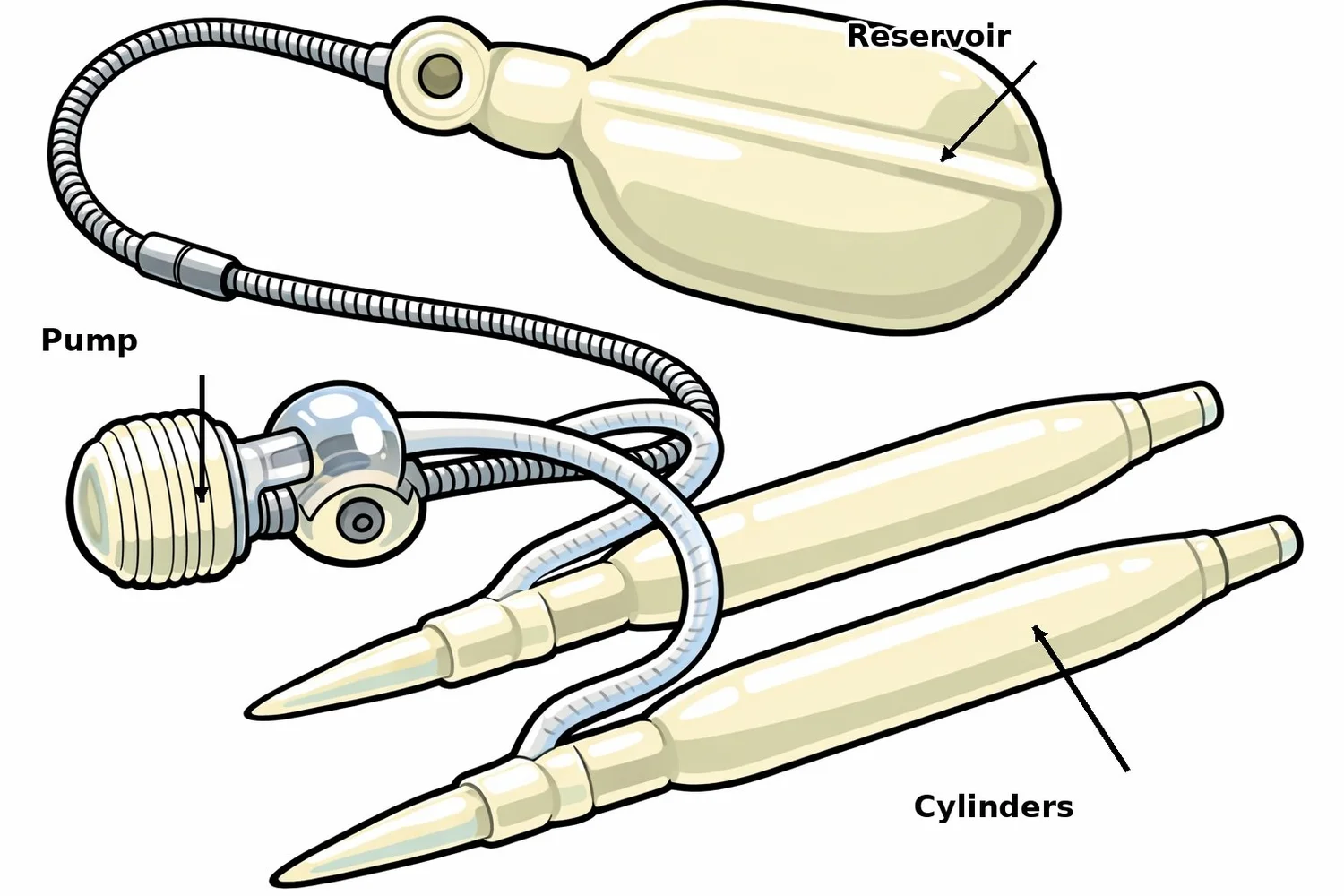
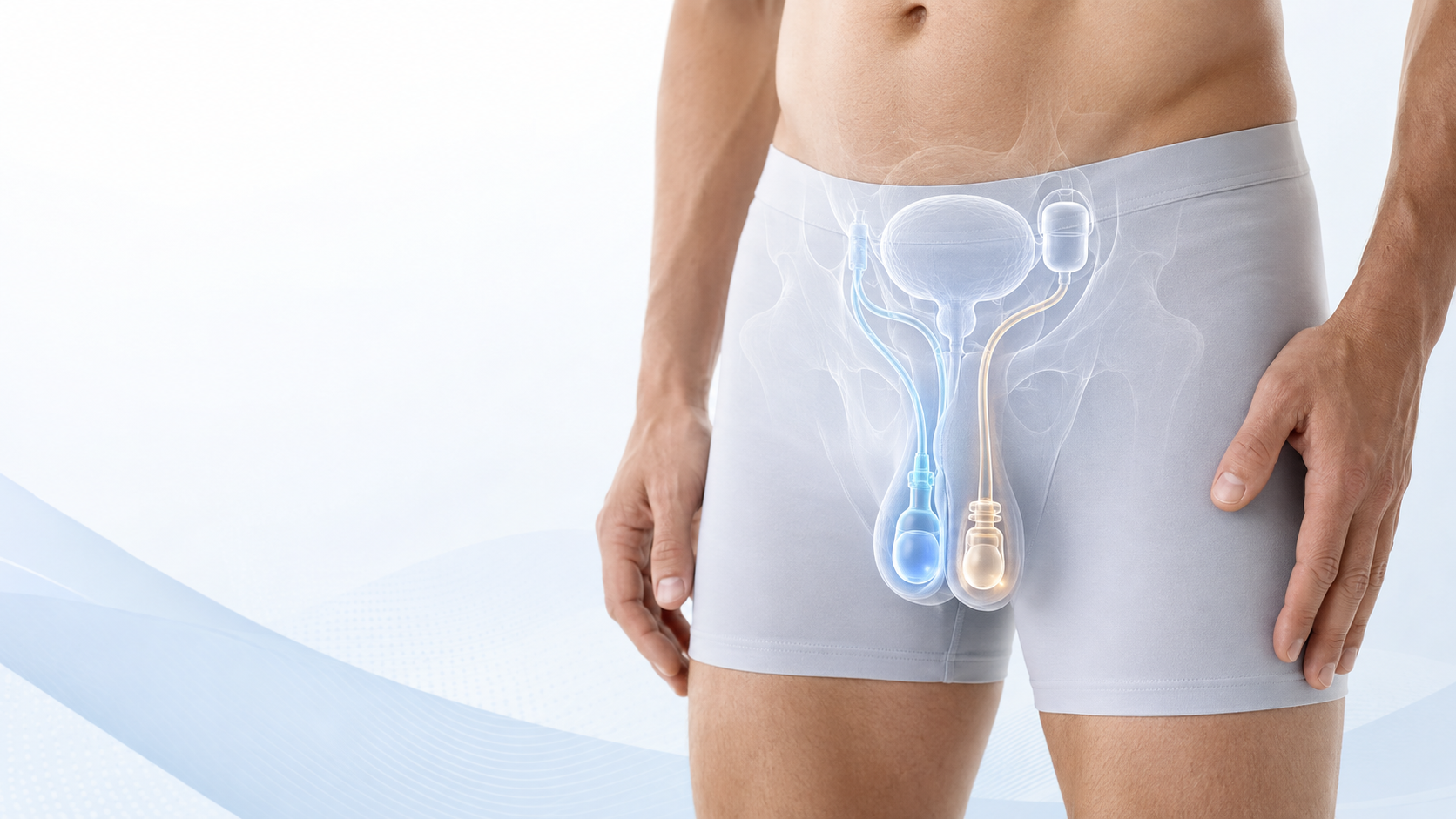
Educational illustration of the principal components of a three-piece inflatable penile implant.
Stores the fluid used to inflate the cylinders. Position can be modified when previous pelvic surgery or anatomy changes the usual route.
The patient-operated control that transfers fluid for inflation and activates the deflation mechanism.
Positioned within the paired erectile chambers and expand when fluid is transferred into them.
Simplified educational schematic. Exact component position varies with anatomy, surgical approach and previous pelvic surgery.
A three-piece implant is a system, not just two cylinders
A three-piece inflatable prosthesis typically contains paired cylinders, a scrotal pump and a fluid reservoir. Each component occupies a different anatomical space and therefore presents different surgical-planning considerations.
Previous prostate surgery, pelvic operations, hernia surgery or other altered anatomy can be relevant particularly when planning reservoir position.
When might penile implant surgery be discussed?
Implant surgery is generally considered within the wider erectile dysfunction pathway rather than in isolation.
Other options have not been satisfactory
Tablets, vacuum devices, injections or other appropriate treatments may not provide sufficient reliability, may not be tolerated or may not suit the individual patient.
ED tablets not working →ED after prostate or pelvic treatment
Persistent ED can occur following prostate surgery, radiotherapy and other pelvic treatment. Previous surgery can also influence implant planning.
ED after prostate cancer →Diabetes, vascular disease or severe ED
Some men have significant erectile dysfunction associated with diabetes, vascular disease or other medical conditions despite appropriate non-surgical management.
Treatment-resistant ED →Peyronie’s disease with poor rigidity
When significant ED accompanies curvature, narrowing or instability, erection quality and deformity need to be considered together.
Explore Peyronie's disease →Preference for a surgical pathway
Some appropriately assessed patients prefer an implanted surgical option after understanding alternatives, limitations, risks and recovery.
When to consider an implant →Penile scarring or altered anatomy
Peyronie’s disease, previous implant surgery, priapism, infection or other penile procedures can increase operative complexity.
Previous treatment hasn't worked →Difficulty with ED treatment does not automatically mean you need an implant.
The purpose of assessment is to clarify the cause and severity of erectile dysfunction, review previous treatment and establish whether implant surgery is a reasonable option for your circumstances.
Where are you in the erectile dysfunction treatment pathway?
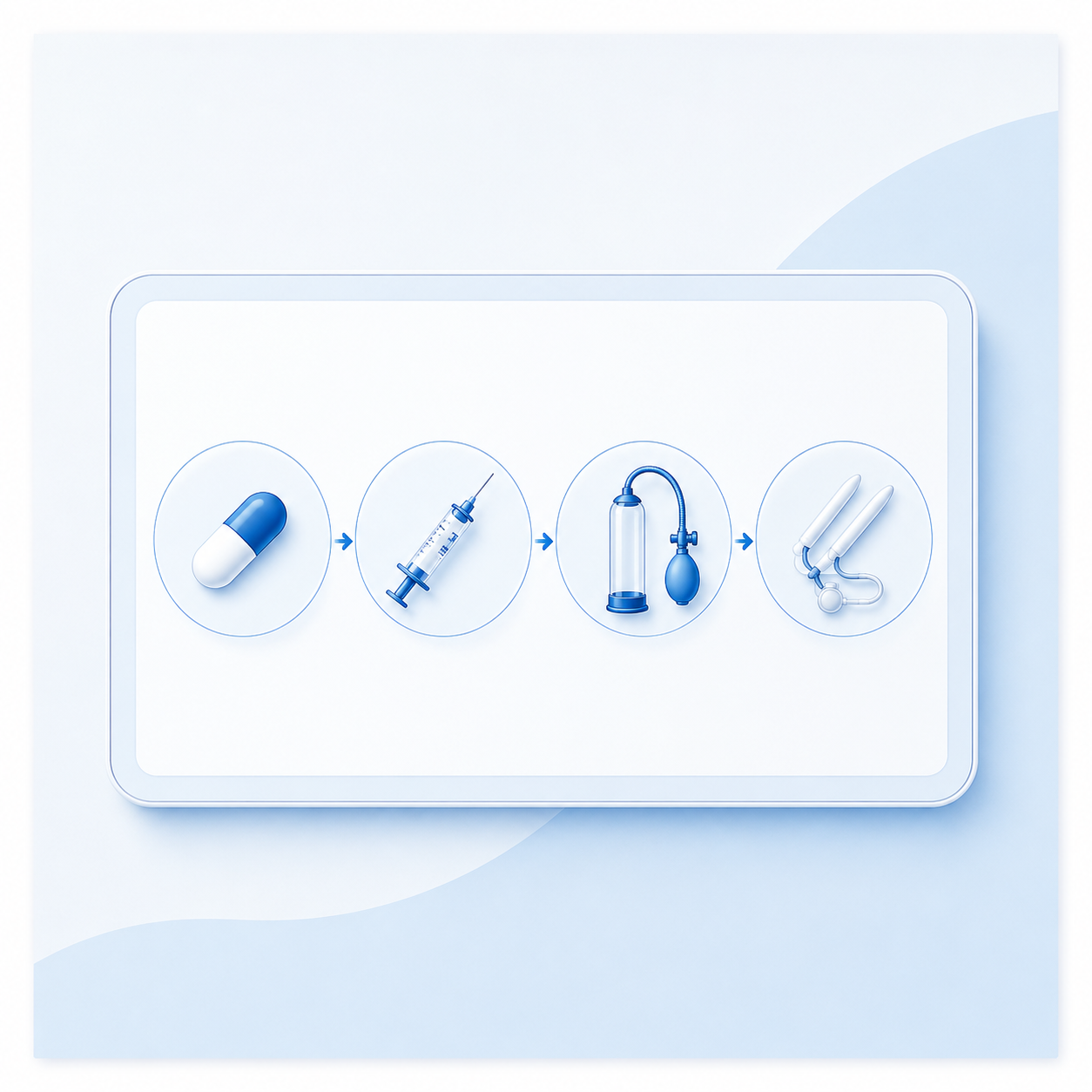
Many patients arrive at the penile implant discussion after one or more non-surgical treatments have been ineffective, unreliable, poorly tolerated or simply unsuitable.
ED tablets have not worked
Review common reasons for an inadequate response and which options may reasonably follow.
What happens next? →Injections do not suit you
Injections may be ineffective, painful, inconvenient, unreliable or unacceptable.
Explore alternatives →ED remains severe
Persistent poor rigidity despite treatment requires broader review of cause and anatomy.
Explore severe ED →An implant enters the discussion
Understand when a prosthesis may reasonably become part of treatment planning.
Consider an implant →Erectile dysfunction after prostatectomy has its own treatment pathway
Erectile function can change following radical prostatectomy, radiotherapy and other prostate cancer treatment. The pattern and severity of ED, time since treatment, rehabilitation already attempted and response to tablets or injections all help shape the next discussion.
Radical prostatectomy
Focused information on recovery, rehabilitation and treatment escalation.
Read more →Implant pathway
Understand why previous pelvic surgery matters when planning prosthetic surgery.
Implant after prostatectomy →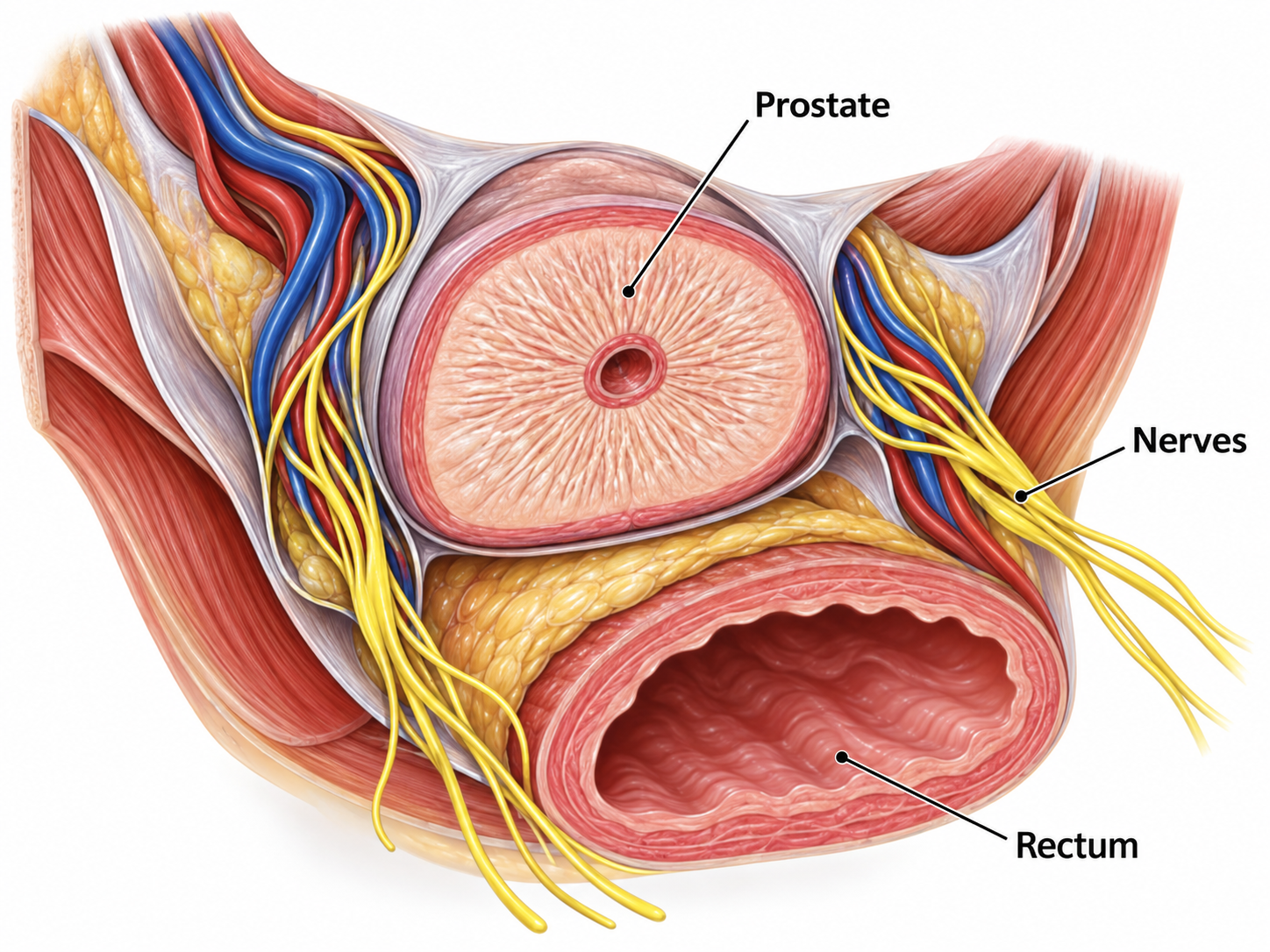
Radical prostatectomy can affect the nerve pathways involved in erections. Previous pelvic surgery is also relevant when planning a later penile implant procedure.
Penile implant or penile injections?
Both approaches may be used for significant erectile dysfunction, but they work very differently. Treatment choice should reflect response, practicality, medical factors and patient priorities rather than a simple ranking.
Penile injection therapy
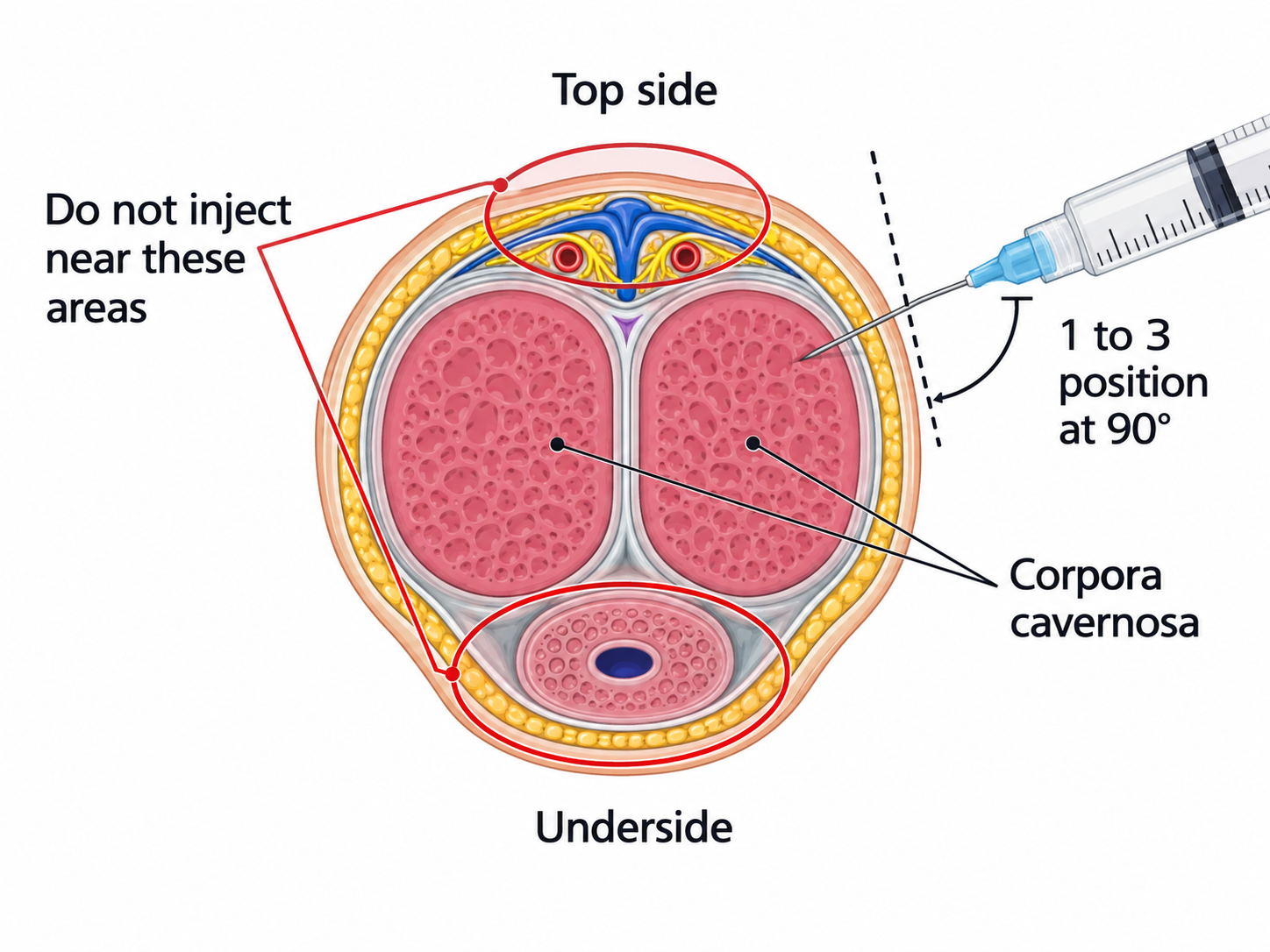
Medication is injected into the erectile tissue before sexual activity and can provide useful rigidity for some men when tablets are ineffective.
- No implant operation required
- Medication required for each use
- Dose and response can vary
- Some patients dislike needles or discomfort
- Priapism is an important potential complication
Penile implant
An implanted device provides mechanical rigidity and does not depend on an injection or tablet each time sexual activity is planned.
- Requires surgery and recovery
- Completely implanted within the body
- Provides mechanical rigidity when used
- Has surgical and device-related risks
- May eventually require revision or replacement
Inflatable or malleable penile implant?
Neither implant design is automatically better for every patient. Anatomy, hand function, previous surgery, scarring and individual priorities can all influence the discussion.
Fluid reservoir
Stores fluid when the implant is deflated.
Scrotal pump
Moves fluid into or out of the cylinders.
Paired cylinders
Increase in volume to create rigidity.
Paired bendable rods
Provide persistent structural firmness.
No separate reservoir
No hydraulic fluid-storage component is required.
No inflation pump
The implant is manually positioned rather than inflated.
Three-piece inflatable implant
An inflatable system typically includes two implanted cylinders, a pump within the scrotum and a fluid reservoir within the pelvis or lower abdomen.
- Inflates when rigidity is desired
- Can be deflated when not in use
- Requires sufficient hand function to operate
- Reservoir planning may be affected by pelvic surgery
- Contains additional mechanical components
Malleable penile implant
A malleable implant contains bendable rods positioned inside the penis. There is no scrotal inflation pump or separate fluid reservoir.
- Simpler implanted mechanical design
- Does not require repeated pump squeezing
- Manually positioned for sexual activity
- Penis remains persistently firm to some degree
- Concealability differs from an inflatable system
When deflated, most fluid is stored within the reservoir.
Repeated pump compression transfers fluid through concealed tubing.
Increasing cylinder volume creates mechanical penile rigidity.
Activating the deflation mechanism allows fluid to return to the reservoir.
The inflatable implant uses a closed hydraulic system
Activating the scrotal pump transfers fluid from the reservoir into the cylinders. This increases cylinder volume and produces penile rigidity.
A deflation mechanism allows fluid to return to the reservoir after sexual activity.
Pump feel, the number of squeezes required and the way the device cycles vary between systems, implant sizing, individual anatomy and how fully the implant is inflated.
What does a penile implant actually change?
One of the most important parts of penile implant assessment is establishing realistic expectations before surgery.
A penile implant is principally a treatment for erectile rigidity. It should not be presented as a penile enlargement procedure, and it cannot recreate every aspect of natural erectile function.
- Provide mechanical penile rigidity
- Allow an erection to be created when desired
- Provide a treatment option independent of tablets or injections
- Remain completely implanted within the body
- Provide a long-term surgical treatment pathway
- Increased penile length or girth
- Restoration of penile dimensions from years earlier
- Normal glans engorgement in every patient
- Increased sexual desire
- Restoration of orgasm, sensation or ejaculation affected by another condition
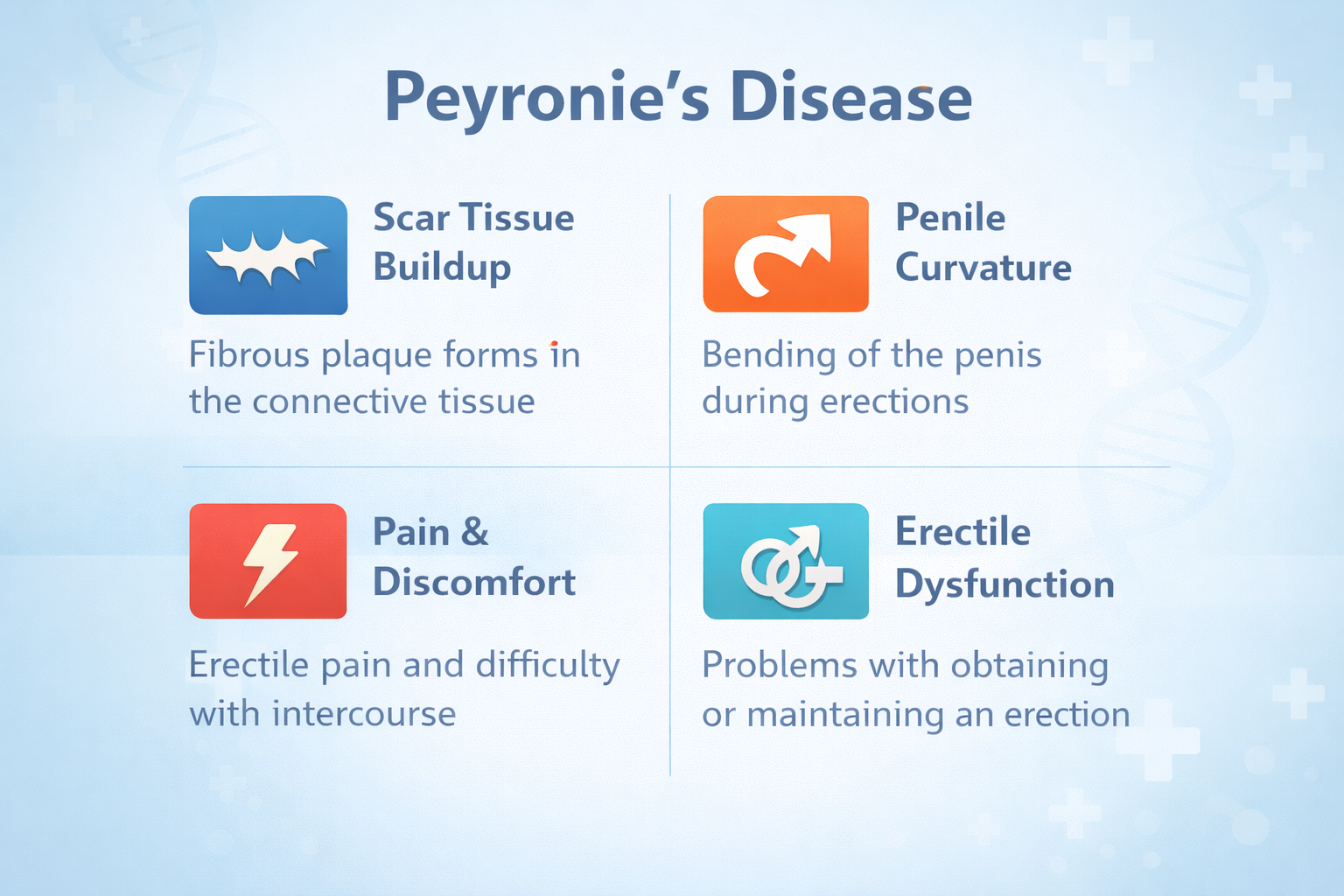
What if I have both Peyronie’s disease and ED?
Penile curvature and erectile dysfunction should not be treated as completely separate problems when both are present.
Curvature may be the main problem
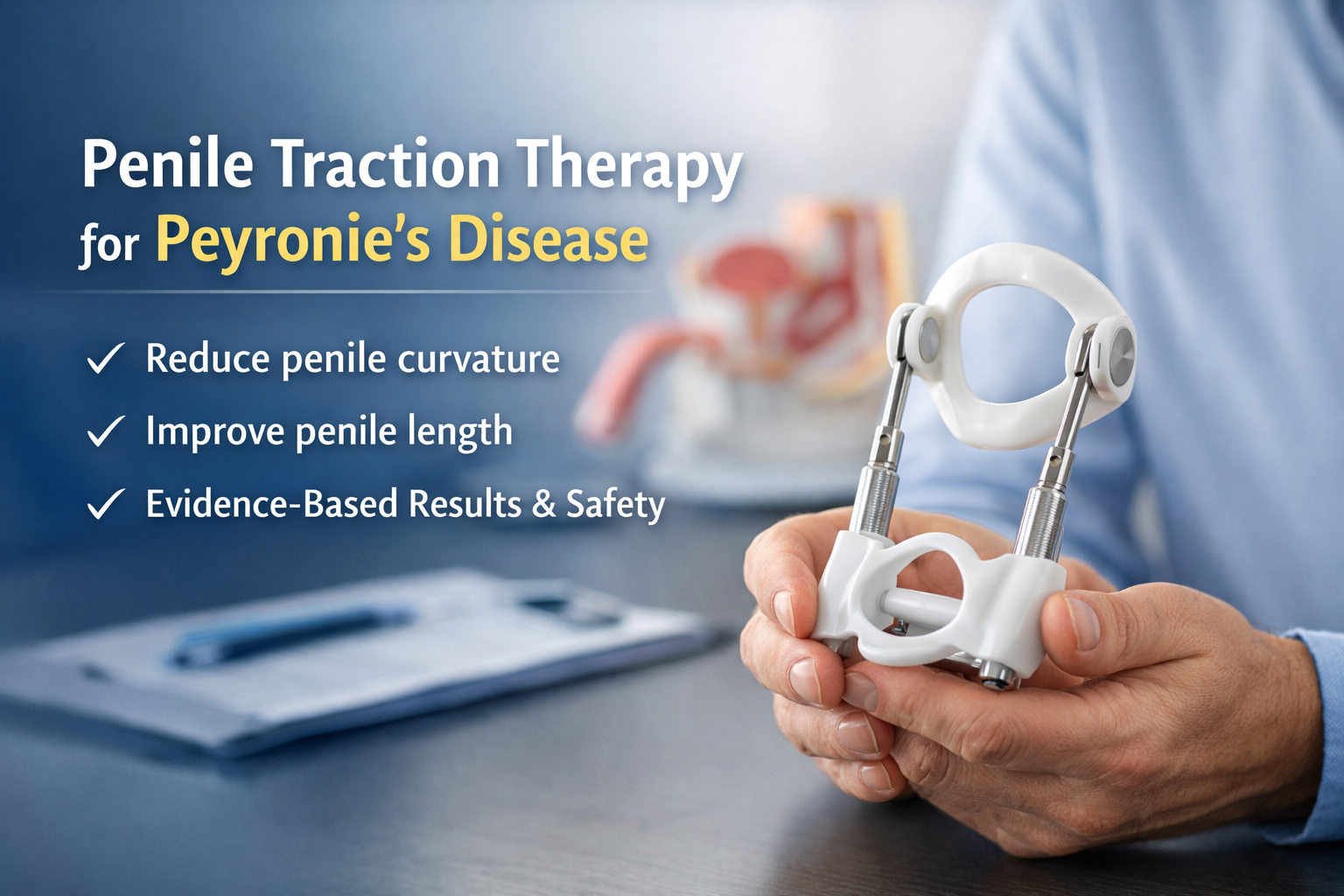
When natural erections remain reliable, management may focus more directly on penile deformity rather than implant surgery.
Straightening alone may not solve the problem
A straightening procedure does not create a stronger erection. Significant treatment-resistant ED may therefore change the surgical pathway.
Rigidity and deformity can be considered together
Implant placement may improve some curvature. Additional modelling or reconstructive manoeuvres may be required in selected patients.
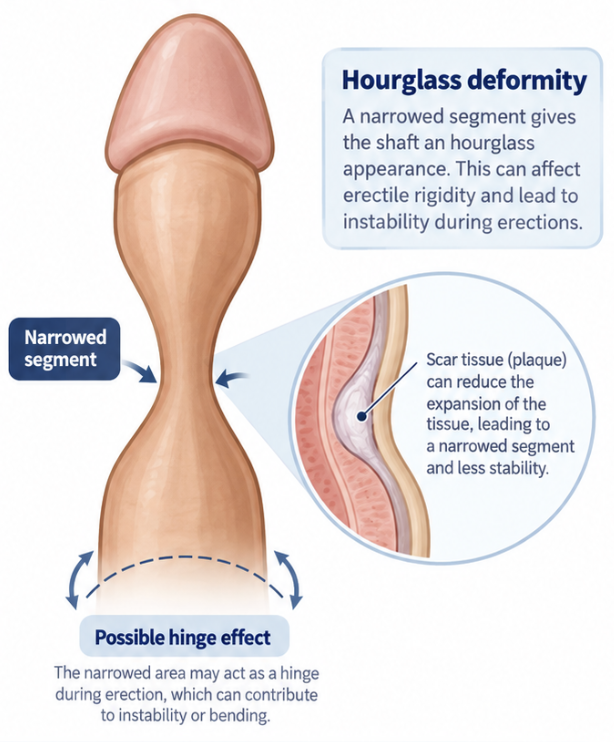
Hourglass narrowing and hinge instability can matter when erectile dysfunction and penile deformity occur together.
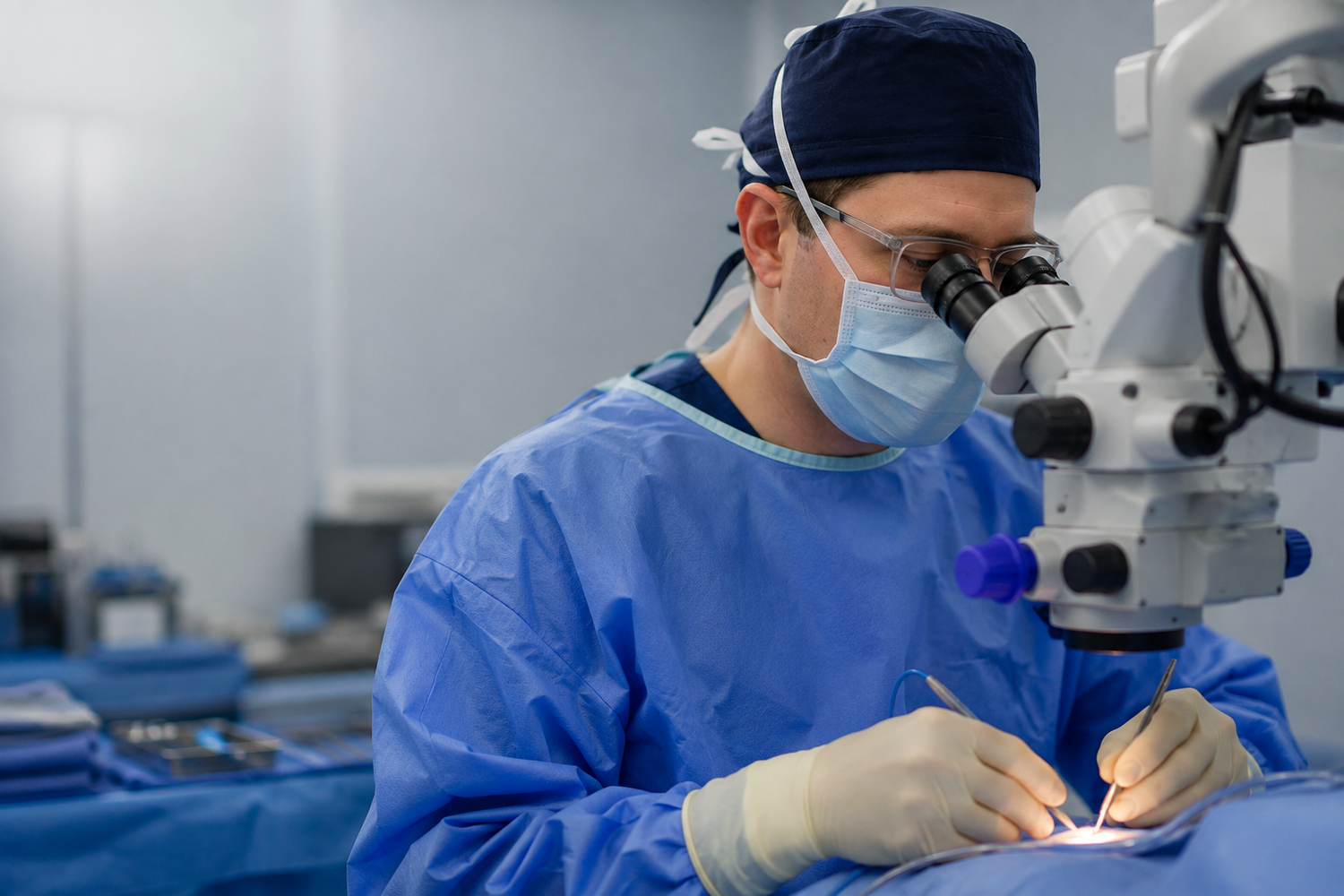
Specialist urological surgical image. Individual penile implant procedures vary according to anatomy and surgical planning.
From assessment to learning to use the implant
Exact timing and postoperative instructions vary between patients, but penile prosthetic surgery generally involves several distinct stages.
Previous radical prostate surgery, hernia surgery, Peyronie’s surgery, prior implant procedures, infection, priapism and significant fibrosis may influence component placement and operative complexity.
Assessment
Review the ED, previous treatment, health, medications, anatomy and priorities.
Planning
Discuss implant design, previous pelvic surgery, hand function, expectations and risks.
Surgery
Components are implanted under anaesthesia according to the surgical plan.
Healing
Early recovery focuses on wound care, swelling, pain and activity restrictions.
Activation
Once appropriately healed, patients are taught how to operate and cycle an inflatable device.
Recovery and implant activation are separate stages
Immediately after surgery, the priorities are wound healing, swelling, pain control, urinary function and detecting any unexpected postoperative problem.
Implant operation and cycling are introduced according to the postoperative plan once healing is sufficiently advanced. Exact instructions and timing vary.
- Early wound and swelling assessment
- Activity and lifting restrictions
- Identification of concerning symptoms
- Pump identification and handling
- Inflation and deflation teaching when appropriate
- Longer-term cycling and follow-up
Risks and limitations should be understood before surgery
Penile implant surgery is an operation involving an implanted medical device. Individual risks vary according to medical history, previous surgery, anatomy and the complexity of the procedure.
Infection
Infection can require additional treatment, implant removal and sometimes reconstructive or salvage surgery.
Mechanical problems
Implanted components can develop mechanical problems over time and may eventually require another operation.
Positioning problems
Pump, cylinder or reservoir position can occasionally cause discomfort or functional difficulty.
Pain & wound problems
Early discomfort and swelling are expected. Persistent pain or abnormal wound healing require assessment.
Erosion or tissue injury
Prosthesis components can threaten surrounding tissues, and urethral or other tissue injury is a recognised risk.
Expectations & appearance
Penile length, shape, glans fullness, pump position and the feel of an implanted erection may differ from expectations.
This is not an exhaustive list of surgical risks. Individual risks, anaesthetic considerations and device-specific information are discussed during consultation and formal informed consent.
Conceptual illustration only. Fibrosis can vary substantially after previous infection, explantation or repeated surgery.
Problems with an existing implant have their own pathway
If an implant has stopped working, become difficult to operate, changed position, become painful or developed wound or infection concerns, the priority is to establish exactly what has changed.
Revision surgery is often more complex than first-time implantation because previous surgery can alter tissue planes and produce fibrosis. Previous infection, explantation or repeated revision can further increase reconstructive complexity.
Some postoperative implant concerns require prompt assessment
Increasing pain, increasing redness or swelling, fever, wound discharge, skin breakdown or exposure of any implant component should be assessed promptly. Do not delay urgent medical care while arranging a routine or interstate appointment.
The treatment decision is about more than device mechanics
Reliability, concealability, spontaneity, confidence, partner expectations and comfort operating the device all form part of the real-life discussion.
Some patients focus primarily on obtaining predictable rigidity after years of unsuccessful ED treatment. Others have specific questions about appearance, what a partner may notice, glans firmness, sensation or returning to physical activity.


Dr Jack Crozier
Dr Jack Crozier is a Brisbane urologist and fellowship-trained andrologist whose subspecialty practice includes erectile dysfunction, penile implant surgery, Peyronie’s disease and reconstructive andrology.
His advanced andrology fellowship experience at University College London Hospitals included penile prosthetic surgery, penile reconstruction, Peyronie’s disease surgery and complex andrology.
This allows erectile function, penile anatomy, deformity, fibrosis, previous surgery and potential future revision requirements to be considered as part of the same treatment discussion.
Travelling to Brisbane for penile implant surgery?
Patients may seek penile prosthetic assessment from regional Queensland, interstate or overseas for first-time implantation, ED after prostatectomy, Peyronie’s disease with erectile dysfunction, previous implant problems or complex revision surgery.
Where clinically appropriate, existing records can be useful before major travel arrangements are made.
- Previous urology correspondence
- Pelvic or penile operation reports
- Previous implant identification information
- Imaging and relevant investigation results
- Previous infection or implant removal history

Major travel arrangements are best considered once the likely assessment and treatment pathway is clearer.
Explore penile implant information in more detail
These dedicated guides address the practical questions patients commonly ask before and after penile implant surgery.
Penile Implant Discussion Guide
Prepare questions about implant designs, expectations, recovery and surgical planning.
Open guide → Revision surgeryPenile Implant Revision
Mechanical problems, infection, component position, previous surgery and complex fibrosis.
Explore revision → Penile lengthWill an Implant Make My Penis Shorter?
Penile dimensions, implant sizing, pre-existing shortening and realistic expectations.
Read article → RelationshipsCan My Partner Tell I Have an Implant?
Appearance, concealability, intimacy and what a partner may notice.
Read article → Implant functionMy Implant Pump Has Moved
What pump position may mean and when a change should be assessed.
Read article → Using your implantHow Many Squeezes Should Inflation Take?
Why there is no universal normal squeeze count and which changes matter more.
Read article → Glans firmnessWhy Is the Glans Still Soft?
Understand why implant cylinders and glans engorgement are different.
Read article → Pump functionPump Hard to Squeeze
Practical information about pump feel and changes in implant cycling.
Read article → Sexual functionWhat Does Sex Feel Like?
Rigidity, sensation, orgasm and what a prosthesis does and does not alter.
Read article →Erectile dysfunction pathways leading into the implant discussion
These focused pages connect the main penile implant page with the questions commonly asked after tablets, injections or prostate cancer treatment have not restored satisfactory erections.
ED Tablets Not Working
Review reasons for poor response and the next treatment stages.
Read guide → 02 · Injection limitationsPenile Injections — What If They Don’t Suit Me?
Alternatives when injections are ineffective, impractical or unsuitable.
Read guide → 03 · Refractory EDSevere / Treatment-Resistant ED
A focused pathway for persistent severe ED after treatment.
Read guide → 04 · Implant decisionWhen Should You Consider an Implant?
When penile prosthetic surgery may reasonably enter the discussion.
Read guide → 05 · Compare treatmentsPenile Implant vs Penile Injections
Compare repeated injection therapy with an implanted surgical option.
Compare → 06 · Prostate cancerED After Prostate Cancer Treatment
Sexual function and ED treatment after prostate cancer care.
Read guide → 07 · Radical prostatectomyED After Radical Prostatectomy
Recovery, rehabilitation and treatment escalation after surgery.
Read guide → 08 · Post-prostatectomy implantPenile Implant After Prostatectomy
Focused implant planning after previous radical prostatectomy.
Read guide →Penile implant surgery FAQs
Implant surgery may be worth discussing when erectile dysfunction remains a significant problem despite other reasonable treatment, when other treatments are unsuitable or when you are considering a surgical option after appropriate counselling. Assessment should review the cause of ED, previous treatment, health conditions, penile anatomy and expectations.
No. Previous tablet response is only one part of assessment. Other treatment options may remain relevant depending on the underlying cause, severity, previous treatment and individual priorities.
Effectiveness is only one consideration. Pain, inconvenience, dislike of needles, reliability, spontaneity and individual preference can all influence whether injection therapy remains acceptable.
Penile implant surgery can be considered in appropriately selected men with persistent erectile dysfunction after radical prostatectomy. Previous pelvic surgery is relevant because it can influence anatomy and operative planning.
There is no single implant design that is best for every patient. Hand function, anatomy, scarring, previous pelvic or penile surgery and individual priorities should be considered when discussing inflatable and malleable options.
A penile implant is designed to create rigidity rather than increase penile length. Long-standing ED, prostate treatment, Peyronie’s disease and fibrosis may already have affected dimensions before surgery. Implant sizing is based on the available internal corporal dimensions measured during the operation.
The implant is designed to provide penile rigidity. It does not itself create sexual desire, sensation or orgasm. Other conditions, previous surgery and medications can independently affect these aspects of sexual function.
The implant cylinders principally provide rigidity within the penile shaft. The glans is anatomically separate and continues to depend on remaining natural blood flow and arousal for engorgement. Some patients therefore notice that the glans remains softer than the implanted shaft.
In selected men with significant ED and Peyronie’s disease, implant surgery can form part of a pathway addressing rigidity and penile deformity together. Implant placement may improve some curvature, while additional straightening or reconstructive techniques may occasionally be required.
There is no fixed lifespan that applies to every implant. Penile implants are mechanical devices and can function for many years, but mechanical failure or another complication can eventually require revision, replacement or removal.
The implant should first be assessed to determine whether the problem relates to device operation, pump position, a mechanical component, fluid loss, cylinder position or another issue. Revision surgery is a separate clinical pathway from first-time implantation.
Increasing pain, redness, rapidly increasing swelling, fever, wound discharge, skin breakdown or exposure of any implant component warrant prompt medical assessment. A significant new change in implant position or function should also be reviewed.
Yes. Problems with an implant inserted elsewhere can be assessed. If available, bring implant identification information, the original operation report, details of previous revision surgery and records relating to previous infection or implant removal.
Where clinically appropriate, previous records and implant information may help clarify what further assessment is required before major travel arrangements are made. An in-person examination is still necessary for many aspects of definitive surgical planning.
Considering penile implant surgery?
A specialist consultation can help clarify whether implant surgery is appropriate, how previous erectile dysfunction treatment, prostate surgery or penile anatomy may influence the operation, and which questions should be addressed before making a decision.
Medical information disclaimer: This page provides general educational information only and does not provide individual medical advice, diagnosis or a treatment recommendation. Penile implant surgery involves an implanted medical device and has potential benefits, limitations and risks. Appropriate treatment, implant design, surgical technique and postoperative care depend on individual medical history, anatomy, previous treatment, examination findings and informed patient preferences. Product availability, specifications and regulatory information can change. Individual device information should be discussed with an appropriately qualified clinician as part of informed consent. Seek prompt medical assessment for significant postoperative pain, fever, increasing redness or swelling, wound discharge, skin breakdown or exposure of an implant component.
Explore More About Penile Implant Surgery



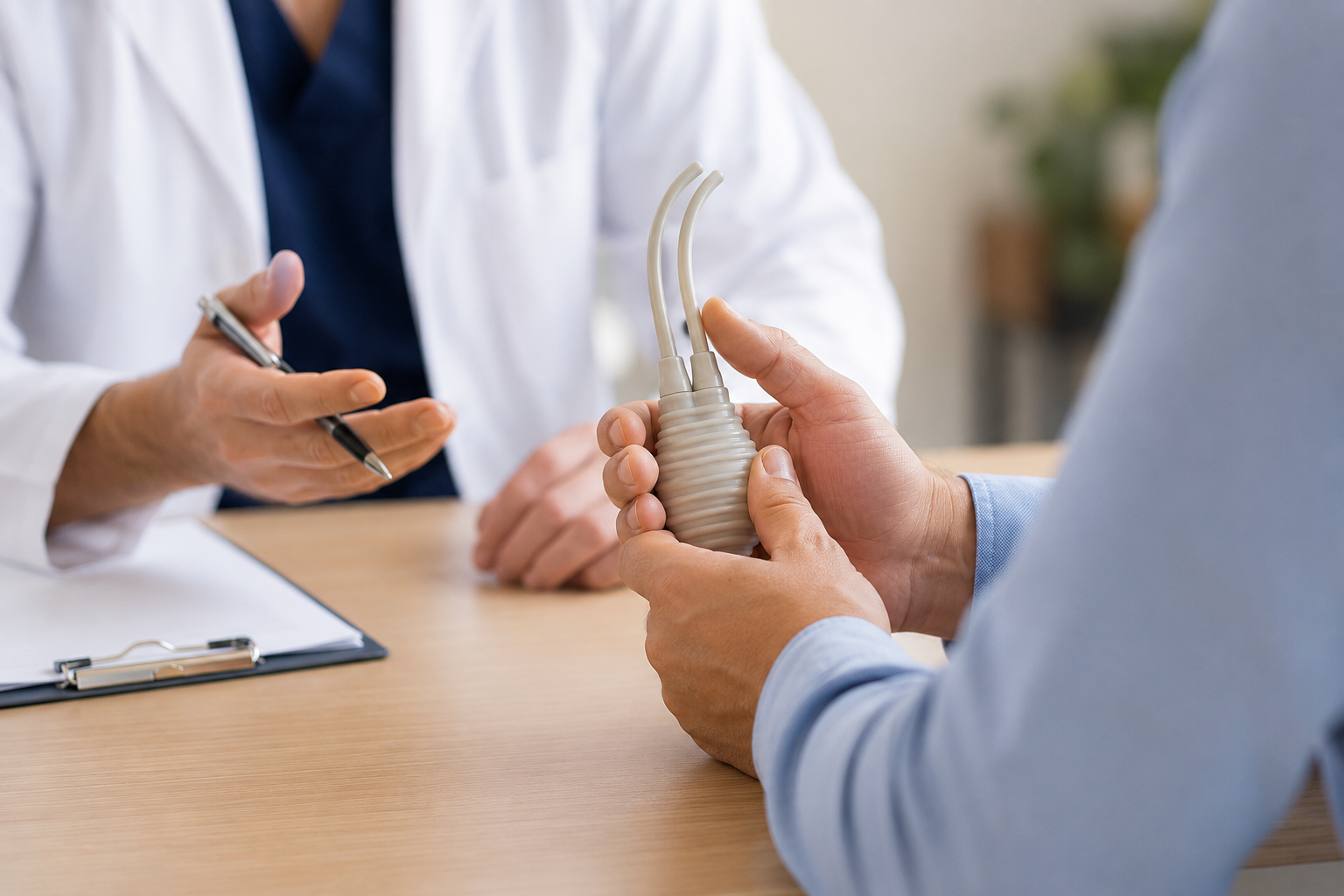

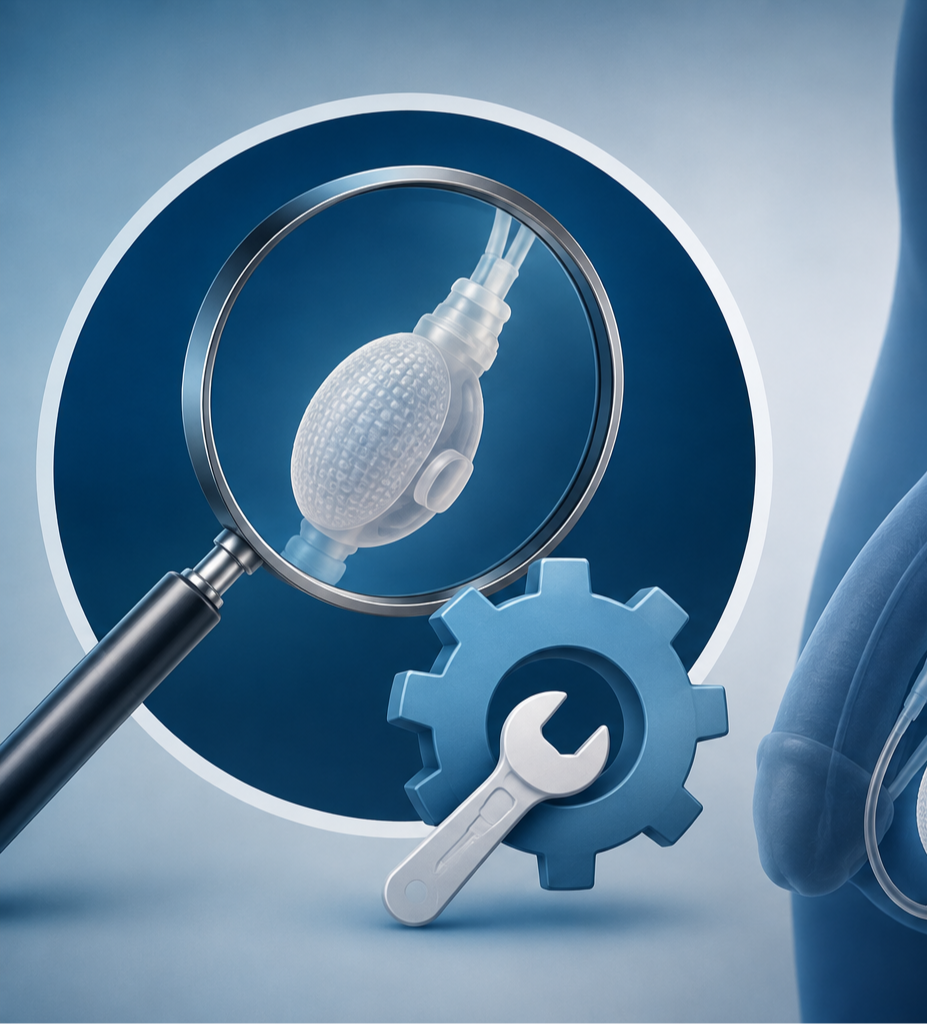




Penile Implant Revision Surgery
Problems with an existing penile implant, including mechanical failure, positioning concerns, infection, erosion or previous implant surgery.