Penile & Testicular Cancer Care
Specialist assessment and surgical care for penile cancer, testicular cancer and selected testicular or paratesticular tumours, with consideration of cancer control, fertility, function and reconstruction where clinically appropriate.
The first priority is to establish which cancer or tumour pathway applies before deciding on surgery, surveillance or further staging.
Search conditions, treatments & patient information
Search for a diagnosis, symptom, operation or patient pathway. The search also checks available website endpoints from the site map where possible.
A penile lesion or testicular lump does not automatically mean cancer
Penile abnormalities, intratesticular masses and lumps beside the testicle can arise from very different conditions. Examination, imaging and pathology where relevant help identify the correct pathway.
The aim is not to assume the worst or to perform the most extensive operation. It is to establish the likely diagnosis and then select an appropriate oncological, surgical or surveillance pathway.
A website or photograph cannot reliably determine whether a penile lesion or testicular lump is cancerous.

Three different problems — three dedicated pathways
Penile cancer, conventional testicular cancer and selected testicular masses require different assessment and surgical strategies.
Penile Cancer
Assessment of persistent penile lesions, penile intraepithelial neoplasia and confirmed penile cancer.
- Biopsy and diagnosis
- Penile-preserving surgery
- Groin lymph-node staging
- Advanced disease pathways
- Reconstruction after treatment
Testicular Cancer
Dedicated pathway for a suspicious intratesticular mass or confirmed germ-cell tumour.
- Ultrasound and tumour markers
- Radical inguinal orchidectomy
- Fertility preservation
- Pathology and staging
- Surveillance and further treatment
Testicular Masses & Testis-Sparing Surgery
A separate pathway for selected masses where preservation of functioning testicular tissue may be considered.
- Small or indeterminate masses
- Selected solitary-testis situations
- Bilateral lesions
- Intra-operative frozen section
- Testicular tissue preservation
Testis-sparing surgery is a selected approach and is not the routine substitute for radical orchidectomy when a typical germ-cell cancer is strongly suspected.
Explore Testis-Sparing SurgeryA complete penile cancer surgical pathway
Penile cancer management depends on tumour pathology, location, depth of invasion and lymph-node risk.
Cancer control remains the priority. Where oncologically appropriate, treatment planning can also consider penile preservation, urinary function, sexual function and reconstruction.
The dedicated penile cancer page provides the overall diagnostic and treatment pathway, while the pages below explain individual surgical decisions in greater detail.
Penile-Preserving Surgery
Understand when penile tissue may be preserved and how circumcision, local excision, resurfacing, glansectomy and more extensive surgery fit together.
Compare penile cancer operations → PeIN & superficial diseaseGlans Resurfacing
Organ-preserving surgery in which abnormal surface tissue is removed while the deeper glans is retained, commonly followed by skin-graft reconstruction.
Explore glans resurfacing → Selected invasive glans cancerGlansectomy & Neoglans Reconstruction
Partial or total removal of the glans may allow preservation of the penile shaft in appropriately selected disease.
Explore glansectomy → Regional cancer stagingGroin Lymph Node Staging
Learn about clinically node-negative groins, dynamic sentinel node biopsy, suspicious nodes and inguinal or pelvic lymph-node treatment.
Explore lymph-node staging →Penile cancer and the regional lymph-node pathway
Treatment of the primary penile tumour and management of the lymph nodes are related but separate decisions.
Penile Cancer Reconstruction After Surgery
Dedicated information about skin grafting, neoglans reconstruction, urinary reconstruction, scar revision and functional problems following previous penile cancer surgery.
Cancer treatment and fertility planning
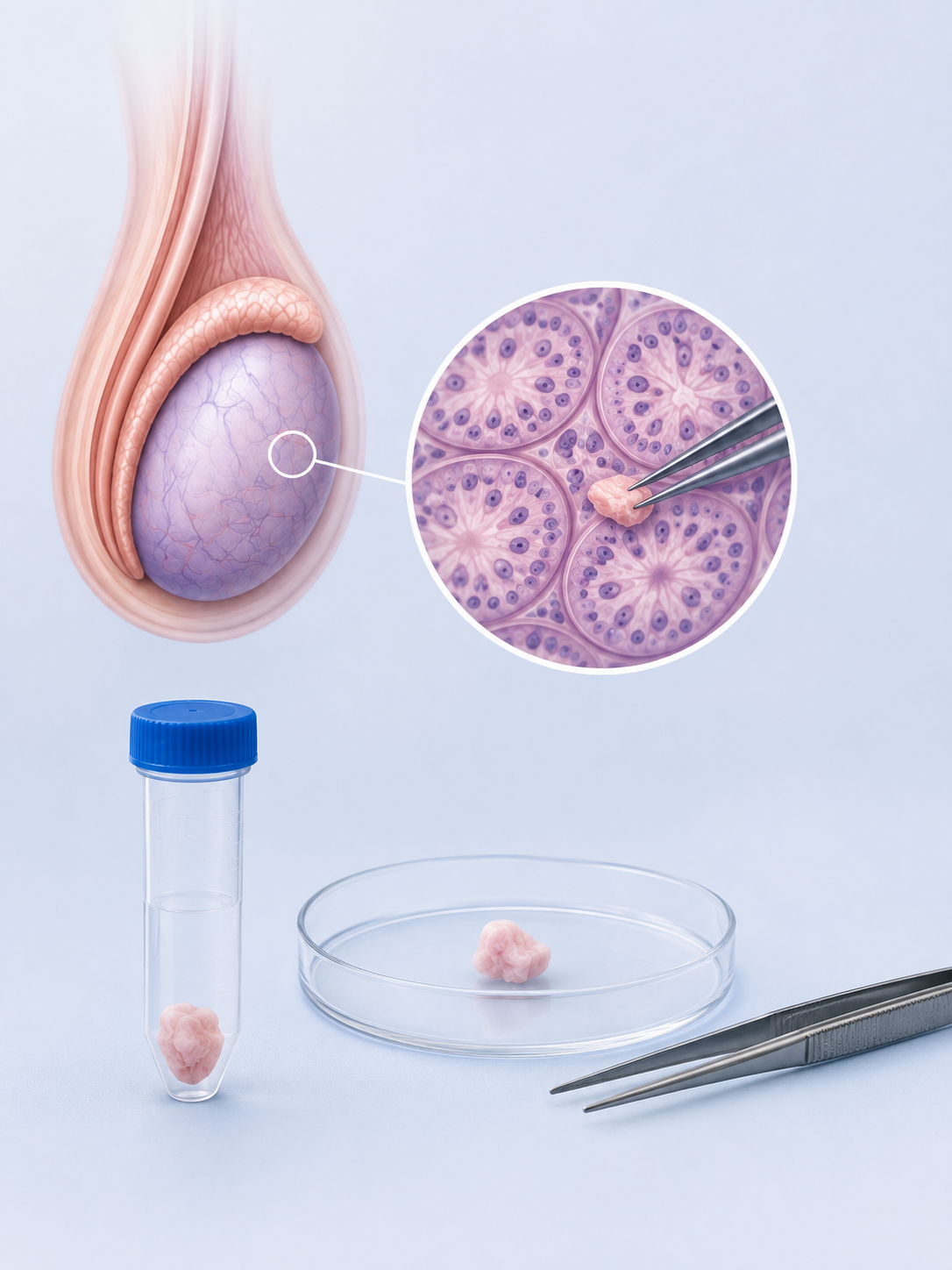
A typical testicular mass suspicious for germ-cell cancer follows a different pathway from a small indeterminate lesion.
Initial assessment commonly involves examination, high-quality scrotal ultrasound and serum tumour markers.
When a germ-cell tumour is suspected, radical inguinal orchidectomy remains the standard initial operation. Final pathology, post-operative tumour markers and staging then determine whether surveillance or further oncological treatment is appropriate.
A suspicious intratesticular mass still requires appropriate assessment.
How a suspicious testicular mass is assessed
History & examination
Both testes are examined and relevant history is reviewed, including previous undescended testis, prior cancer and fertility considerations.
Scrotal ultrasound
Ultrasound helps determine whether a mass is within the testicle and assesses the lesion and opposite testis.
Tumour markers
AFP, beta-hCG and LDH can contribute to diagnosis, staging and subsequent follow-up.
Select the surgical pathway
A mass strongly suspicious for a germ-cell tumour commonly proceeds through an inguinal surgical approach.

Radical inguinal orchidectomy
When a typical testicular germ-cell cancer is suspected, removal of the affected testicle through an incision in the groin is the standard initial surgical pathway.
Understand the Testicular Cancer PathwayNot every testicular or scrotal mass is conventional testicular cancer
Several related problems deserve their own dedicated assessment pathway rather than being grouped together with germ-cell cancer.
Testicular Masses & Testis-Sparing Surgery
Assessment of small or indeterminate masses and selected situations where preserving functioning testicular tissue may be reasonable.
Testis-sparing pathway → Mass beside the testicleParatesticular Tumours
Epididymal, spermatic-cord and other masses beside the testis have a different differential diagnosis and surgical pathway.
Explore paratesticular tumours → Cancer-risk contextUndescended Testis in Adults
Adult cryptorchidism requires consideration of testicular position, fertility, hormone function, cancer risk and whether preservation or orchidectomy should be discussed.
Explore adult undescended testis → After orchidectomyTesticular Prosthesis
A testicular prosthesis is optional after orchidectomy and may be considered during the original operation or as a later procedure.
Testicular prosthesis information →The right treatment begins with identifying where the abnormality arises
Penile lesion
Persistent sores, growths, bleeding or skin changes may require examination, biopsy or review of existing pathology before treatment is selected.
Penile cancer assessment →Mass within the testicle
Intratesticular solid masses require appropriate assessment because testicular cancer is an important diagnosis to exclude.
Testicular cancer assessment →Small or indeterminate testicular lesion
Not every ultrasound-detected testicular lesion behaves like a typical germ-cell cancer. Selected lesions may warrant a testis-preserving discussion.
Testis-sparing pathway →Mass beside the testicle
Epididymal, spermatic-cord and other paratesticular lesions follow a different diagnostic and surgical pathway.
Paratesticular tumour pathway →Cancer control comes first — but the wider consequences matter
Where clinically relevant, treatment planning can also consider fertility, testosterone production, urinary function, sexual function, reconstruction and body image.
Penile preservation & reconstruction
Selected penile cancers may allow organ-preserving surgery. Reconstruction can be incorporated when tumour removal affects penile skin, glans anatomy or the urethra.
Reconstruction after penile cancer →Fertility before testicular cancer treatment
Semen assessment and sperm cryopreservation may be considered before orchidectomy or subsequent cancer treatment when future fertility is relevant and timing allows.
Male fertility information →Testicular function & body image
The remaining testis often provides ongoing hormone production after unilateral orchidectomy. Testosterone, fertility and the option of a testicular prosthesis can be discussed where relevant.
Testicular prosthesis →
Consider reproductive planning early
Testicular cancer commonly occurs during reproductive years. Where future fertility is important, the fertility discussion is ideally held before treatment whenever clinically feasible.
- Baseline semen analysis when appropriate
- Sperm cryopreservation where feasible
- Assessment of the opposite testicle
- Specialised planning for severe sperm impairment
You do not need to know the diagnosis before arranging assessment
The initial goal is to establish what the abnormality is and then direct treatment toward the appropriate cancer, tumour, fertility or reconstructive pathway.
Review the problem
Symptoms, examination findings, previous imaging, pathology and relevant medical or surgical history are reviewed.
Establish the likely diagnosis
Depending on the problem, assessment may involve ultrasound, tumour-marker blood tests, biopsy, pathology review or further imaging.
Choose the appropriate pathway
The next step may be surveillance, cancer surgery, testis-sparing surgery in a selected situation, regional staging or another investigation.
Consider wider implications
Fertility, testosterone, urinary function, sexual function, reconstruction and prosthesis options can be considered where relevant.

Dr Jack Crozier
Dr Jack Crozier is a Brisbane urologist with fellowship experience in uro-oncology, andrology and reconstructive urology.
His practice includes penile cancer, testicular and paratesticular tumours, testicular surgery, male fertility and complex genital reconstruction. This allows relevant oncological, fertility, functional and reconstructive considerations to be assessed together where appropriate.
Travelling to Brisbane for an opinion or treatment?
Existing investigations can often be useful before major travel arrangements are made.
Relevant records may include:
An in-person examination or additional investigations may still be necessary before definitive treatment can be confirmed.

Related areas of care
Penile & Testicular Cancer FAQs
Does a penile lesion mean I have penile cancer?
No. Several benign conditions can cause penile skin changes and lesions. Persistent ulcers, growths, bleeding areas or lesions that do not heal should nevertheless be assessed.
Does penile cancer always require removal of the penis?
No. Selected superficial and localised penile cancers may allow penile-preserving treatment. More extensive disease can require more extensive surgery.
Explore penile-preserving surgery →Why do penile cancer patients sometimes need groin lymph-node staging?
Penile cancer commonly spreads first to the inguinal lymph nodes. The appropriate groin pathway depends on the primary tumour pathology and whether lymph nodes are clinically suspicious.
Read the groin lymph-node staging guide →Is a testicular cancer lump usually painful?
Testicular cancer frequently presents without significant pain. A new persistent lump, focal firmness or change within a testicle deserves assessment even when it does not hurt.
Do normal tumour markers rule out testicular cancer?
No. Some testicular cancers do not produce elevated serum tumour markers. Ultrasound, clinical findings and surgical pathology remain important.
Does every suspected testicular cancer require removal of the testicle?
Radical inguinal orchidectomy remains the standard initial operation for a typical mass strongly suspicious for a germ-cell cancer. Selected small or indeterminate lesions may have a different testis-sparing pathway.
Explore testis-sparing surgery →Can testicular cancer treatment affect fertility?
Yes. Baseline sperm production, the condition of the opposite testis and any subsequent cancer treatment can affect fertility. Fertility preservation can be discussed before treatment where clinically appropriate.
Should sperm be frozen before testicular cancer surgery?
Sperm cryopreservation should be discussed when future fertility is relevant and treatment timing allows. The need and feasibility vary between individuals.
Can I have a testicular prosthesis after orchidectomy?
Potentially. A prosthesis is optional and can be discussed for placement at the time of orchidectomy or as a later procedure depending on individual circumstances.
Testicular prosthesis information →What if a lump is beside rather than inside the testicle?
Masses arising from the epididymis, spermatic cord or other tissues around the testis are considered paratesticular and have a different range of potential diagnoses.
Explore paratesticular tumours →Does a previous undescended testis matter?
Yes. A history of cryptorchidism is relevant to testicular cancer risk, testicular function and fertility and should be included when a new testicular problem is assessed.
Can penile cancer surgery be reconstructed?
In selected circumstances reconstruction can include skin grafting, neoglans reconstruction, urethral reconstruction or later revision after previous cancer surgery.
Explore penile cancer reconstruction →Can patients from interstate or overseas seek an opinion?
Potentially. Existing pathology, imaging, tumour-marker results and previous operative reports can often be useful for preliminary planning, although an in-person assessment or further investigations may still be required.
Interstate & international information →
Concerned about a penile lesion, testicular lump or previous cancer diagnosis?
Assessment can help clarify the diagnosis and determine whether the appropriate next step is surveillance, biopsy, cancer surgery, testis-sparing surgery in a selected situation, lymph-node staging, fertility preservation or reconstructive treatment.
Medical information disclaimer: This page provides general educational information and does not replace individual medical advice, diagnosis, multidisciplinary cancer review or informed consent. A website cannot determine whether a penile lesion, testicular lump or imaging abnormality is cancer. Investigation and treatment depend on examination, imaging, pathology, tumour markers where relevant, disease stage, previous treatment, fertility and functional considerations, general health and individual circumstances. Surgical and cancer treatments have potential benefits, limitations and risks that require individual assessment.
Urgent testicular pain: Sudden severe testicular pain requires urgent medical assessment because testicular torsion is a time-sensitive emergency.
Explore More About Penile & Testicular Cancer