Kidney Stones &
Endourology
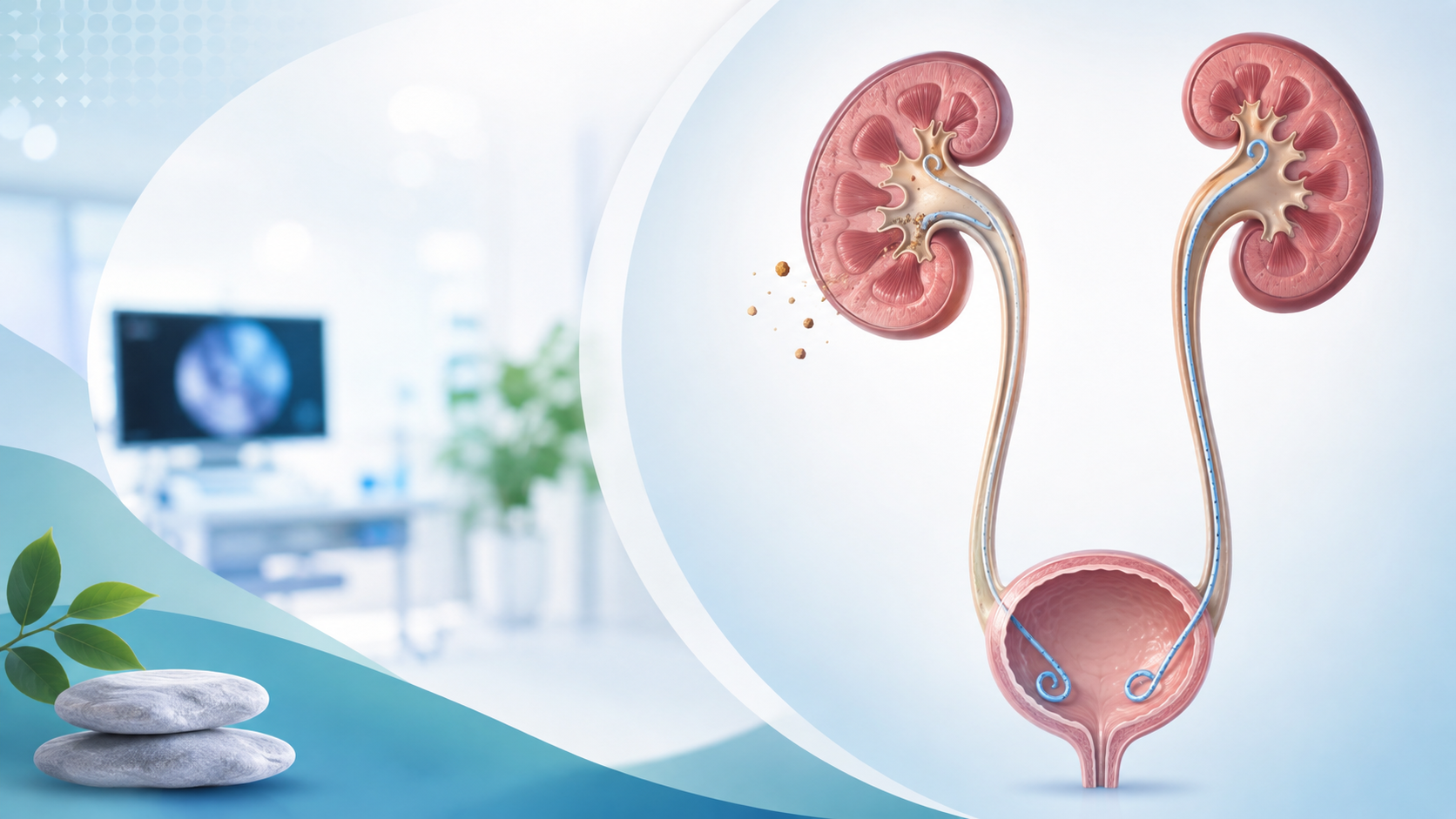
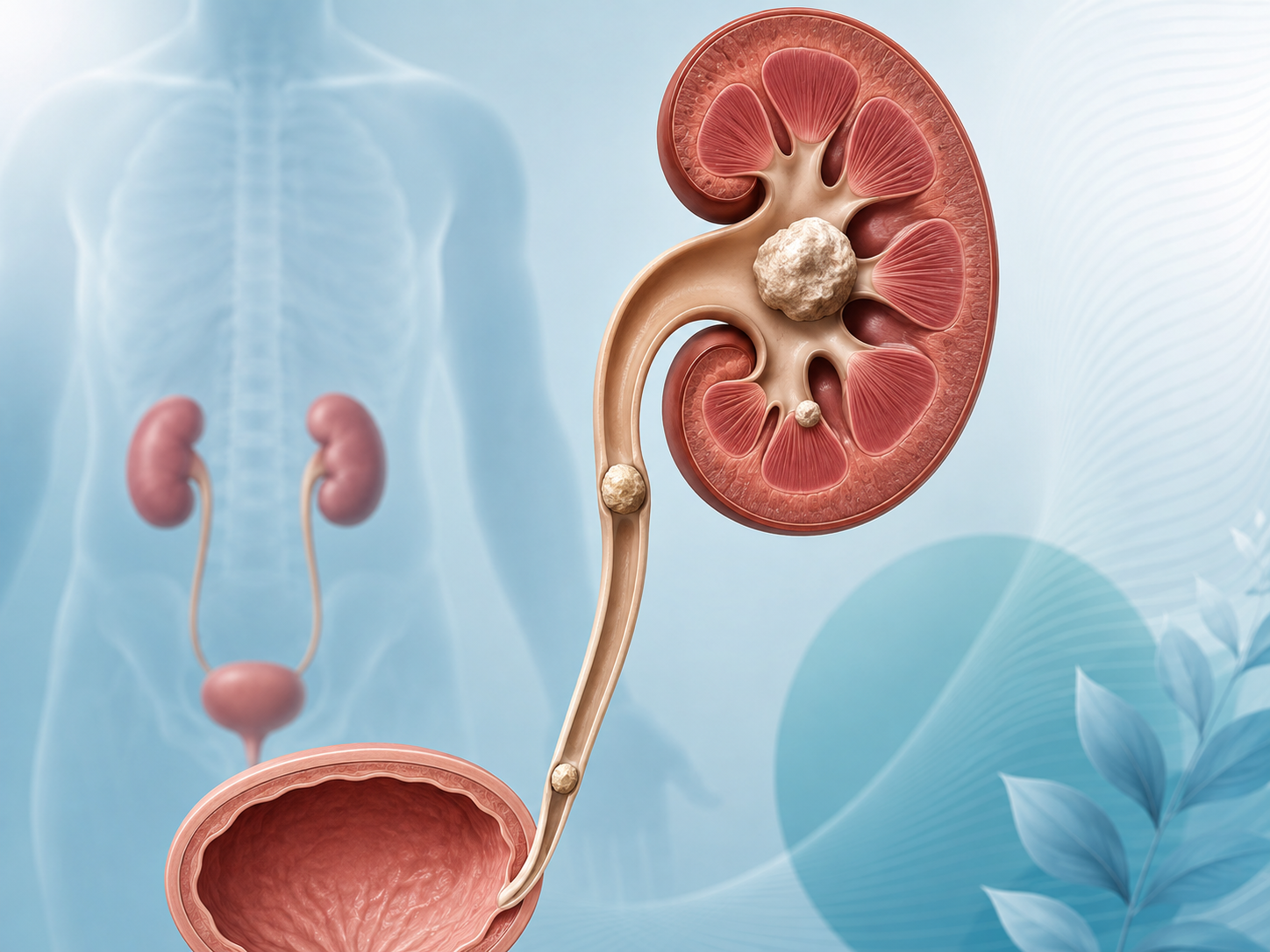
Assessment and treatment of kidney and ureteric stones, from stones suitable for observation through to ureteroscopy, laser stone surgery, shock-wave lithotripsy, PCNL and complex stone treatment.
Search the kidney stone pathway
Search a condition, scan finding, procedure or question to go directly to the most relevant kidney-stone page.
Search the whole websiteStart typing to find a relevant condition, treatment or patient guide.
An infected and obstructed urinary system can require emergency drainage. Do not wait for a routine appointment if stone symptoms occur with fever, chills, significant deterioration or inability to pass urine.
What do you already know about your stone?
You do not need to know which operation you need. Start with the information you already have and move into the most relevant pathway.
I have a kidney stone
Understand symptoms, investigations, CT imaging, observation and the main treatment pathways.
Explore kidney stones 02 STONE IN THE URETERI have renal colic
Learn about spontaneous passage, obstruction and when a ureteric stone may require active treatment.
Explore ureteric stones 03 DECISIONDoes my stone need surgery?
Understand the factors that influence observation, spontaneous passage and active treatment.
When surgery is considered 04 PREVENTIONMy stones keep returning
Explore stone analysis, metabolic assessment, 24-hour urine testing and individualised prevention.
Explore preventionKidney Stone
Treatment Explorer
The treatment pathway depends on much more than whether a kidney stone is present. Stone size and location can significantly change which treatment options are usually considered.
Use the explorer to organise the information from your scan and understand the broad pathways that may be discussed.
Educational decision support only. The explorer does not replace clinical assessment or provide an individual treatment recommendation.
Explore the main kidney stone pathways
Different stones require different strategies. These are the principal starting points for assessment and treatment planning.

Kidney Stones
Symptoms, diagnosis, CT imaging, observation and the main treatment options for stones within the kidney.
Explore kidney stones →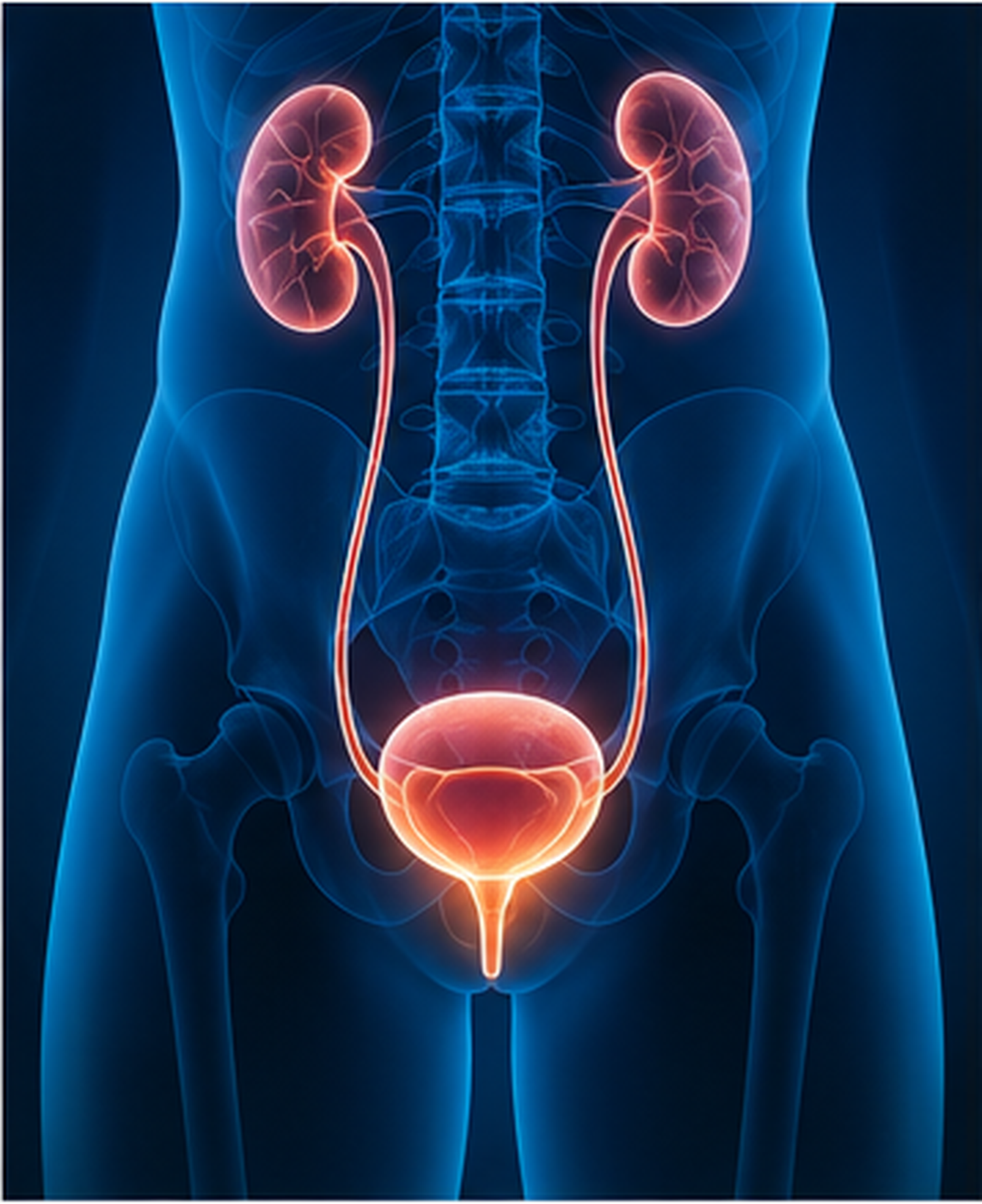
Ureteric Stones
Renal colic, spontaneous passage, urinary obstruction and active treatment of stones in the ureter.
Explore ureteric stones →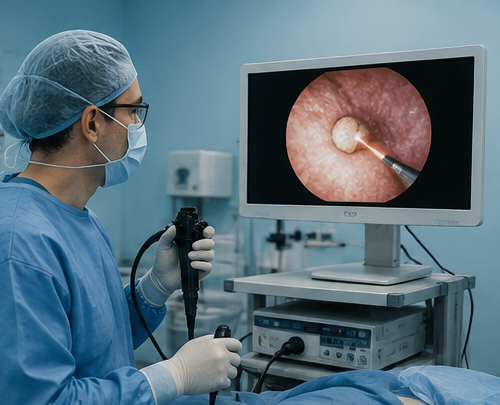
Ureteroscopy & Laser
Endoscopic treatment of selected kidney and ureteric stones through the natural urinary tract using fine instruments and laser energy.
Explore ureteroscopy →
Shock-Wave Lithotripsy
External shock waves can fragment appropriately selected kidney and ureteric stones without an endoscopic tract into the kidney.
Explore SWL →
PCNL
Direct keyhole access to the kidney for selected larger, staghorn and complex renal stone burdens.
Explore PCNL →Large & Complex Stones
Treatment planning for large, multiple, branching, difficult or previously treated stone burdens.
Explore complex stones →Modern stone treatment is matched to the stone — not the other way around
Ureteroscopy, shock-wave treatment and PCNL solve different problems. The most useful pathway depends on stone location, size, density, obstruction, anatomy, symptoms and previous treatment.
Ureteroscopy & laser
Fine endoscopic instruments can reach selected ureteric and kidney stones through the natural urinary tract, with laser fragmentation where appropriate.
Explore ureteroscopy → NON-INVASIVEShock-wave lithotripsy
Selected stones can be fragmented using externally generated shock waves. Suitability depends on stone and patient factors rather than size alone.
Explore SWL → PERCUTANEOUSPCNL
Direct access into the kidney can be useful for selected larger, branching or otherwise complex renal stone burdens.
Explore PCNL →What determines the treatment pathway?
Stone size matters, but it is only one part of the treatment decision. A useful discussion considers the complete stone profile and the individual patient.
Size
Stone diameter and total stone burden influence spontaneous passage and treatment selection.
02Location
A distal ureteric stone can behave very differently from a stone remaining within the kidney.
03Density
CT Hounsfield units provide additional information about stone characteristics and expected fragmentation.
04Obstruction
Persistent obstruction, particularly with infection, can materially change the urgency of treatment.
Symptoms
Pain, vomiting, urinary symptoms and recurrent attacks form part of treatment planning.
Kidney function
Kidney function and the number of functioning kidneys can influence urgency and strategy.
Previous treatment
Residual stones after treatment may require reassessment rather than simply repeating the same procedure.
Individual circumstances
Medical conditions, medications, travel, work and individual priorities can all be relevant.
Specific kidney stone situations
More detailed information for situations that need a more specific pathway than general kidney stone care.
Asymptomatic Kidney Stones
When an incidentally detected kidney stone may be monitored rather than treated immediately.
Medical Expulsive Therapy
The role of observation and medication while selected ureteric stones are given time to pass.
Impacted Upper Ureteric Stones
Treatment considerations when a stone becomes persistently lodged in the upper ureter.
Residual Kidney Stones
What remaining stone fragments can mean after previous ureteroscopy, SWL or PCNL.
Stone Density & Hounsfield Units
Understand what stone density on CT may add to treatment planning.
Staghorn Kidney Stones
Assessment and treatment planning for large branching renal stone burdens.
Uric Acid Kidney Stones
Why urine acidity matters and how uric acid stones can differ from many calcium stones.
Kidney Stones in Pregnancy
Investigation and management require additional imaging and treatment considerations during pregnancy.
Observation, SWL, ureteroscopy or PCNL?
There is no single best procedure for every kidney stone. Each treatment addresses a different clinical situation.
Observation
Selected stones can be monitored when immediate intervention is not required.
- Selected asymptomatic stones
- Surveillance imaging
- Monitor growth and obstruction
Shock-Wave Lithotripsy
External shock waves fragment suitable stones without placing an endoscope into the kidney.
- Selected kidney or ureteric stones
- Suitability depends on stone factors
- Fragments pass afterwards
Ureteroscopy & Laser
Fine instruments reach the stone through the urinary tract, allowing direct stone treatment.
- Common ureteric stone treatment
- Flexible access to many renal stones
- Laser fragmentation where appropriate
PCNL
Direct keyhole access into the kidney for selected larger and complex renal stone burdens.
- Larger renal stone burdens
- Many staghorn stones
- Selected complex stones
Large or difficult stones need a different strategy
Complex stone treatment is based on the entire stone burden, kidney anatomy and clinical situation rather than simply measuring the largest stone.
Some patients have one large stone. Others have multiple stones, branching staghorn calculi, impacted ureteric stones or residual stones following previous treatment.
Have you been told you need a ureteric stent?
A temporary ureteric stent may be used before or after selected stone procedures to maintain drainage between the kidney and bladder.
Stents can cause urinary frequency, urgency, blood in the urine and discomfort, so understanding what to expect can make the recovery period easier to navigate.
Ureteric Stents – What to Expect
Removing the stone is only part of stone care
If kidney stones continue to form, further assessment can help identify factors contributing to recurrence.
Prevention should be individualised rather than relying on one universal “kidney stone diet”.
Kidney stone information library
Detailed information for common questions before, during and after kidney stone treatment.
When Does a Kidney Stone Need Surgery?
Understand when observation may be reasonable and what can make treatment more appropriate.
Explore → TREATMENTKidney Stone Treatment Options
Compare observation, shock-wave treatment, ureteroscopy, laser surgery and PCNL.
Compare options → URGENT CAREBlocked or Infected Kidney Stone
Understand why infection behind urinary obstruction may require urgent drainage.
Read urgent information → RECOVERYUreteric Stents – What to Expect
Why stents are used, symptoms they may cause and what happens while a stent remains in place.
Read the stent guide → CT SCANStone Density & Hounsfield Units
Understand the additional information stone density may provide when planning treatment.
Understand HU → FOLLOW-UPResidual Kidney Stones After Treatment
What happens when follow-up imaging continues to show stone fragments after treatment.
Explore follow-up →Bringing your existing imaging can make the first consultation more useful
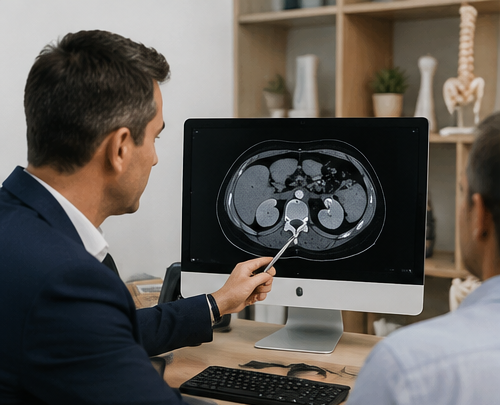
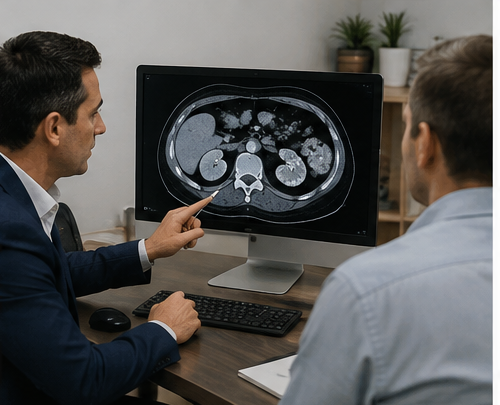
CT imaging provides important information about stone size, location, number, density and urinary obstruction.
Previous investigations and treatment history can also help determine whether observation or active treatment is more appropriate.
Helpful information to bring
- CT scans or other imaging
- Radiology reports
- Recent blood-test results
- Urine testing or urine culture results
- Previous stone procedure details
- Previous stone-analysis results
- Previous 24-hour urine results
Kidney Stones & Endourology FAQ
Common questions about observation, stone passage, endoscopic treatment, PCNL, shock-wave treatment and stents.
Does every kidney stone need surgery?
No. Selected kidney stones can be monitored and some ureteric stones can pass naturally. Treatment becomes more relevant when there is significant pain, persistent obstruction, infection, stone growth, threatened kidney function or a low likelihood of spontaneous passage.
What size kidney stone needs surgery?
There is no single stone size that automatically means surgery is required. Size is considered together with location, symptoms, obstruction, infection, kidney function, anatomy and total stone burden.
Can a ureteric stone pass by itself?
Many smaller ureteric stones can pass spontaneously. The likelihood depends particularly on stone size and location, as well as whether symptoms remain manageable and complications are developing.
What is ureteroscopy?
Ureteroscopy involves passing a fine endoscope through the urinary tract to reach stones in the ureter. Flexible instruments can also reach selected kidney stones, where laser treatment may be used.
What is pyeloscopy?
Flexible pyeloscopy refers to endoscopic examination and treatment within the kidney collecting system. It is commonly performed as part of flexible ureteroscopy for selected kidney stones.
What is PCNL?
Percutaneous nephrolithotomy creates a small access tract directly into the kidney through the back or side. It is an important treatment pathway for selected larger and complex renal stone burdens.
What is shock-wave lithotripsy?
Shock-wave lithotripsy uses externally generated energy to fragment suitable kidney or ureteric stones. Suitability depends on factors including stone size, location, density and patient anatomy.
Will I need a ureteric stent?
Not every stone procedure requires a stent. A temporary ureteric stent may be used when maintaining drainage between the kidney and bladder is considered helpful before or after treatment.
Why do Hounsfield units matter?
Hounsfield units describe density on CT. Stone density can add useful information when estimating how readily a stone may fragment and when comparing treatments such as shock-wave lithotripsy with endoscopic approaches.
Why do kidney stones keep coming back?
Recurrence can be influenced by urine volume, urinary chemistry, stone composition, diet, medical conditions, medications, genetics, infection and urinary anatomy. Selected recurrent stone formers may benefit from metabolic investigation.
What should I bring to a kidney stone appointment?
If available, bring CT scans or other imaging, radiology reports, recent blood tests, urine or urine-culture results, details of previous stone procedures, previous stone-analysis results and any previous 24-hour urine results.
When is a kidney stone an emergency?
Urinary obstruction associated with infection can require urgent treatment. Fever, chills, significant illness or deterioration with suspected obstruction, or inability to pass urine, should prompt urgent medical assessment rather than waiting for a routine appointment.
Not sure which kidney stone treatment applies to you?
You do not need to determine the treatment yourself before arranging an assessment. Existing imaging and investigations can be reviewed to help establish whether observation or active treatment may be appropriate and which options fit the stone.
This information is general educational information and does not replace individual medical advice. Kidney stone investigation and treatment depend on stone characteristics, symptoms, obstruction, infection, kidney function, urinary anatomy, previous treatment and individual circumstances.
Explore More About Kidney Stones & Endourology