

Severe or Treatment-Resistant Erectile Dysfunction
When erectile dysfunction tablets, injections or other treatments are not providing a sufficiently firm or reliable erection, the next step is usually to understand why treatment has not worked and which options remain genuinely useful.
Some men still have worthwhile non-surgical options. For others with persistent severe erectile dysfunction, a penile implant may become reasonable to discuss after individual assessment, counselling and consideration of alternatives.

When erectile dysfunction has become difficult to treat
Specialist reassessment may be useful when erectile difficulty has progressed from an occasional problem to persistent inability to achieve or maintain sufficient rigidity for sexual activity.
- Sildenafil, tadalafil or other prescribed ED tablets provide little, inconsistent or insufficient benefit.
- Penile injections do not produce satisfactory rigidity, cause problems, or are no longer a treatment you wish to use.
- Erectile function remains poor following radical prostatectomy, pelvic surgery or other prostate cancer treatment.
- Longstanding diabetes or vascular disease is associated with progressively more severe erectile dysfunction.
- Peyronie's disease, shortening, deformity or penile fibrosis occurs together with poor erection quality.
- You want to understand whether continuing non-surgical therapy remains worthwhile or whether implant surgery should be discussed.
Severe erectile dysfunction often reflects overlapping vascular, neurological, medical and penile factors rather than one isolated abnormality.
What does “treatment-resistant ED” mean?
Treatment-resistant erectile dysfunction is not a single diagnosis. The important issue is why appropriately selected treatment has not produced the degree of rigidity needed for satisfactory sexual activity.
True treatment failure
Medication or another therapy has been used appropriately but cannot overcome the severity of the underlying erectile dysfunction.
Incomplete optimisation
Dose, timing, food intake, stimulation, treatment technique or medication interactions may have reduced the apparent response.
Treatment no longer suits
A therapy may technically produce an erection but still be unacceptable because of discomfort, preparation, inconvenience or loss of spontaneity.
More than one factor may be contributing
Understanding the likely mechanism helps determine whether further medical treatment is worthwhile or whether a different treatment pathway should be considered.
Vascular disease
Reduced arterial inflow and impaired retention of blood within the erectile tissue can make erections progressively less responsive to medication.
Diabetes
Diabetes can affect penile blood vessels, peripheral nerves and erectile tissue at the same time.
Prostate surgery
Erectile function can remain substantially impaired after radical prostatectomy despite nerve-sparing where oncologically possible.
Pelvic radiotherapy
Radiation can affect penile vascular and erectile tissues, and deterioration may develop gradually after treatment.
Peyronie's disease
Curvature, narrowing, hinge instability and fibrosis may coexist with inadequate rigidity and need to be assessed together.
Neurological factors
Pelvic nerve injury, spinal conditions and peripheral neuropathy can impair the signalling required for the erectile response.
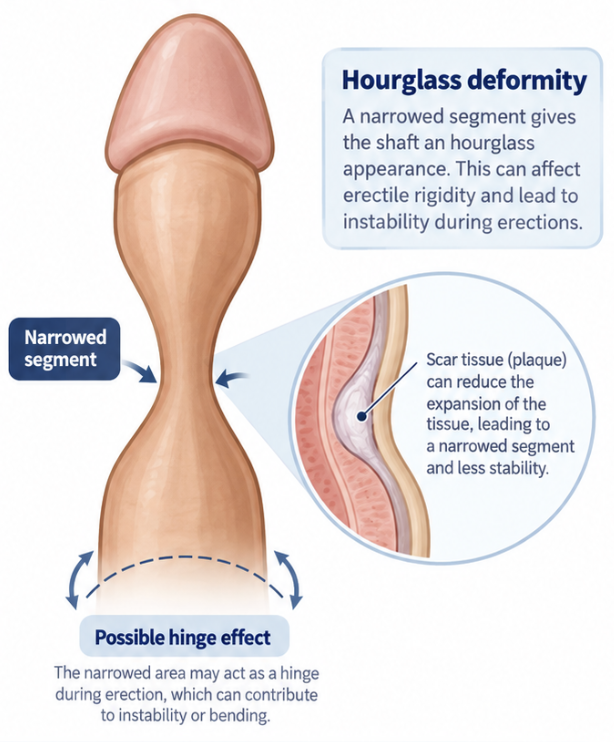
Erection quality and penile deformity sometimes need to be considered as one problem
In men with Peyronie's disease, straightening the penis does not itself create a stronger erection. Baseline rigidity therefore matters when deciding whether treatment should focus on deformity, erectile function or both.
Explore Peyronie's disease →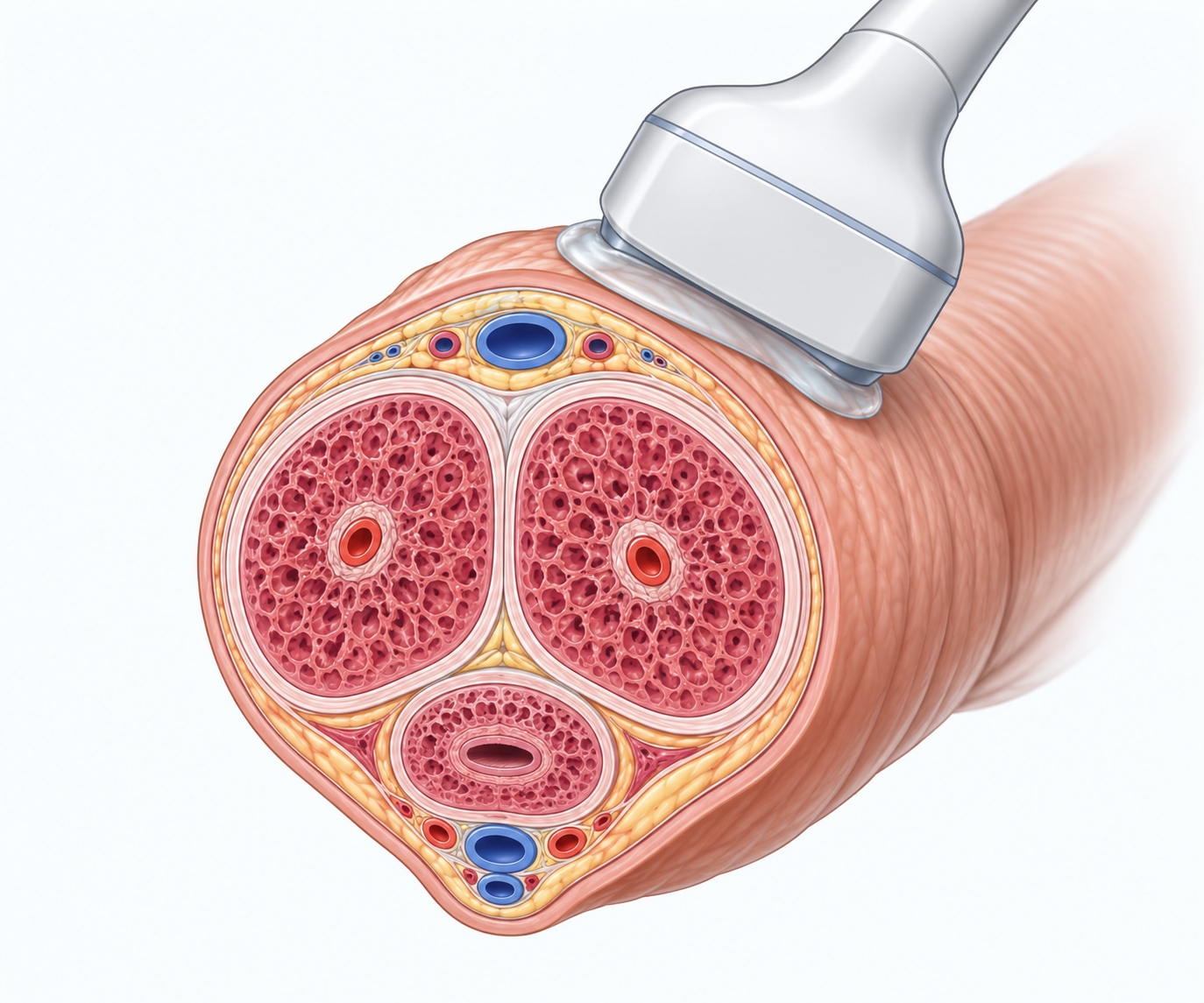
Penile ultrasound or Doppler assessment may be useful in selected men when the result is likely to change the treatment discussion. It is not required for every patient with erectile dysfunction.
Has oral treatment genuinely been optimised?
An initial poor response to oral ED medication does not always mean that all tablet treatment is ineffective. The circumstances of treatment failure are worth reviewing before repeatedly changing medication.
Timing, meals for some medicines, stimulation and the clinical setting can influence response.
Cardiovascular disease and other medications can affect which ED therapies are safe or appropriate.
Diabetes, vascular health, neurological disease, medicines and selected hormonal issues may be relevant.
Advanced vascular, diabetic or post-surgical ED can remain inadequately responsive despite appropriate tablet use.
What happens when standard ED treatment has not worked?
Treatment does not need to become an endless cycle of changing tablets. The next step depends on why previous treatment failed, the severity of ED and which options remain practical and acceptable.
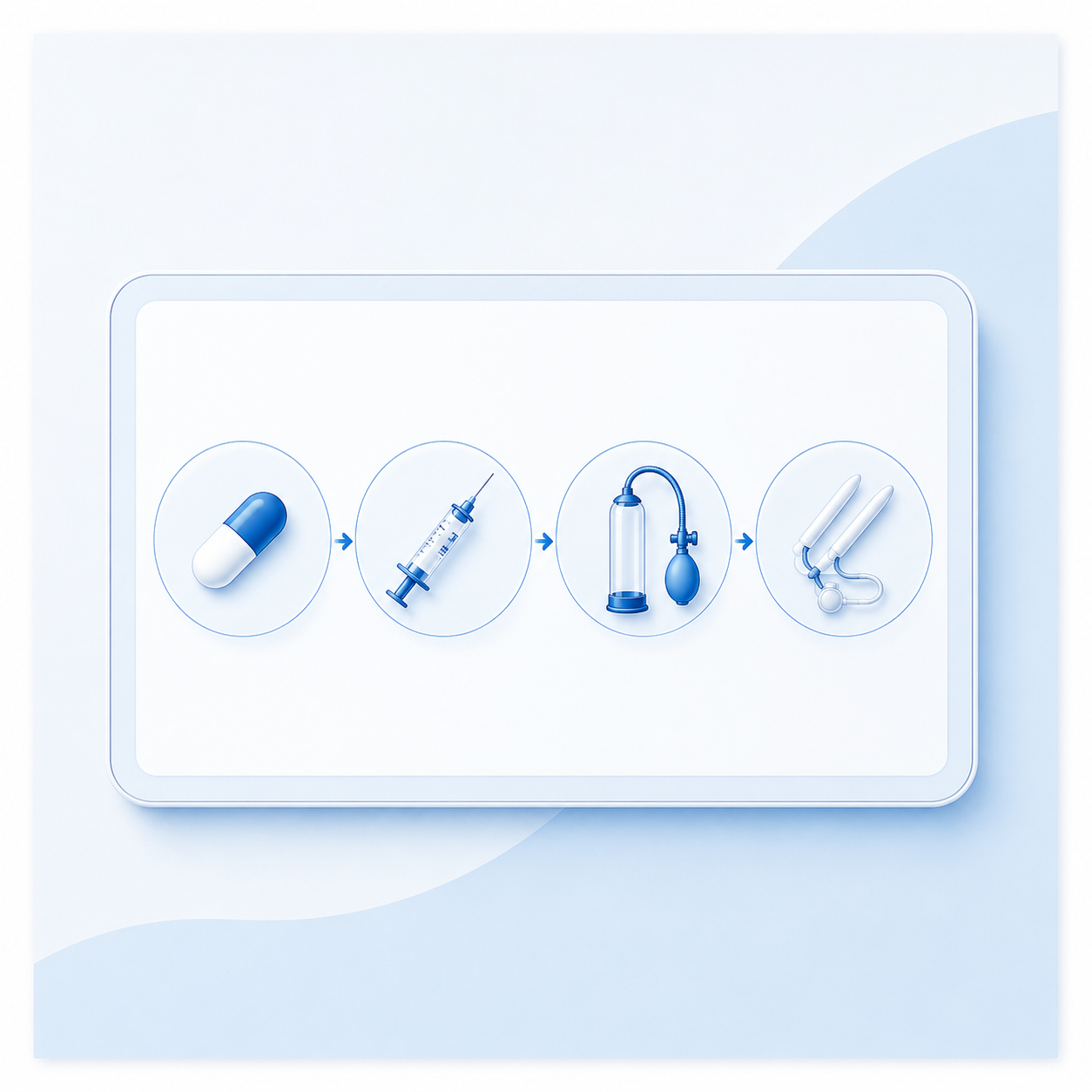
Simplified treatment pathway. Not every patient needs to progress through every treatment step.
Review oral treatment
Confirm whether medication has been appropriately selected, correctly used and realistically capable of treating the severity of the problem.
Tablets not working →Penile injections
Injection therapy acts directly on erectile tissue and may produce useful rigidity even when oral medication is insufficient.
Compare injections and implant →Vacuum erection device
A vacuum device offers a mechanical, non-drug approach and may also have a role in selected penile rehabilitation pathways.
Vacuum device information →Penile implant surgery
A penile implant can provide mechanical rigidity when significant ED remains problematic and less invasive options are ineffective, unsuitable or no longer acceptable.
Penile implant surgery →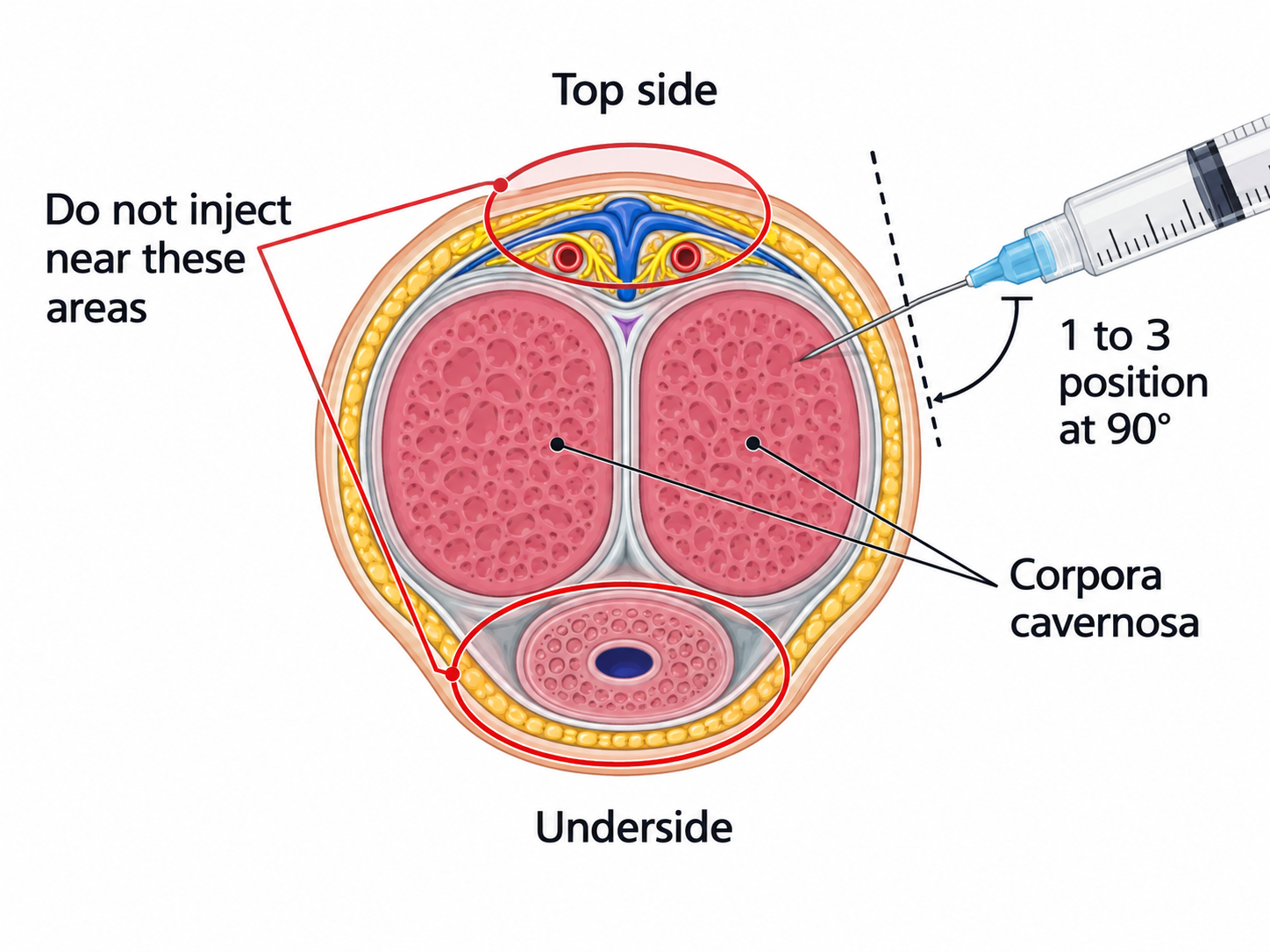
Intracavernosal treatment acts directly on the erectile tissue and can remain effective even when tablets provide insufficient rigidity.
When tablets are insufficient, injections can clarify the next step
Penile injections bypass part of the nerve-dependent pathway required for oral ED medication and can therefore produce useful rigidity in some men with more severe erectile dysfunction.
The practical question is not only whether an injection can create an erection, but whether the response is sufficiently reliable, comfortable and acceptable for ongoing use.
- Technique and dose may need supervised review.
- Pain, bruising or prolonged erections can limit acceptability.
- A useful injection response does not obligate long-term injection use.
- Persistent dissatisfaction can prompt discussion of other ED pathways.
Severe ED does not always follow the same pathway
Previous treatment and the underlying condition can substantially influence which options are reasonable.
ED after radical prostatectomy
Age, erectile function before surgery, nerve preservation, general health and the time since surgery influence recovery and treatment planning.
Explore post-prostatectomy ED →Longstanding diabetic ED
Diabetes can affect neurological signalling, vascular inflow and erectile tissue simultaneously, making oral therapy less predictable.
Curvature with poor erection quality
When curvature, narrowing or hinge instability occurs together with inadequate rigidity, both problems need to be incorporated into the treatment plan.
Peyronie's information →ED after surgery or radiotherapy
Cancer treatment may affect nerves, blood vessels and erectile tissues. Previous pelvic surgery may also alter future prosthetic surgical planning.
ED after prostate cancer treatment →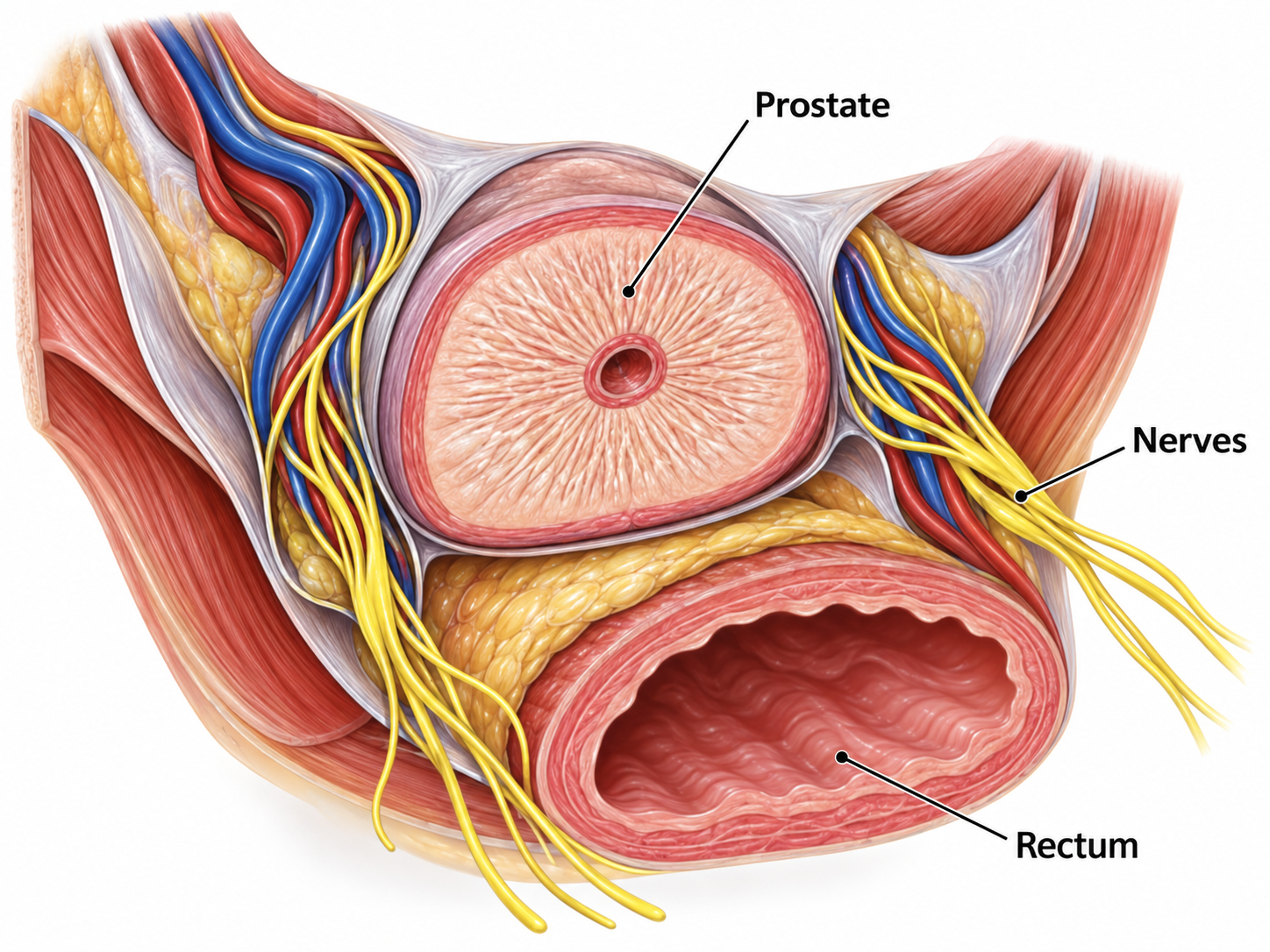
Erectile recovery depends partly on the nerves immediately beside the prostate
Even when nerve-sparing is oncologically appropriate, erectile signalling may be temporarily or persistently reduced after surgery. This is why post-prostatectomy ED may require a different treatment discussion from milder vascular erectile dysfunction.
Explore ED after radical prostatectomy →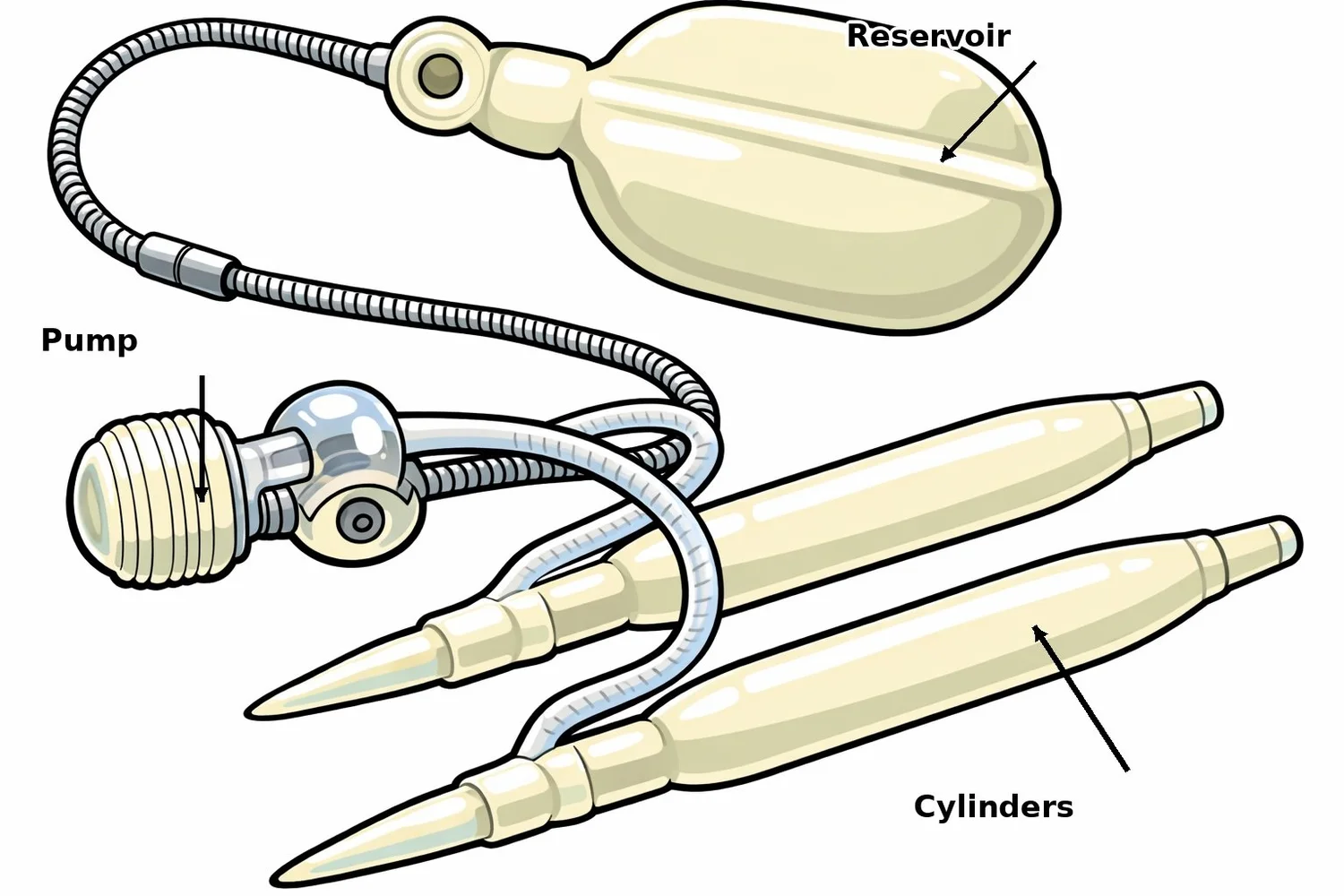
Educational illustration of the principal components of a three-piece inflatable penile implant.
When might a penile implant be considered?
A penile implant is an internal medical device that creates rigidity mechanically rather than depending on the natural blood-flow and nerve response required for a spontaneous erection.
Implant surgery may enter the discussion when significant erectile dysfunction remains problematic despite reasonable non-surgical treatment, when those treatments are unsuitable or unacceptable, or after an appropriately assessed patient prefers a surgical pathway following discussion of the alternatives and risks.
Implant surgery is more than simply choosing a device
Previous prostate surgery, pelvic operations, Peyronie's disease, corporal fibrosis, prior infection, hand function and penile anatomy can all influence operative planning.
Counselling should include expectations regarding rigidity, penile dimensions, device operation, recovery, complications and the fact that future revision or replacement may eventually be necessary.
- Previous radical prostatectomy or pelvic surgery
- Previous hernia repair or pelvic mesh
- Radiotherapy or altered tissue quality
- Peyronie's disease or corporal fibrosis
- Previous prosthetic or reconstructive surgery
- Current continence and other urinary devices

Operating-theatre image representing specialist urological and prosthetic surgery.
What an implant changes — and what it does not
Understanding the specific purpose and limitations of penile implant surgery is an important part of deciding whether it is appropriate.
- Provide mechanical penile rigidity for sexual activity.
- Reduce dependence on the natural erectile response required for tablets or injections.
- Provide a long-term surgical treatment pathway for selected men with significant erectile dysfunction.
- Allow an inflatable system to be activated when rigidity is desired and deflated afterwards.
- Increased penile length or girth.
- Restoration of penile dimensions from many years earlier.
- Increased sexual desire or libido.
- Restoration of ejaculation already lost after prostatectomy.
- Freedom from future mechanical problems or revision surgery.

The objective is useful function in real life
Erectile dysfunction treatment is not judged only by whether an erection can be produced in theory. Reliability, comfort, treatment burden, spontaneity, confidence and how treatment fits within a relationship can all influence whether a particular strategy remains acceptable.
Some men are comfortable continuing medication, injection therapy or a vacuum device. Others reach a point where the preparation or unpredictability of treatment becomes a major part of the problem.
What happens during an assessment for severe ED?
The purpose of assessment is to establish where you are in the treatment pathway rather than automatically prescribe another medicine or automatically recommend surgery.
When it began, whether rigidity can be achieved or maintained, and how erectile function has changed.
Tablets, injection doses, vacuum therapy and why each treatment was ineffective or stopped.
Diabetes, vascular disease, medicines, neurological conditions, prostate treatment and penile disease may all be relevant.
The next step may involve optimising current treatment, another non-surgical option or discussion of implant surgery.

Persistent erectile dysfunction can also be relevant to general health
Erectile dysfunction can occur alongside cardiovascular and metabolic conditions such as diabetes, hypertension, dyslipidaemia and vascular disease. Persistent or severe ED therefore warrants assessment in its wider medical context rather than being viewed only as a sexual symptom.
Continuing non-surgical treatment versus penile implant surgery
There is no single treatment that is best for every patient. Suitability depends on treatment response, health, priorities and willingness to undergo surgery.
| Consideration | Tablets / injections / vacuum | Penile implant |
|---|---|---|
| Surgery required? | No. | Yes. |
| Treatment around sexual activity? | Medication, injection or a device is generally used when required. | An implanted device is activated when rigidity is wanted. |
| Depends on biological erectile response? | Usually depends to some degree on vascular or erectile tissue response. | Rigidity is produced mechanically. |
| Can treatment simply be stopped? | Usually yes. | Implantation is a permanent surgical treatment pathway. |
| Very severe ED? | Some non-surgical treatments become less effective as the severity of ED increases. | Implant surgery may remain an option for appropriately selected patients. |
| Future procedures? | Usually not required because of the therapy itself. | Mechanical failure, infection or another problem may eventually require revision, replacement or removal. |
Common questions when ED treatment is no longer working
No. Tablet response is only one component of assessment. It is useful to review how medication was used, the likely cause and severity of ED, and whether other non-surgical approaches remain appropriate before deciding whether implant surgery warrants discussion.
Treatment effectiveness is not the only consideration. Discomfort, needles, preparation, timing, inconvenience and personal preference can all influence whether injection therapy remains acceptable long term.
Not necessarily. The pathway is individualised. Understanding reasonable alternatives is important, but repeatedly pursuing a treatment that is medically unsuitable, ineffective or unacceptable may not be useful.
Penile implant surgery may be considered in selected men with persistent significant erectile dysfunction after radical prostatectomy when other treatments have not produced a satisfactory result, are unsuitable or are no longer acceptable.
In selected men with both substantial erectile dysfunction and Peyronie's disease, implant surgery may form part of a treatment pathway addressing rigidity and penile deformity together. Additional straightening procedures can occasionally be required.
An implant creates mechanical rigidity rather than restoring the original erectile mechanism. Penile dimensions, glans fullness, sensation, orgasm and appearance should therefore be discussed individually before surgery.
Age alone does not determine suitability. General health, anaesthetic considerations, anatomy, dexterity, previous surgery, infection risk and individual priorities are more relevant.
ED becomes more common with age, but persistent or severe erectile dysfunction should not automatically be dismissed as normal ageing. Vascular, metabolic, neurological, medication-related, hormonal and penile factors may contribute.
Related erectile dysfunction pathways
Go directly to the information most relevant to where you are in the treatment pathway.
Review what has failed before deciding what comes next
Specialist assessment can help determine whether further non-surgical treatment remains worthwhile or whether a surgical option such as penile implant surgery is reasonable to discuss.
Medical information: This page provides general educational information only and does not provide an individual diagnosis, medical advice or treatment recommendation. Erectile dysfunction has multiple possible causes and appropriate assessment and treatment vary between individuals. Prescription medicines, medical devices and surgical procedures have potential risks, contraindications, limitations and alternatives that require individual clinical discussion. Do not start, stop or change prescribed medication solely on the basis of information on this page. An erection lasting four hours or longer requires urgent medical assessment.