

Erectile Dysfunction After Prostate Cancer Treatment
Erection problems are common after prostate cancer treatment, including prostatectomy, radiotherapy and hormone therapy. The cause, likelihood of recovery and most suitable treatment can be different for every man.
If tablets have not provided a satisfactory erection, that does not mean there are no further treatment options.

Erectile dysfunction after prostate cancer does not mean that sexual function cannot be treated
Prostate cancer treatment can affect the nerves, blood vessels, hormones and tissues involved in erections. Some men recover useful natural erections over time. Others continue to require treatment.
After prostate surgery
Erectile dysfunction is often noticeable immediately after radical prostatectomy. Recovery may occur gradually, particularly when nerve-sparing surgery has been possible.
After radiotherapy
Erectile function may initially remain relatively preserved and then decline gradually in the months or years following treatment.
During hormone treatment
Androgen deprivation therapy can reduce testosterone, sexual desire and erectile responsiveness.
If ED persists
Tablets are only one treatment option. Vacuum devices, penile injections and penile implant surgery may also enter the discussion in appropriate circumstances.
An erection depends on several systems working together
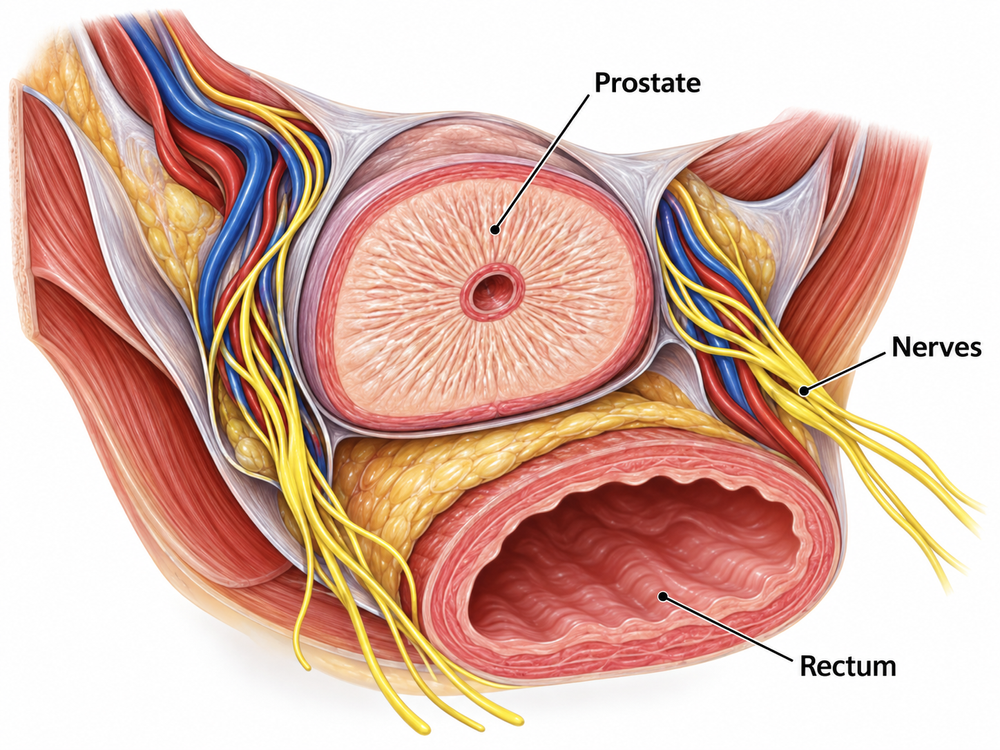
Normal erectile function requires intact nerve signalling, healthy blood flow, responsive erectile tissue, hormonal support and sexual stimulation.
Prostate cancer treatment may affect one or several of these mechanisms. This is why erectile dysfunction after prostate cancer does not look exactly the same in every man.
- Sexual stimulationBrain and sensory input
- Nerve signallingPelvic neurovascular pathways
- Increased blood flowErectile tissue expands
- Functional erection
The pattern of erectile dysfunction partly depends on how the prostate cancer was treated
Radical prostatectomy
The nerves involved in erections run very close to the prostate. Even when nerve-sparing surgery is possible, temporary or persistent impairment of erectile nerve function may occur.
- ED is commonly apparent immediately after surgery.
- Recovery may continue over many months.
- Nerve-sparing status is important but does not guarantee recovery.
- Erectile function before surgery strongly influences outcome.
Radiotherapy or brachytherapy
Radiation may affect penile blood vessels, erectile tissue and nearby neural pathways. Erectile deterioration can therefore occur more gradually than after surgery.
- Erections may remain useful initially.
- Erectile function can decline with time.
- Age and vascular health influence erectile reserve.
- ED treatment options remain available after radiotherapy.
Androgen deprivation therapy
Hormonal treatment suppresses testosterone and may affect both sexual desire and the physiological erectile response.
- Libido may reduce substantially.
- Erections may become more difficult to achieve.
- Treatment response can change while testosterone is suppressed.
- Hormonal recovery after treatment varies between men.
Combined treatment
Some men receive surgery, radiotherapy and/or hormone treatment. More than one mechanism may therefore contribute to erectile dysfunction.
- Treatment should be individualised.
- Failure of tablets does not mean all treatments will fail.
- Injection therapy can bypass some nerve-dependent pathways.
- Implant surgery may be considered for selected persistent ED.
Erectile dysfunction treatment can begin while recovery is still evolving.
Some men notice progressive improvement in erectile response, particularly following nerve-sparing surgery.
Recovery may continue, but persistent significant ED may justify discussing additional treatment options.
Erectile recovery does not follow one fixed timetable
Following nerve-sparing prostate surgery, improvement may continue for a prolonged period. However, this does not mean a man has to simply wait without discussing treatment.
Treatment may be used during the recovery period to assist sexual activity and provide erections when desired.
Treatment does not stop when tablets fail
Erectile dysfunction management can include oral medication, injection therapy, vacuum devices and, for selected men, penile implant surgery.
Not every man needs to proceed through each option in a rigid sequence. Treatment choice also depends on effectiveness, convenience, adverse effects, medical suitability and individual preferences.
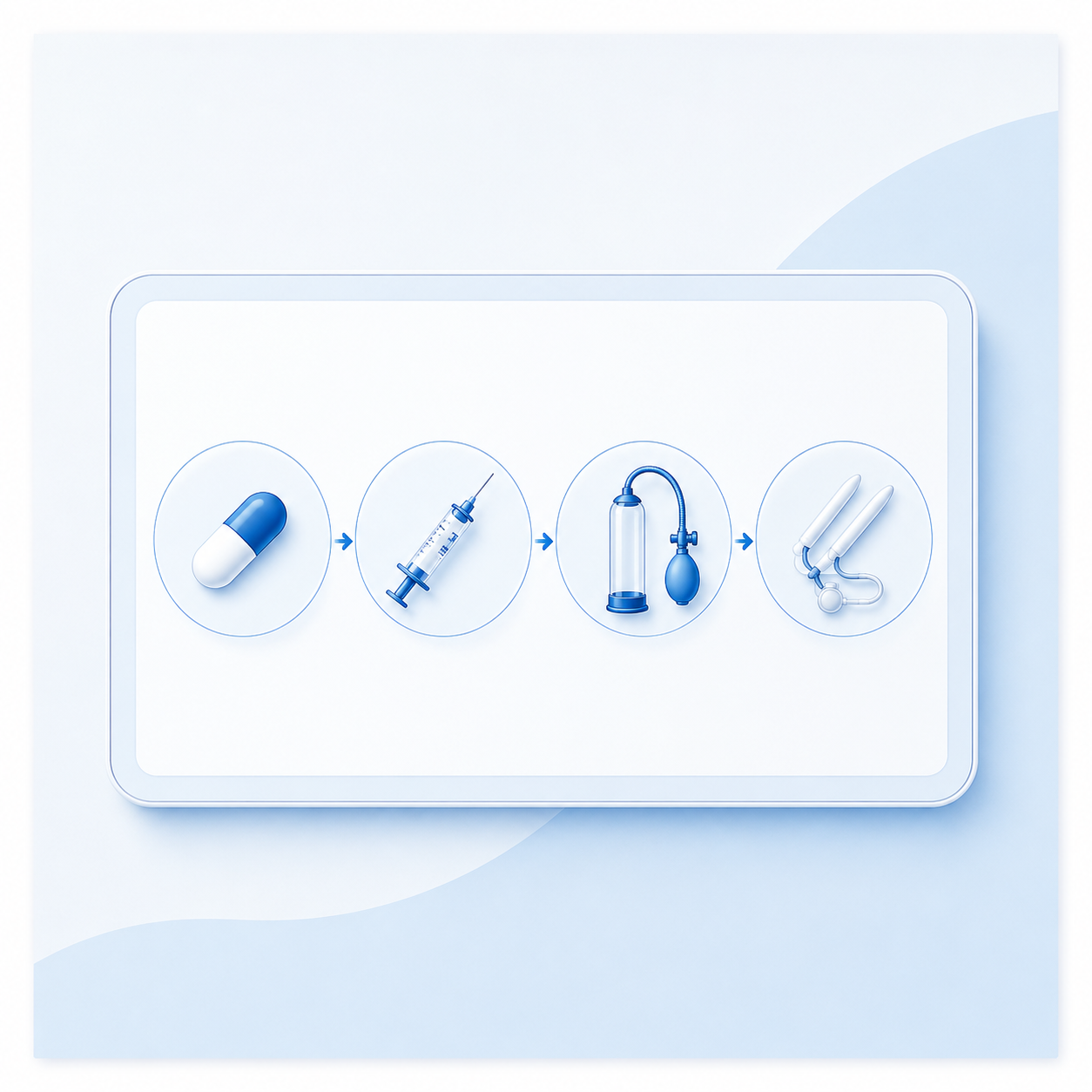
Several treatments may be considered after prostate cancer
The most appropriate option depends on the cause and severity of ED, previous treatment response, general health and what matters most to the individual patient.
Oral medication
Medicines such as sildenafil or tadalafil are commonly used in erectile dysfunction management.
Some men respond well. Others have partial or minimal benefit, particularly when erectile nerve function has been substantially affected.
Vacuum erection device
A vacuum erection device uses negative pressure to draw blood into the penis mechanically.
It may be used as part of rehabilitation or to help produce an erection for sexual activity.
Penile injection therapy
Medication delivered directly into the erectile tissue can produce an erection without relying to the same extent on the normal erectile nerve pathway.
Injection therapy may therefore remain useful when tablets have provided limited benefit following prostate surgery.
Penile implant surgery
A penile prosthesis provides penile rigidity mechanically and therefore does not rely on recovery of the normal erectile nerve and blood-flow response.
It may enter the discussion when other reasonable treatments have been ineffective, unsuitable or are not preferred after appropriate counselling.
Learn about penile implant surgeryPenile implant surgery after prostate cancer treatment
For appropriately selected men with persistent significant erectile dysfunction, a penile implant can provide mechanically controlled penile rigidity without relying on recovery of the normal erectile nerves.
The components of an inflatable penile implant are completely internal. A three-piece inflatable system typically includes paired cylinders, a pump positioned within the scrotum and a fluid reservoir within the pelvis or lower abdomen.
Previous prostatectomy, radiotherapy, pelvic surgery, hernia repair, urinary continence surgery and individual anatomy may influence implant planning.
Mechanical rigidity does not depend on recovery of the erectile nerves.
Previous prostatectomy can be incorporated into surgical planning.
Inflatable and malleable implant designs are available.
Implant selection should consider anatomy, dexterity, previous surgery and individual priorities.
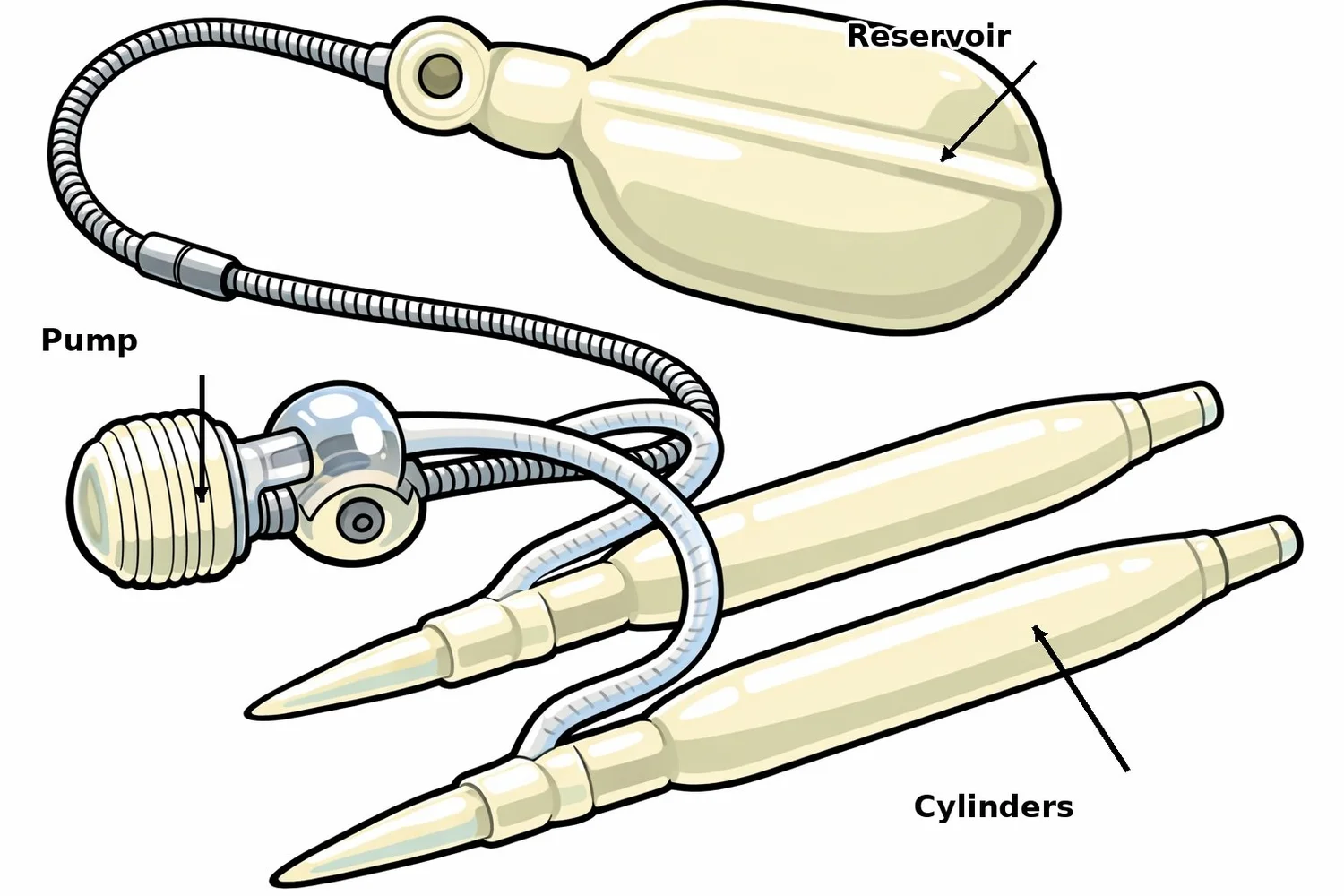
Paired cylinders are positioned within the erectile chambers and provide rigidity when inflated.
A control pump is positioned within the scrotum and is used to inflate and deflate the system.
A fluid reservoir is generally positioned within the pelvis or lower abdomen.
Educational illustration. Exact implant configuration, component positioning and surgical technique vary according to the individual patient.
When should I discuss a penile implant?
There is no single time point that is correct for every man. The decision depends on erectile recovery, previous treatment response and personal priorities.
You are relatively early after treatment
If nerve-sparing surgery was performed and erectile response is improving, continued conservative treatment may be reasonable while recovery evolves.
Erectile dysfunction remains significant
Implant assessment may be reasonable when erections remain inadequate for sexual activity and non-surgical treatment has been ineffective, poorly tolerated, unsuitable or does not align with the patient's preferences.

Previous prostate and pelvic treatment forms part of penile implant planning
Previous abdominal or pelvic surgery, radiotherapy, penile fibrosis, continence procedures and individual anatomy may all influence the operative approach.
Prostate cancer treatment can cause other sexual changes
Erectile dysfunction is only one component of sexual recovery. Other changes may also affect confidence, sexual function and quality of life.
Changes in orgasm
Orgasm can feel different after prostate cancer treatment. Some men notice reduced intensity, discomfort or difficulty reaching orgasm.
Dry orgasm
Following radical prostatectomy, ejaculation no longer occurs because the prostate and seminal vesicles have been removed. Orgasm may still remain possible.
Climacturia
Some men leak urine during sexual stimulation or orgasm after prostate surgery. Management can be considered when this is bothersome.
Perceived shortening
Some men notice a reduction in apparent penile length, particularly after prostatectomy or prolonged erectile dysfunction.
Curvature or deformity
Penile curvature, narrowing or other structural changes may occasionally coexist with erectile dysfunction and may change treatment planning.
Reduced sexual desire
Reduced libido is particularly relevant during androgen deprivation therapy, although psychological, relationship and other medical factors may also contribute.
What happens at an erectile dysfunction consultation?
Assessment aims to understand why erections are impaired, what has already been tried and which treatment options are reasonable for the individual patient.
Review your prostate cancer treatment
Surgery, nerve-sparing status, radiotherapy, hormone treatment and time since treatment are considered.
Understand your current erections
This includes erectile function before cancer treatment, spontaneous erections and response to previous ED therapies.
Review general health
Cardiovascular health, diabetes, medications, hormonal factors and other conditions may influence erectile function.
Discuss a practical treatment pathway
Options may include tablets, vacuum treatment, penile injections or penile implant surgery depending on clinical circumstances and patient goals.
Erectile dysfunction tablets are not suitable for everyone
Sildenafil, tadalafil and similar medications should not be used with nitrate medication. Men with unstable or significant cardiovascular symptoms may also require cardiovascular assessment before ED treatment and sexual activity.
Current medications and medical history should be discussed with the prescribing clinician.
Erectile dysfunction after prostate cancer treatment FAQs
Can erections recover after radical prostatectomy?
Some men recover useful erections following radical prostatectomy, particularly when nerve-sparing surgery was possible. Recovery may continue over a prolonged period. Age, erectile function before surgery, vascular health and nerve preservation all influence the likelihood of recovery.
How soon can erectile dysfunction treatment begin?
ED treatment is often discussed relatively early following recovery from surgery. Exact timing should be individualised according to the operation, postoperative recovery and advice from the treating surgical team.
Does daily tadalafil guarantee recovery of natural erections?
No. Tadalafil can improve erectile response in some men, but no medication schedule can guarantee restoration of spontaneous natural erections following prostate cancer treatment.
What if sildenafil or tadalafil do not work?
Other treatments may still be available. These can include vacuum erection devices, penile injection therapy and, for appropriately selected patients, penile implant surgery.
Can penile injections work after prostatectomy?
Yes. Injection therapy acts directly on erectile tissue and therefore does not rely to the same extent on the nerve pathway required for a natural erection. It can be useful even when oral medication has provided limited benefit.
Can I have a penile implant after prostate cancer surgery?
Previous radical prostatectomy does not prevent penile implant surgery. Previous pelvic surgery forms part of planning, particularly when considering the position of implant components.
Can I have a penile implant after radiotherapy?
Previous radiotherapy does not automatically exclude penile implant surgery. Tissue quality, previous procedures, anatomy and general medical factors require individual assessment.
Will a penile implant restore ejaculation?
No. A penile implant treats penile rigidity. It does not recreate ejaculation lost following radical prostatectomy.
Can I still orgasm with a penile implant?
A penile implant provides rigidity and does not itself remove penile sensation or orgasm. However, prostate cancer treatment may already have altered orgasmic function, and individual experiences vary.
Do I need to wait two years before discussing an implant?
Not necessarily. Continued conservative treatment may be appropriate while recovery is occurring, but implant assessment can also be discussed when significant ED remains problematic and other treatments have been unsatisfactory or unsuitable. Timing should be individualised.
Is erectile dysfunction simply something I have to accept after prostate cancer?
Erectile dysfunction is a recognised consequence of prostate cancer treatment, but several treatment approaches may be available. Failure of one treatment does not mean all treatment options have been exhausted.
If erections have not recovered, further treatment options may still be available
Specialist assessment can help clarify whether continued conservative treatment, penile injections, vacuum treatment or penile implant surgery is appropriate to discuss.
This page provides general educational information and does not replace individual medical advice, diagnosis or informed consent. Erectile dysfunction following prostate cancer treatment varies substantially between patients. Treatment suitability, potential benefits, risks, limitations and alternatives require individual clinical assessment.