

Erectile Dysfunction After Radical Prostatectomy
Difficulty obtaining or maintaining an erection is common following radical prostatectomy. Recovery differs considerably between men — and treatment does not need to stop simply because tablets have not worked.
A structured assessment can help determine where you are in the recovery process, whether further spontaneous improvement is realistic, and which treatments may provide useful erectile function now.

Erections can improve gradually after prostatectomy, particularly when nerve-sparing surgery has been possible, but recovery is unpredictable.
Persistent erectile dysfunction remains treatable even if spontaneous erections do not return. Tablets are only one part of the treatment pathway.
Why can radical prostatectomy affect erections?
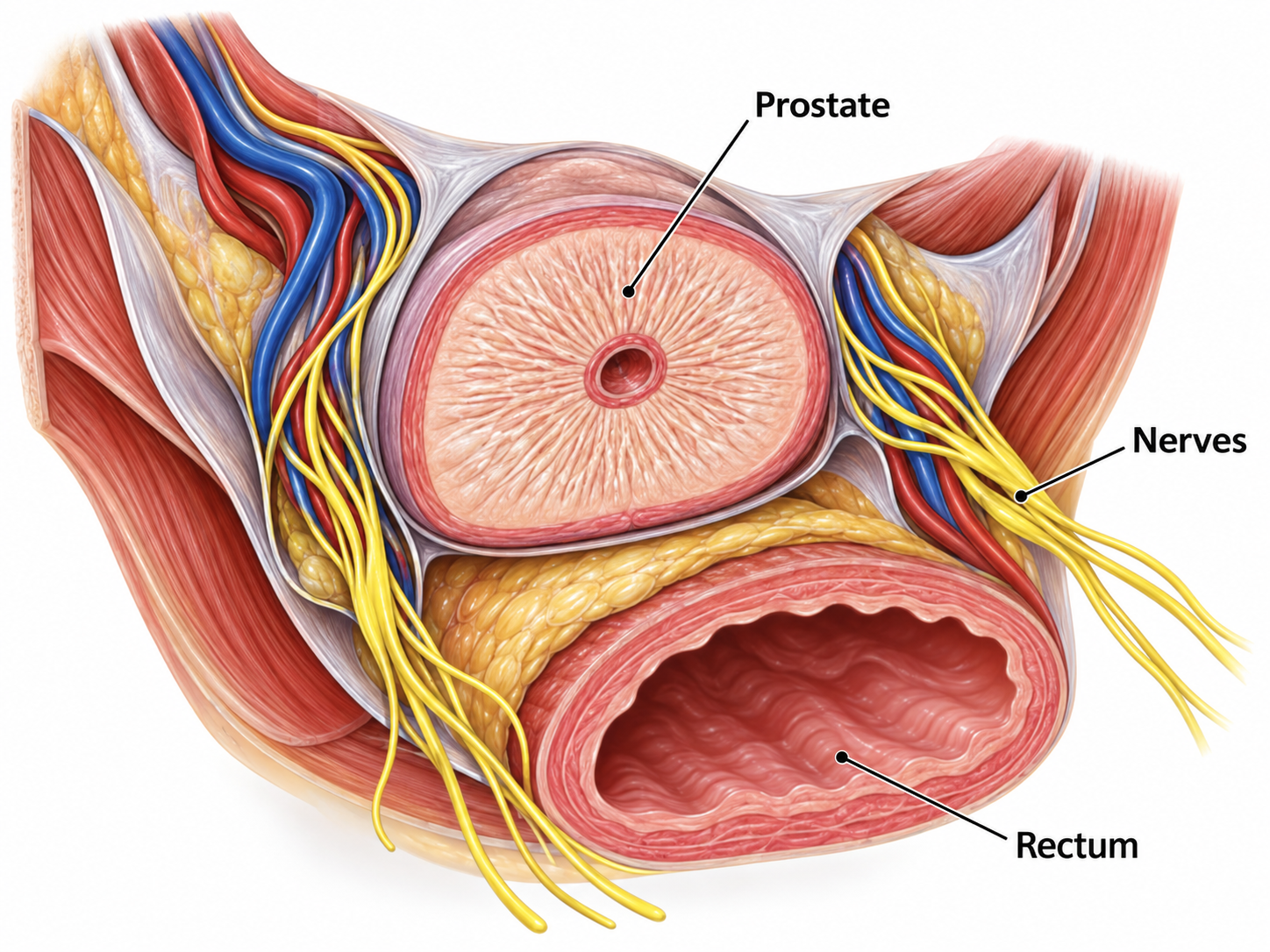
The nerves involved in erections run immediately beside the prostate as part of the neurovascular bundles.
Even when these nerves can be preserved during prostate surgery, their function may be temporarily reduced while they recover from manipulation, stretching, inflammation and surgical trauma.
Reduced nerve signalling can mean that the erectile tissue receives less stimulation and fewer natural erections. Erections may therefore be absent, softer or less predictable in the months after surgery.
If cancer location or extent means that one or both neurovascular bundles cannot safely be preserved, the chance of spontaneous erectile recovery may be lower.
“Nerve-sparing” does not mean erections will return immediately
Nerve-sparing describes an attempt to preserve the neurovascular structures where this is oncologically appropriate. The nerves may still require considerable time to recover.
Treatment can occur while recovery is continuing
A man does not necessarily need to wait for the eventual erectile outcome before discussing tablets, vacuum therapy or other erectile dysfunction treatments.
Why do some men recover better than others?
There is no single postoperative timetable that applies to every patient. Several factors are considered together.
Erections before surgery
Strong, reliable erections before prostatectomy generally provide a better starting point for postoperative recovery.
Nerve-sparing
Recovery is more likely when one or both neurovascular bundles can safely be preserved, although nerve-sparing cannot guarantee recovery.
Age
Younger men tend to recover erectile function more readily, but effective ED treatments remain available at older ages.
Vascular health
Diabetes, cardiovascular disease, smoking and other vascular factors can reduce erectile reserve and postoperative recovery.
Additional cancer treatment
Radiotherapy or androgen-deprivation therapy may further affect erectile function, sexual desire and recovery.
Time since surgery
The treatment discussion is different several weeks after surgery compared with persistent severe erectile dysfunction years later.
What can erectile recovery look like?
This is a general framework rather than a prediction of exactly when an individual man's erections should return.
Initial healing
Erections are commonly absent or substantially weaker immediately following prostatectomy.
Early ED treatment
Tablets, vacuum therapy or another pro-erectile strategy may be discussed when clinically appropriate.
Ongoing recovery
Some men notice gradual improvements in spontaneous or medication-assisted erections over time.
Reassess the strategy
Persistent unreliable erections may warrant injections, combination therapy or discussion about an implant.
Do I need to wait two years before treating my ED?
No. Erectile dysfunction treatment can be used while natural nerve recovery is still occurring. Treatment and spontaneous recovery are not mutually exclusive.

What does “penile rehabilitation” mean?
Penile rehabilitation is a broad term used for erectile treatment during recovery following prostate surgery.
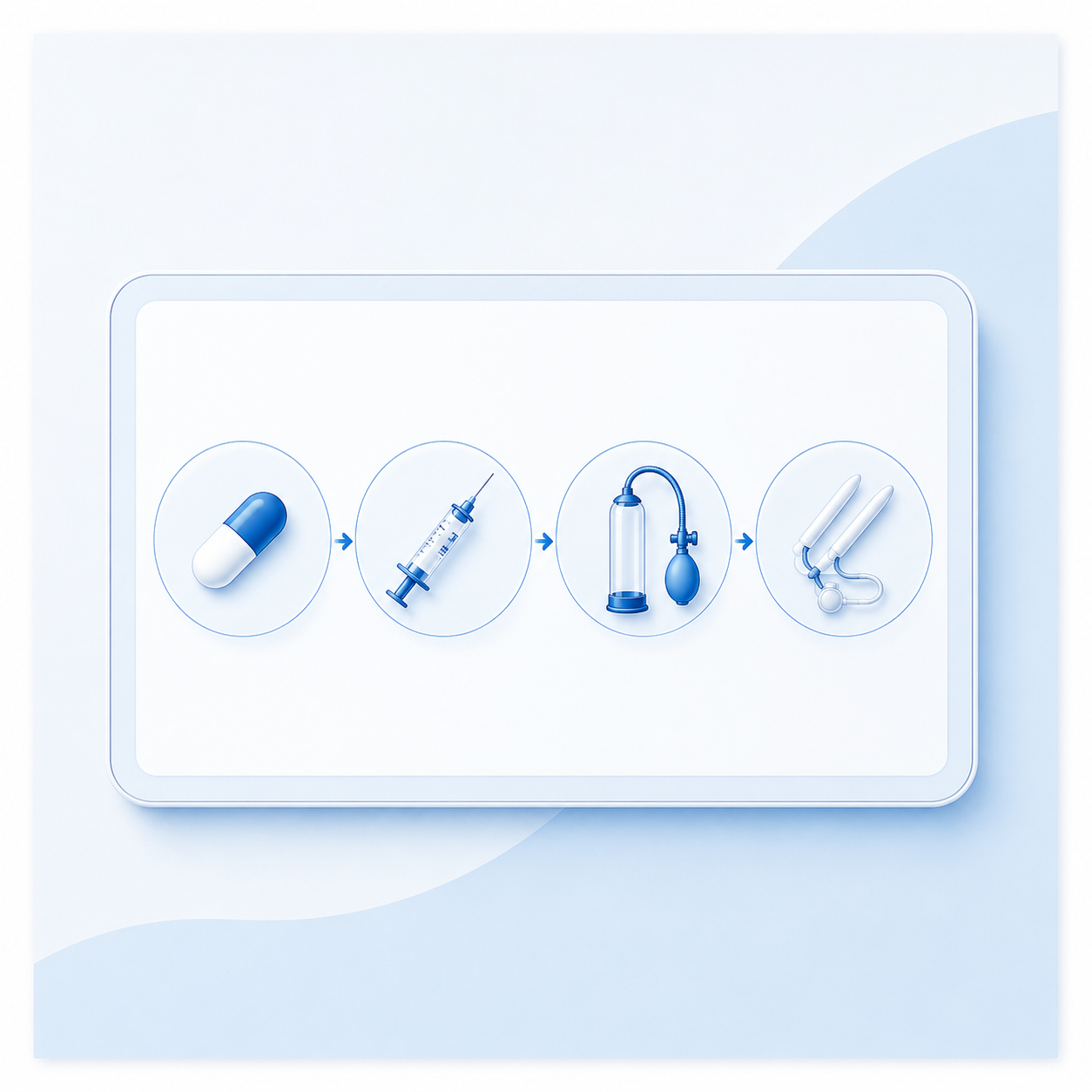
Strategies may include a PDE5-inhibitor tablet, vacuum erection therapy, penile injections or combinations of these approaches depending on the patient.
The aim may include assisting sexual activity, maintaining erectile tissue use and providing useful erections during the period in which nerve recovery may still be occurring.
What rehabilitation cannot promise
No single penile rehabilitation protocol can guarantee that spontaneous erections will eventually return. Treatment should therefore be individualised rather than presented as a guaranteed recovery programme.
What if erections have not returned?
Erectile dysfunction treatment usually progresses according to erection quality, previous treatment response, medical suitability and what matters most to the patient.
1. ED tablets
PDE5-inhibitor medicines such as sildenafil or tadalafil can improve the erectile response to sexual stimulation and are commonly considered after nerve-sparing prostatectomy when medically appropriate.
An inadequate initial response does not always mean tablets have permanently failed. Dose, timing, meals, stimulation, medication interactions and the stage of nerve recovery can influence the result.
2. Vacuum erection device
A vacuum device draws blood into the penis mechanically. It can be used as part of an erectile recovery strategy or to help produce an erection for sexual activity.
Some men prefer a non-drug approach, while others find that using the device and constriction ring reduces spontaneity.
3. Penile injections
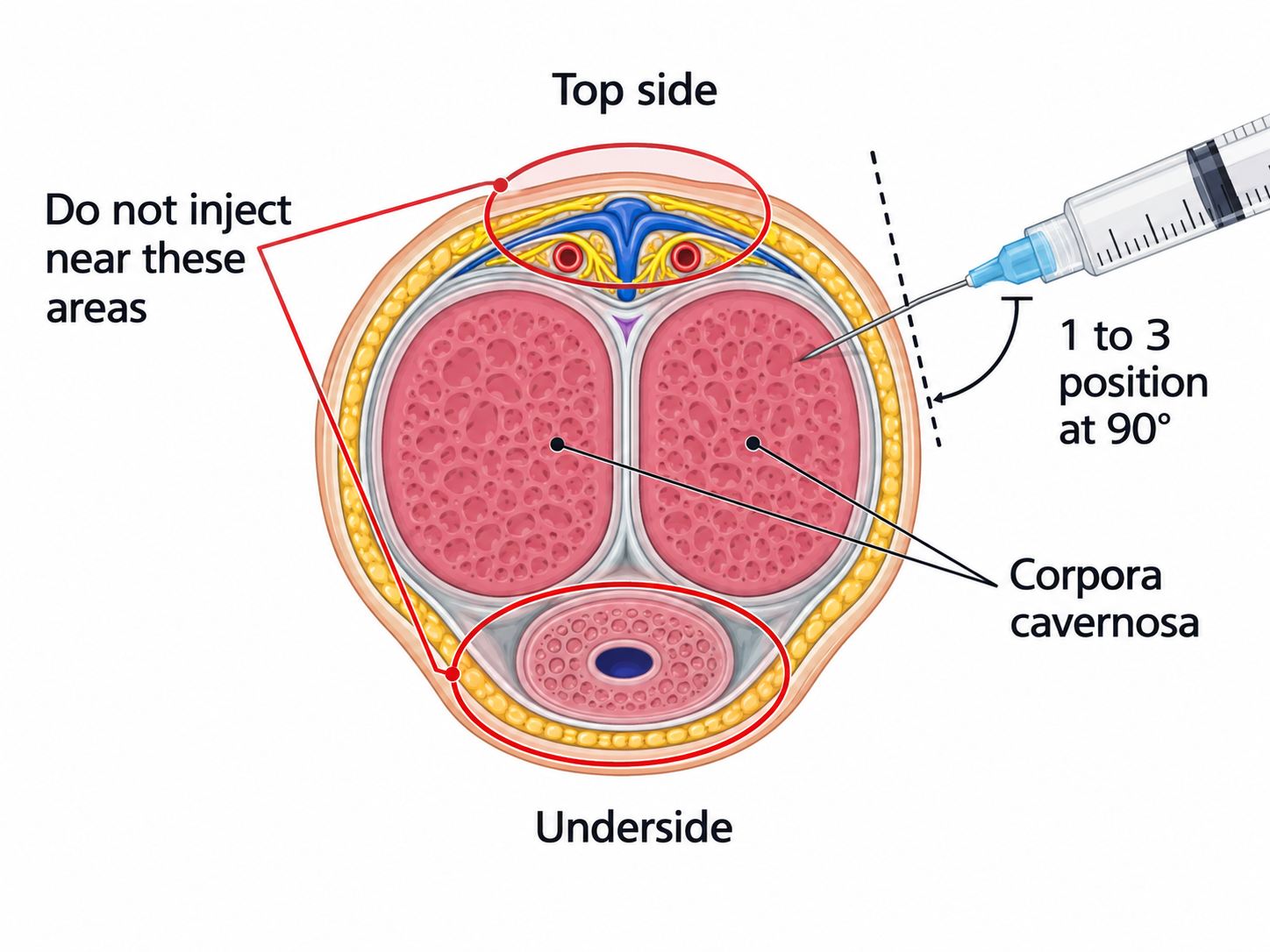
Intracavernosal injection therapy acts directly on the erectile tissue and penile blood vessels.
This means injections can produce useful rigidity even when nerve signalling after prostatectomy remains impaired, making them an important option when tablets are insufficient.
4. Penile implant surgery
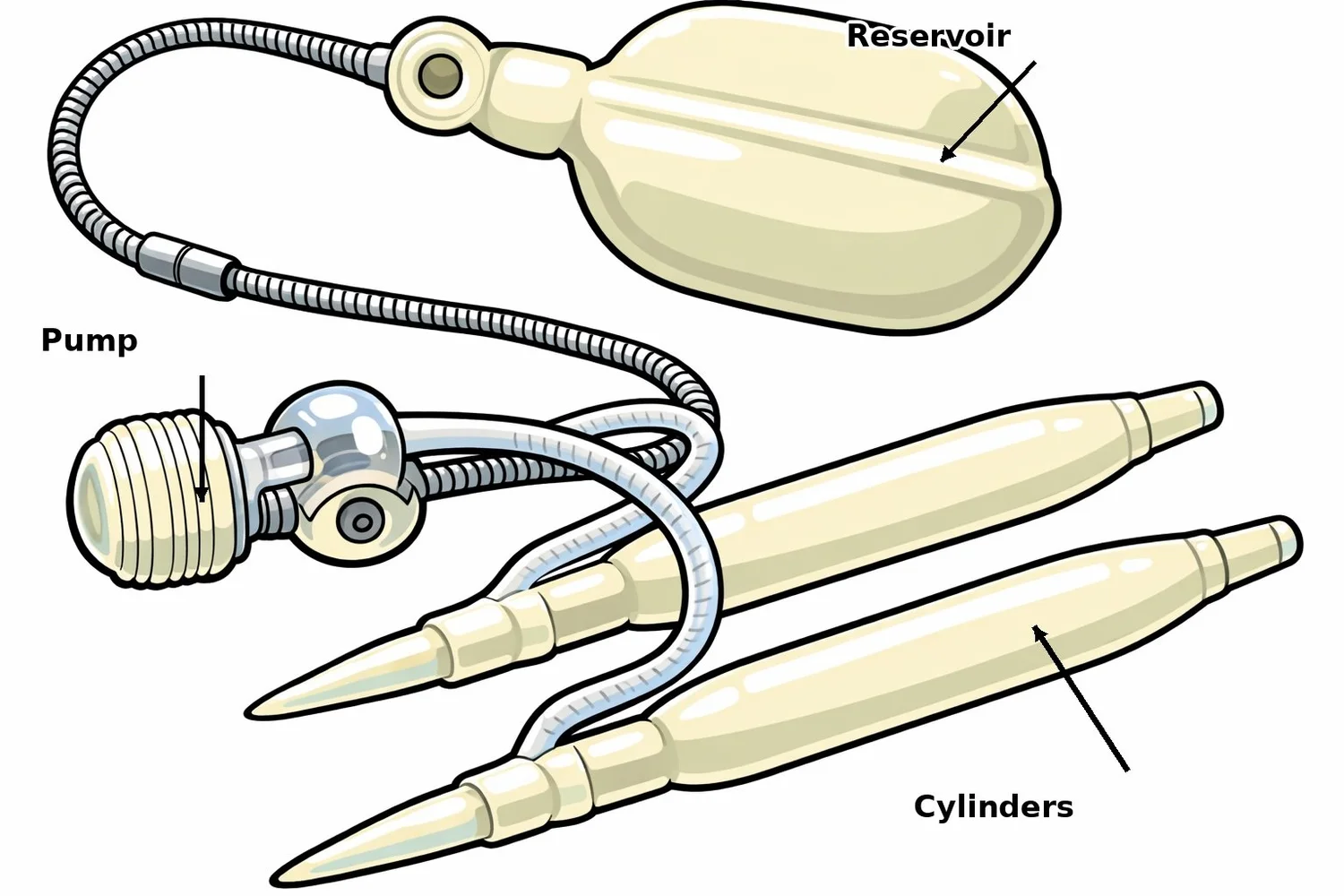
A penile implant creates rigidity mechanically and therefore does not depend on recovery of the erectile nerves.
Implant surgery may enter the discussion when tablets, injections or vacuum treatment have not provided an acceptable result, are unsuitable, or when an appropriately assessed patient prefers a surgical pathway.
“The tablets don't work. What happens next?”
This is particularly common after radical prostatectomy. Tablets rely partly on functioning erectile nerve pathways and therefore may provide limited benefit when nerve signalling remains substantially impaired.
It is worth confirming that oral treatment has been used appropriately before assuming it has failed.
If rigidity remains inadequate despite appropriate tablet treatment, the next discussion often shifts toward treatments that are less dependent on the natural erectile response.
Questions worth clarifying
- Which tablet has been tried?
- What dose was used?
- Was it taken at an appropriate time?
- Was there adequate sexual stimulation?
- Was food likely to affect absorption?
- Has there been any partial response?
- Are erections occurring overnight or on waking?
- How long has it been since prostatectomy?
Why can injections work when tablets do not?
Penile injections bypass much of the impaired nerve signalling by delivering vasoactive medication directly into the erectile tissue.
For this reason they can be effective in men with significant neurogenic erectile dysfunction following radical prostatectomy.
An important option after prostatectomy
Some men use injections successfully for many years. Others achieve a satisfactory erection but dislike needles, discomfort, the preparation involved or the need to plan treatment before intercourse.
If injections work but do not suit the patient's lifestyle or preferences, this can be one reason to discuss penile implant surgery.
Erection lasting four hours or longer
Priapism requires urgent medical assessment because prolonged rigid erection can damage the erectile tissue.
When should a penile implant be discussed?
Some men continue using tablets for years despite obtaining little useful rigidity. Others obtain an erection with injections but find the treatment inconvenient or intrusive.
A penile implant can be discussed when erectile dysfunction remains important and non-surgical treatment is no longer providing an acceptable solution.
Is penile implant surgery different after prostatectomy?
Radical prostatectomy alters pelvic anatomy. This is particularly relevant to the reservoir component of a three-piece inflatable penile implant.
Previous prostate surgery, hernia surgery, pelvic radiotherapy and other pelvic operations may influence the safest location for reservoir placement.
The overall discussion should also include current penile length and shape, any fibrosis or curvature, urinary continence, previous ED treatment and the patient's expectations of surgery.
Implant assessment may consider
- previous radical prostatectomy
- previous pelvic radiotherapy
- previous inguinal hernia repair
- abdominal or pelvic surgery
- current urinary continence
- penile shortening or curvature
- manual dexterity and pump use
- realistic expectations of penile dimensions
Other sexual changes after radical prostatectomy
Erectile dysfunction is only one possible change. Understanding the other recognised effects of prostate surgery can make postoperative sexual changes less confusing.
Dry orgasm
The prostate and seminal vesicles are removed during radical prostatectomy, so ejaculation no longer occurs. Orgasm may still be possible.
Altered orgasm
Some men notice changes in orgasmic sensation, intensity or timing following prostate surgery.
Climacturia
Urine leakage at the time of orgasm can occur in some men and may be discussed if it becomes bothersome.
Penile shortening
Some men perceive a reduction in visible or erect penile length after radical prostatectomy.
Penile curvature
New curvature, narrowing or Peyronie's-like changes may occasionally occur and deserve assessment if they affect function.
Reduced libido
Sexual desire may also be affected by psychological factors, general health and particularly androgen-deprivation therapy.

Prostatectomy changes the treatment context
Erectile dysfunction following pelvic surgery is different from uncomplicated vascular erectile dysfunction.
Nerve recovery, previous prostate surgery, urinary continence, penile anatomy, additional cancer treatment and the response to previous ED therapies may all influence the next step.
If penile implant surgery is being considered, previous pelvic surgery also becomes relevant to operative planning.
What information is useful at an appointment?
Assessment is more useful when the broader prostate cancer and sexual-function history is considered rather than simply asking whether a tablet has worked.
Erectile function before surgery
Were erections spontaneous and reliable before prostate cancer treatment? Were tablets already required?
Details of the prostatectomy
Timing of surgery and whether unilateral or bilateral nerve-sparing was possible may be relevant.
Additional cancer treatment
Radiotherapy, hormone treatment and subsequent prostate cancer therapy can influence erectile function and libido.
Previous ED treatments
Details of tablets, doses, vacuum therapy and injections are useful — particularly whether there was any partial response.
Penile shape and dimensions
New curvature, narrowing, shortening or instability may influence future treatment planning.
What matters to you
Some men prioritise avoiding surgery. Others place greater importance on reliability, spontaneity or reducing the need to plan treatment before sexual activity.
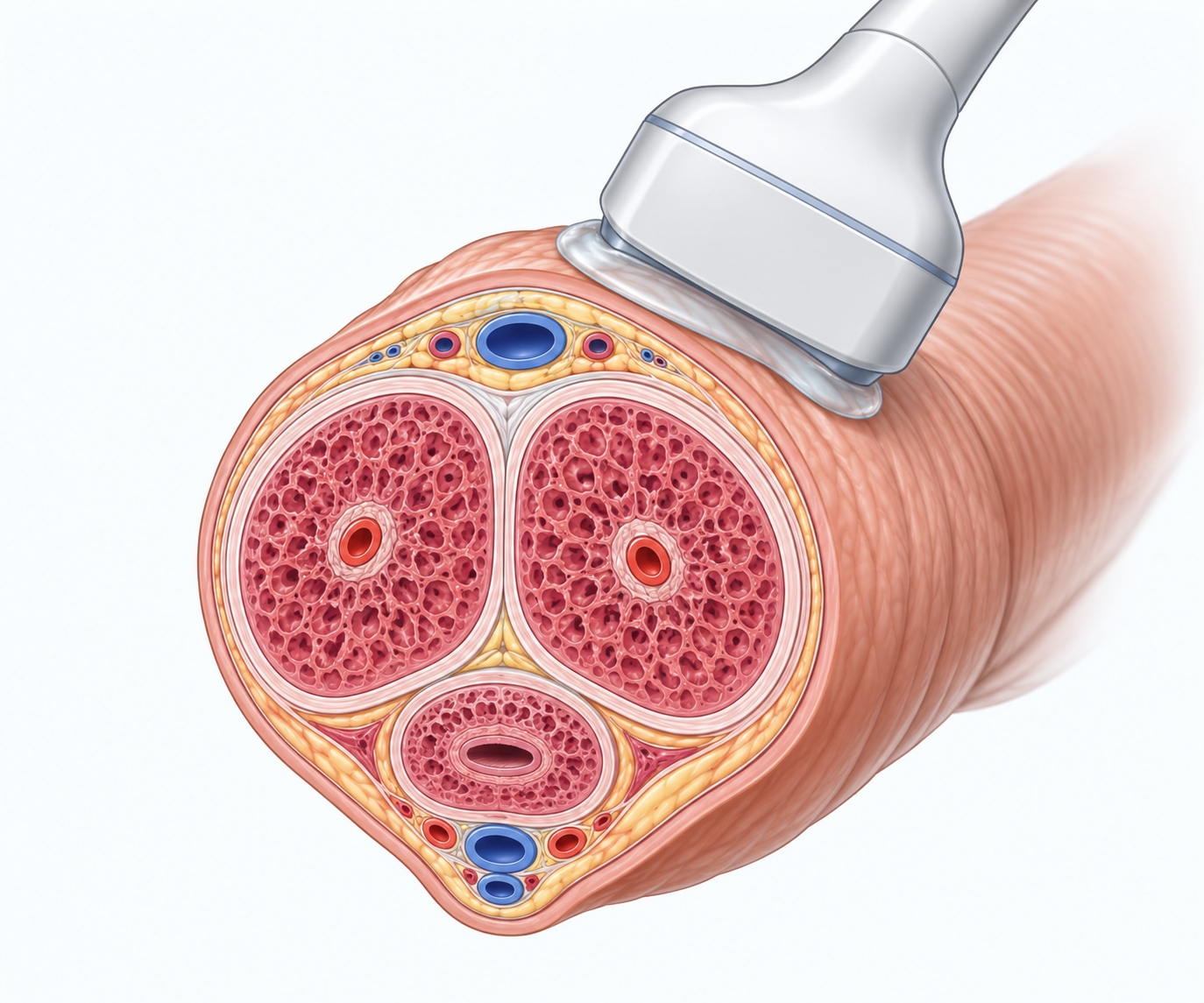
When might penile ultrasound be useful?
Penile Doppler ultrasound is not required for every man after prostatectomy. In selected situations it can provide additional information about penile blood flow, erectile tissue or anatomy when that information is likely to change the treatment discussion.
The need for imaging depends on the clinical question, previous treatment response and examination findings.
Further assessment may be useful if…
Persistent erectile dysfunction does not necessarily mean there are no treatment options left.
- erections remain too soft for intercourse despite tablets
- tablets worked partially but erections remain unreliable
- you are unsure whether tablets have been used optimally
- you would like to learn how penile injections work
- injections work but do not suit you
- you have developed shortening or curvature
- severe ED persists well after prostatectomy
- you want to understand whether a penile implant is reasonable
Erectile dysfunction after prostatectomy FAQs
Recovery varies considerably. Some men notice improvement within months, while others experience gradual improvement over 18–24 months or sometimes longer. Age, erectile function before surgery, nerve-sparing and general health all matter.
Not necessarily. Tablets may work poorly while the nerves are recovering. Dose, timing and other medical factors can also affect response. The result should be interpreted alongside the surgical and clinical history.
Yes. Injection therapy acts directly on the erectile tissue and penile blood vessels, so it does not depend on normal erectile nerve signalling to the same degree as oral medication.
Yes. Treatment can be used during the period in which nerve recovery may still be occurring. There is no requirement to wait until all possibility of spontaneous recovery has ended before treating erectile dysfunction.
Vacuum therapy is one option following prostatectomy and can provide a non-drug means of creating penile engorgement. It may be used alone or alongside other treatments depending on the individual patient.
There is no single time point that applies to every man. Implant surgery may be worth discussing when erectile dysfunction remains important, recovery is limited and non-surgical treatments are ineffective, unsuitable or no longer acceptable to the patient.
No. A penile implant produces rigidity mechanically. This is one reason implant surgery can be effective for severe erectile dysfunction after radical prostatectomy even when natural erectile nerve function has not recovered.
A penile implant principally treats rigidity. It does not replace the nerves responsible for penile sensation or orgasm. If orgasm is already possible before implantation, the implant itself is not intended to remove that ability. Following radical prostatectomy, orgasm is dry because ejaculation no longer occurs in the usual way.
No. A penile implant treats erectile rigidity and does not treat stress urinary incontinence. When both erectile dysfunction and incontinence are significant, both problems should be assessed because treatment planning may need to be coordinated.
No. Even if meaningful spontaneous recovery is no longer expected, treatment can still be considered. Depending on the individual situation, options may include injections, vacuum treatment or penile implant surgery.
A penile implant is a treatment for erectile rigidity rather than a penile enlargement procedure. Pre-existing shortening, fibrosis, prostate treatment and the duration of erectile dysfunction can influence dimensions and expectations should be discussed before surgery.
Neither implant type is automatically best for every patient. Hand function, anatomy, previous surgery, scarring, desired concealability and individual priorities can all influence device selection.
Related erectile dysfunction pathways
Still struggling with erections after prostatectomy?
Assessment can focus on where you are in the recovery process, what treatments you have already tried and whether tablets, vacuum therapy, penile injections or implant surgery warrant further discussion.
Dr Jack Crozier is a Brisbane urologist and fellowship-trained andrologist whose subspecialty practice includes erectile dysfunction, penile prosthetic surgery, Peyronie's disease and reconstructive andrology.
This page provides general educational information and does not provide an individual diagnosis, prognosis or treatment recommendation.
Erectile dysfunction treatment after prostate cancer surgery depends on factors including the medical history, cancer treatment, medications, cardiovascular health, previous erectile function, surgical history and individual priorities.
Do not start, stop or alter prescribed medication solely on the basis of information on this page. Individual treatment decisions require appropriate medical assessment and informed discussion.
An erection lasting four hours or longer requires urgent medical assessment.