

ED Tablets Not Working? What Happens Next?
If erectile dysfunction tablets are no longer giving you a firm, dependable erection, there are still several treatment options.
The next step is usually to understand why the tablets are not working, whether their effect can be improved, and whether another treatment would give you greater reliability.
Review why tablets are failing
Discuss injections and vacuum therapy
Consider penile implant surgery when appropriate

Does tablet failure mean I need an implant?
No. There may still be ways to improve oral treatment, and established non-surgical options include vacuum devices and penile injection therapy.
If these treatments are ineffective, unsuitable or do not provide the reliability you want, penile implant surgery can then become an important option to discuss.
First: are the ED tablets genuinely failing?
Before abandoning tablet treatment completely, it is worth checking whether there is a correctable reason for the poor response.
Important things to review
Different medications have different timing and duration characteristics.
A large or high-fat meal can affect the absorption of some erectile dysfunction medications.
ED tablets usually support the erectile response rather than creating an erection independently of arousal.
A partial response can provide useful information and may differ from having no response at all.
Diabetes, vascular disease, previous prostate surgery and neurological conditions can reduce treatment response.
Some prescribed medicines can contribute to erectile dysfunction or interact with ED treatment.
Do not increase doses, combine erectile dysfunction medications or change prescribed medication without appropriate medical advice.
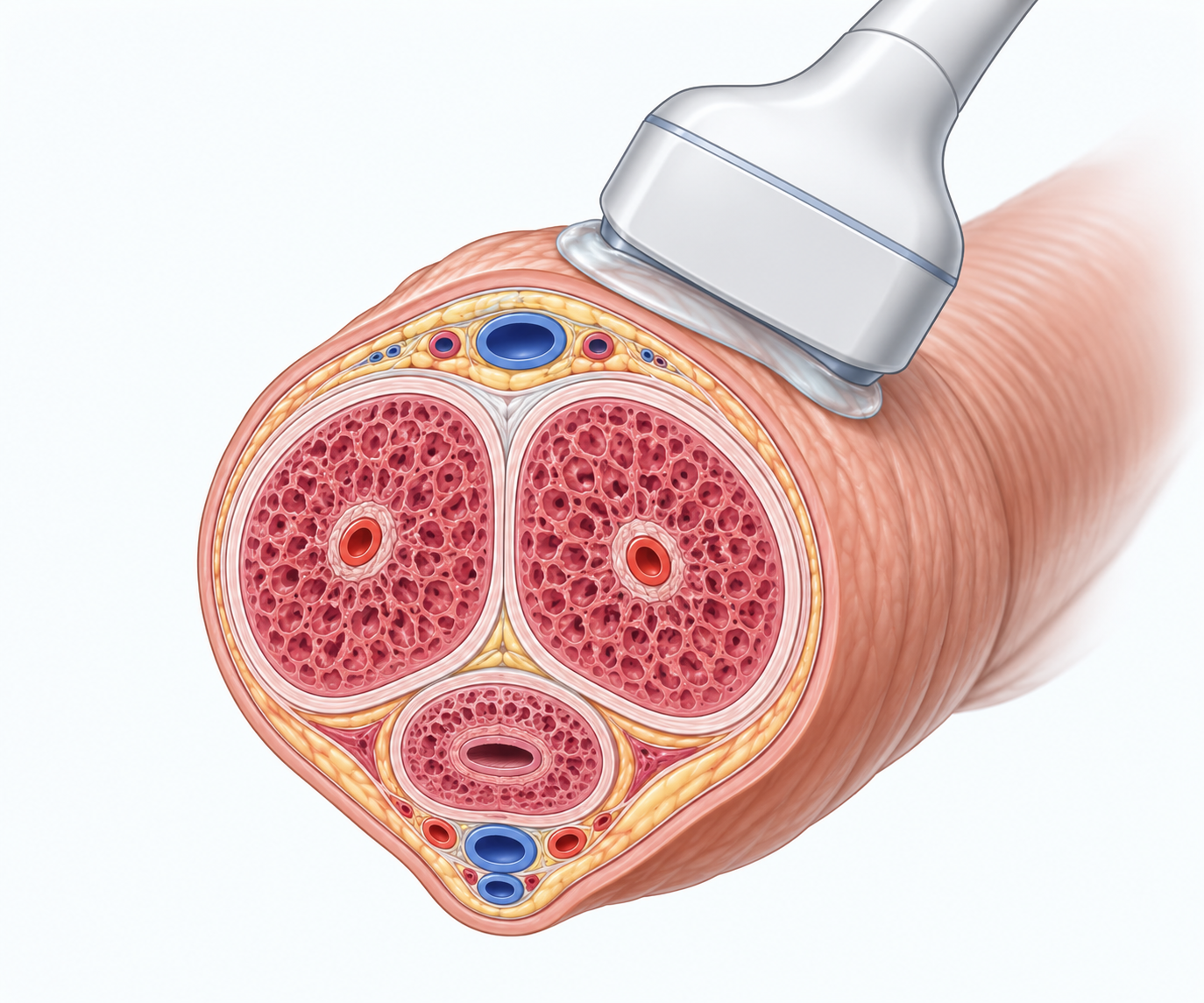
Erectile dysfunction can sometimes be a sign of another health problem
Erections depend heavily on healthy blood vessels. Erectile dysfunction can therefore occur alongside diabetes, high blood pressure, abnormal cholesterol, vascular disease and other cardiovascular risk factors.
New or worsening erectile dysfunction is worth assessing as a medical problem rather than simply trying progressively different tablets without considering the underlying cause.
Work out why the erections are not responding
Not every man needs every investigation. Assessment should be guided by your symptoms, medical history, previous treatment and whether further testing would actually change the treatment plan.
Erection history
Can you obtain any erection? Is it fully rigid? Does it disappear during intercourse? Are morning erections still present?
Medical factors
Diabetes, cardiovascular risk, neurological disease, prostate or pelvic surgery and medication use can all be relevant.
Blood testing
Glucose, cardiovascular risk factors and testosterone may be assessed when clinically appropriate.
Selected imaging
Penile Doppler ultrasound can sometimes provide useful information about vascular erectile function when the result would influence management.
What treatments come after tablets?
The next option depends on what has already been tried, why the tablets are failing, how much reliability you need and whether you prefer to continue with non-surgical treatment.
There is not necessarily a single compulsory sequence for every patient. Treatment should be individualised after discussing the benefits, limitations and risks of the reasonable alternatives.
Use the ED Treatment Pathway →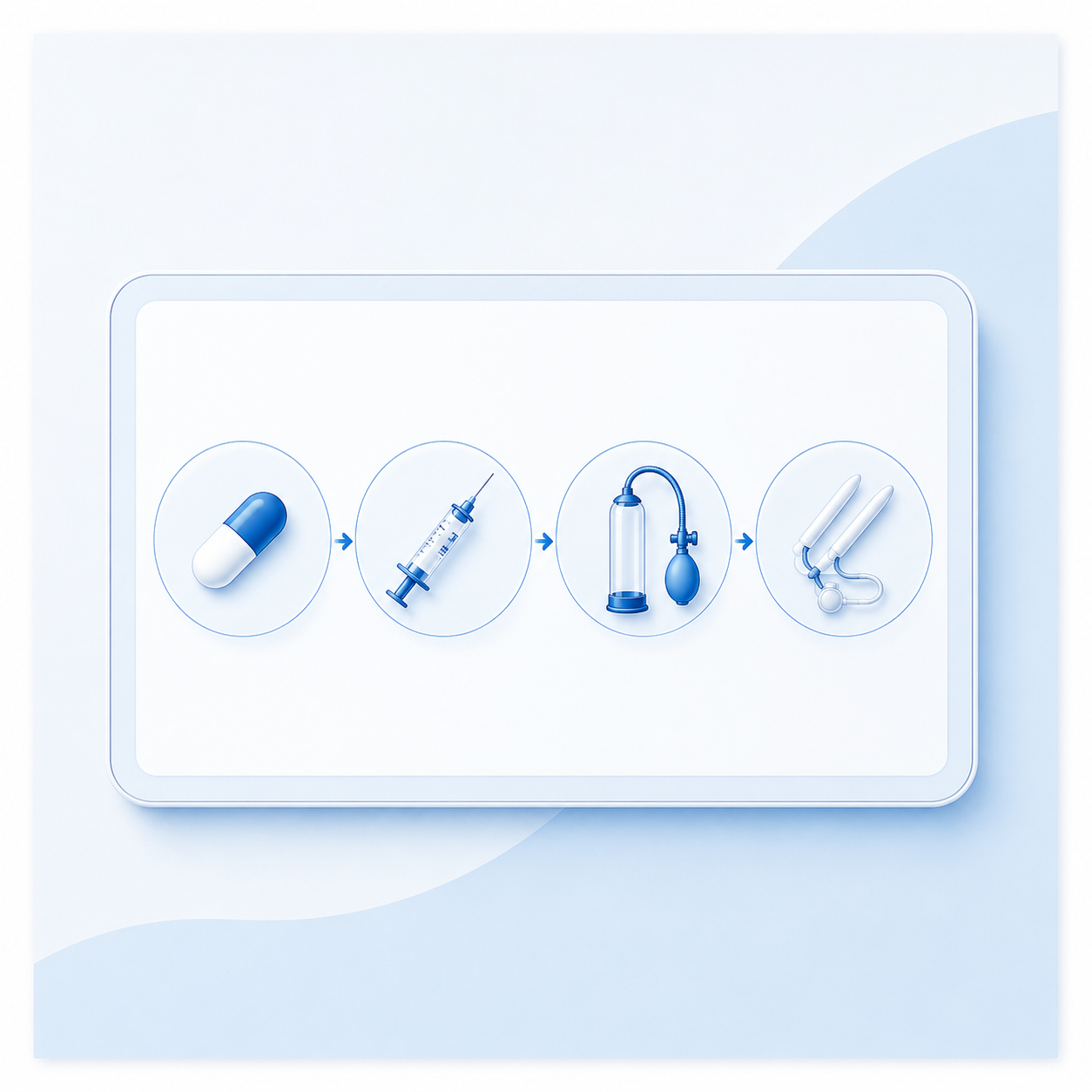
Moving beyond tablets
The options differ in how they work, how much preparation is required and whether treatment is temporary, repeat-use or surgical.
Review oral treatment
If tablets have given some response, there may still be value in reviewing how treatment is being used before concluding that oral therapy has completely failed.
Vacuum erection device
A vacuum device mechanically draws blood into the penis and can provide a non-drug option for erections or penile rehabilitation.
Penile injection therapy
Medication injected directly into the erectile tissue can produce an erection even when oral tablets are not providing an adequate response.
What if injections don't suit me? →Penile implant surgery
A penile implant provides mechanical rigidity without relying on tablet absorption or an injection each time sexual activity is planned.
Explore penile implant surgery →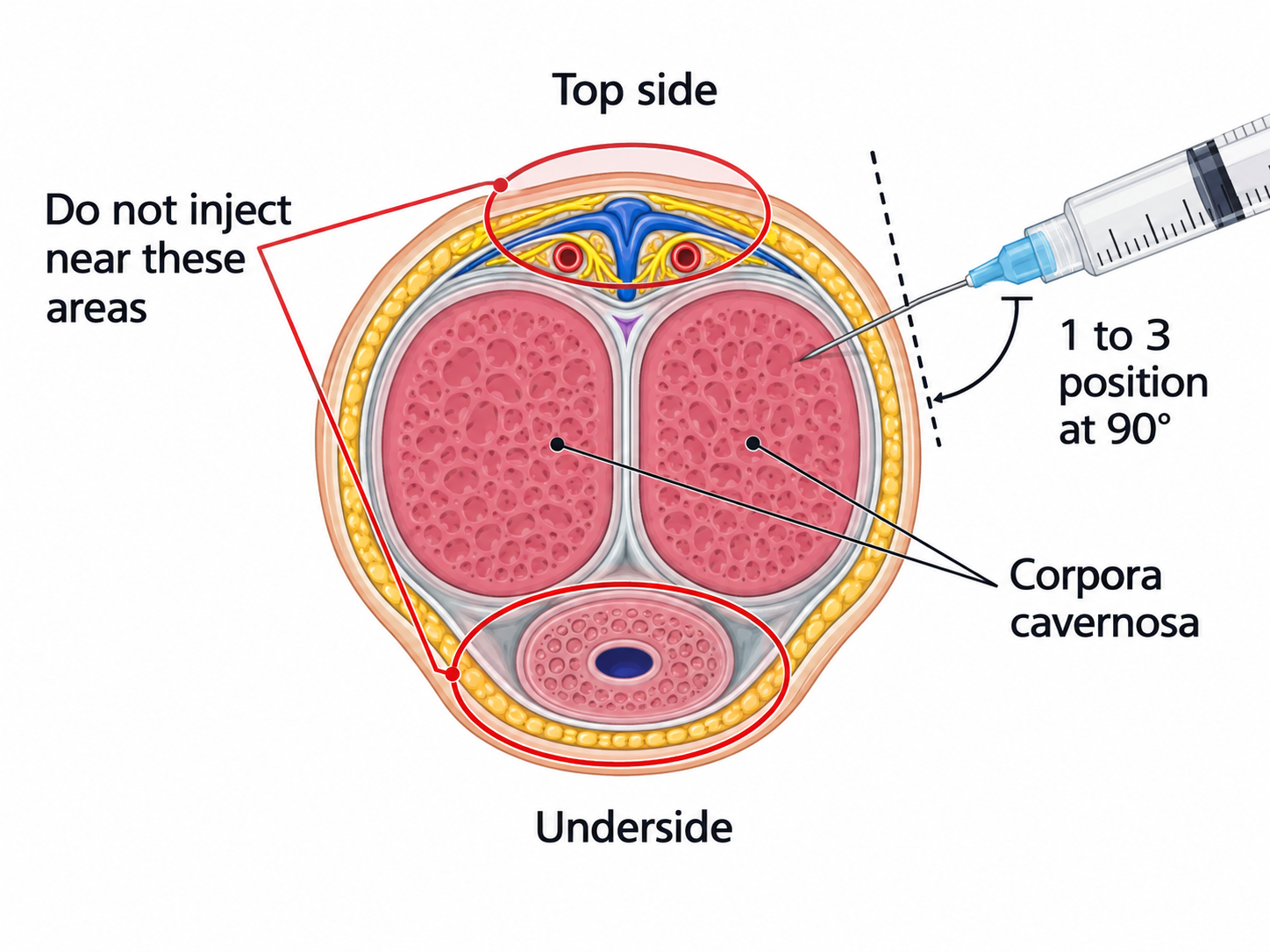
Why injections can work when tablets do not
Intracavernosal medication acts directly on the erectile tissue rather than relying on the same oral-medication pathway. This can make injection therapy useful for selected men with a poor tablet response.
Technique, dose selection and safety counselling matter. An erection that persists for around four hours requires urgent medical assessment.
Penile Injection Information“The tablets work sometimes, but I can't rely on them.”
This is different from having no erectile response at all.
Some men can occasionally achieve an adequate erection but cannot predict when treatment will work, lose rigidity before or during intercourse, or find that increasingly careful planning is required.
In this situation, the question is not simply whether an erection can ever occur.
The more important question may be: is the erection reliable enough for you and your partner?
May still leave substantial uncertainty.
Injection or device-based options may improve predictability for selected men.
Implant surgery is intended to provide mechanical rigidity when desired.
Do I have to try injections before considering an implant?
Not every patient follows exactly the same pathway. The reasonable alternatives should be discussed so you can understand which option best fits your health, expectations and preferences.
Vacuum Device
- No ED medication is required to create the vacuum effect
- Avoids an operation
- Can also have a role in penile rehabilitation
- Requires an external device
- Some men dislike the interruption to spontaneity
Penile Injections
- Can work when tablets have not
- Medication acts directly on erectile tissue
- Requires teaching and dose selection
- Used before sexual activity
- Not everyone wishes to inject long-term
Penile Implant
- Internal treatment
- Does not rely on tablets
- No injection before intercourse
- Patient controls when rigidity is produced
- Requires an operation and implanted medical device
How is an implant different from ED medication?
Tablets and penile injections depend on the erectile tissues responding sufficiently to medication.
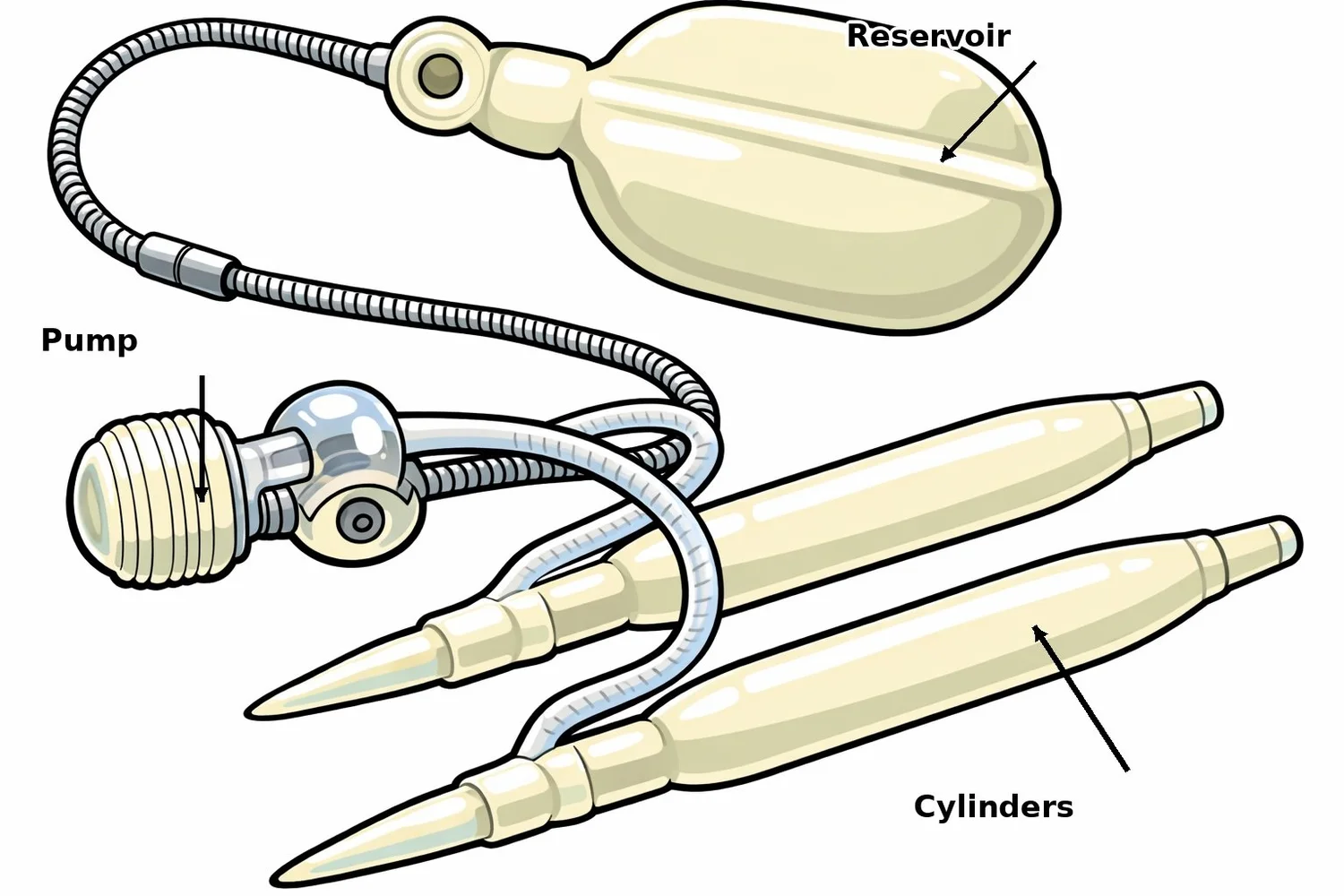
A penile implant is different. It provides mechanical penile rigidity using components placed surgically within the body.
Cylinders
Placed within the erectile chambers.
Pump
Located within the scrotum in a three-piece inflatable system.
Reservoir
Stores fluid within the pelvis or lower abdomen.
When should a penile implant enter the discussion?
Implant surgery may be worth discussing when significant erectile dysfunction continues despite reasonable treatment, when those treatments are unsuitable, or when an appropriately assessed patient wishes to understand a surgical option.
ED tablets no longer provide adequate rigidity
Tablet response is inconsistent or unpredictable
Injection treatment has failed or does not suit you
A vacuum device does not provide acceptable function
Persistent ED is present after prostate or pelvic treatment
Severe diabetes-related or vascular ED is present
Peyronie’s disease is accompanied by poor erectile rigidity

What if ED tablets are not working after prostate surgery?
Erectile dysfunction following radical prostatectomy, radiotherapy or other pelvic cancer treatment can involve nerve and vascular changes that make oral treatment less effective.
Depending on the timing, severity and previous response, discussion may include rehabilitation, vacuum therapy, penile injections and whether penile implant surgery has become appropriate.
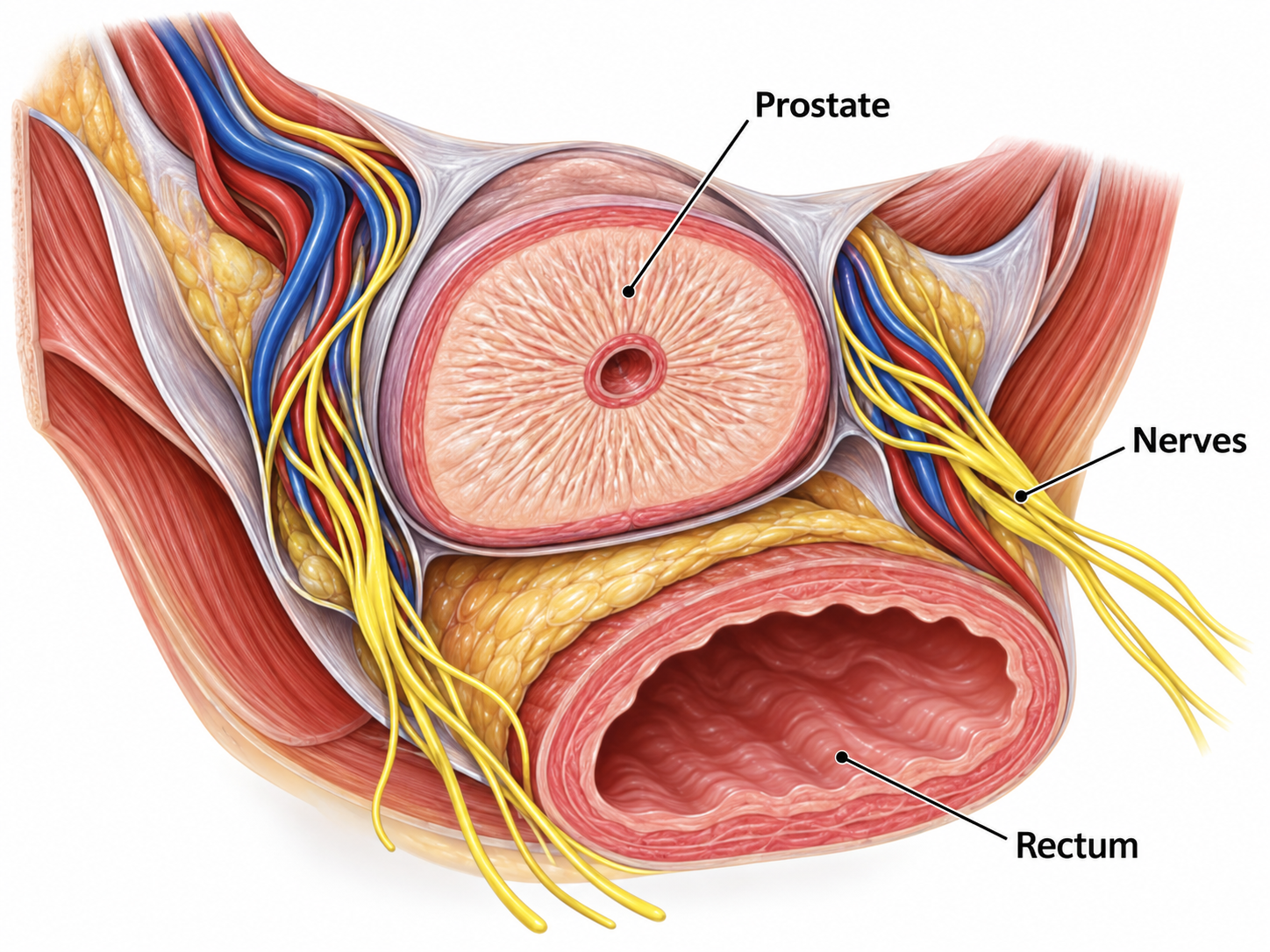
The neurovascular bundles involved in erections run immediately beside the prostate and can be affected by prostate cancer surgery.

An implant is not simply a stronger ED treatment
Penile prosthesis surgery is fundamentally different from tablets, vacuum therapy or injections because an implanted medical device is used to generate penile rigidity.
The decision therefore requires discussion of surgical risks, implant designs, previous pelvic surgery, penile anatomy, hand function, expectations and the possibility of future revision.
Explore the Penile Implant PathwayTreatment is not only about how hard the erection becomes
The practical experience of treatment matters. Different men place different value on avoiding surgery, spontaneity, predictability and the need to prepare before sexual activity.
Reliability
How important is knowing treatment will work when sexual activity is planned?
Spontaneity
How much medication timing, injection preparation or device use are you comfortable with?
Avoiding surgery
Would you prefer ongoing non-surgical treatment even if it requires preparation each time?
Long-term preference
Are you looking for another repeat-use therapy or would you like to understand a more definitive surgical pathway?

Erectile dysfunction can require more than simply changing tablets
Dr Jack Crozier is a Brisbane urologist and fellowship-trained andrologist whose subspecialty practice includes erectile dysfunction, penile implant surgery, Peyronie’s disease and reconstructive andrology.
Assessment can consider erectile function, previous treatment, previous prostate or pelvic surgery, penile anatomy and whether non-surgical or prosthetic treatment is appropriate.
ED tablets not working: frequently asked questions
Why have my ED tablets stopped working?
Erectile dysfunction can progress with time. Vascular disease, diabetes, medication changes, hormonal factors, prostate or pelvic treatment and neurological conditions may all contribute. Incorrect medication use can also produce an apparently poor response, so the circumstances of treatment are worth reviewing.
Can changing how I take the tablets make them work again?
Sometimes. Timing, food, sexual stimulation and the particular medication being used may influence the response. Any medication change should be discussed with your treating clinician rather than increasing or combining treatment yourself.
What if the tablets work but the erection does not stay hard?
Difficulty maintaining sufficient rigidity still represents erectile dysfunction. The pattern can sometimes provide useful clues about contributing vascular, psychological, medication or other factors.
Do I need a penile Doppler ultrasound?
Not necessarily. Many patients can be assessed and treated without penile Doppler ultrasound. It may be useful in selected circumstances where more detailed vascular information would influence management.
Can penile injections work if tablets do not?
Yes, they can. Penile injection therapy acts directly on the erectile tissue and can provide a useful response in some men who have not responded adequately to oral medication. Treatment requires appropriate teaching and dose selection.
Do I have to try injections before having a penile implant?
Not every patient follows exactly the same sequence. The reasonable non-surgical and surgical alternatives should be discussed based on your medical situation, previous treatment and individual preferences.
When should I start thinking about a penile implant?
Implant surgery may be worth discussing when significant erectile dysfunction remains problematic despite reasonable non-surgical treatment, when those treatments are unsuitable, or when an appropriately assessed patient wishes to understand the surgical alternative.
Does a penile implant restore libido or orgasm?
A penile implant is primarily designed to provide penile rigidity. Sexual desire, penile sensation, orgasm and ejaculation involve separate physiological processes and can be affected by other conditions or previous treatment.
Are ED tablets less effective after radical prostatectomy?
They can be. Radical prostatectomy can affect the nerves and vascular pathways involved in erection. The response to tablets varies according to nerve preservation, baseline erectile function, time since surgery and other medical factors.
What if I feel embarrassed discussing erectile dysfunction?
Erectile dysfunction is a routine part of urological and andrological practice. You do not need to know which treatment you want before your appointment. The purpose of assessment is to understand the problem and explain the options that are reasonably relevant to you.
You do not need to keep trying ineffective tablets indefinitely.
If ED medication is no longer providing a satisfactory or dependable erection, specialist assessment can clarify why and explain the options that remain.
General medical information only. Information on this page does not replace individual medical assessment, diagnosis, prescribing advice or informed consent. Erectile dysfunction has multiple possible causes and the suitability, benefits, limitations and risks of individual treatments vary between patients. Do not alter prescription medication without advice from an appropriately qualified clinician.