

Penile Implant After Prostatectomy
When erections have not recovered sufficiently after radical prostatectomy, a penile implant can provide mechanical rigidity without depending on recovery of the erectile nerves or the natural blood-flow response required for tablets or injections.

What if erections have not returned after prostatectomy?
Erectile dysfunction is a recognised consequence of radical prostatectomy, even when nerve-sparing surgery has been possible.
Recovery varies considerably. Age, erection quality before surgery, whether one or both neurovascular bundles were preserved, vascular health, diabetes and additional treatments such as pelvic radiotherapy can all influence recovery.
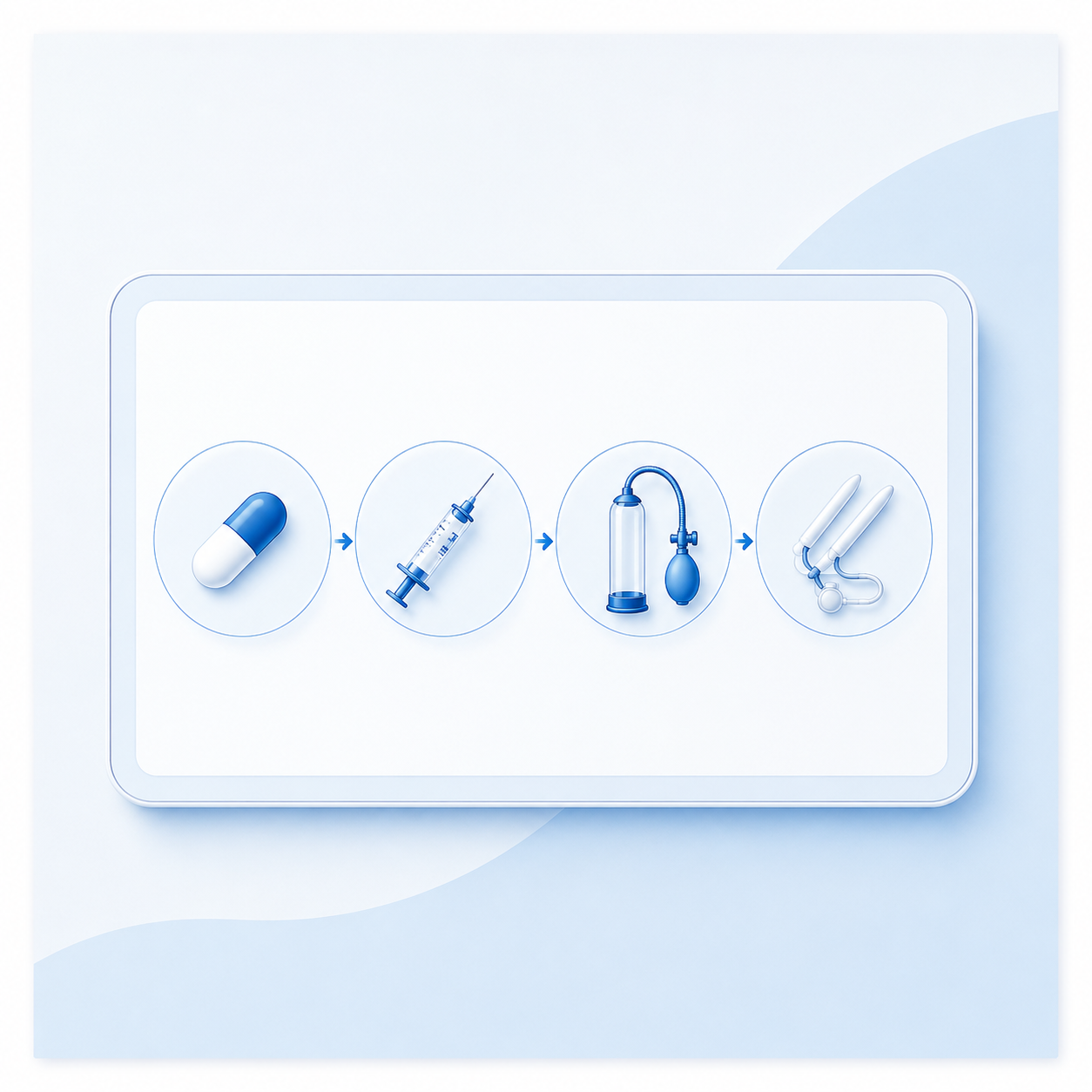
Tablets, vacuum erection devices and penile injections may provide useful erections for some men. For others, erections remain insufficiently rigid, unreliable or dependent on a treatment that no longer suits them.
Rigidity is created mechanically. This means implant surgery can remain an option following non-nerve-sparing prostatectomy or when erectile dysfunction persists despite other treatment.
Why can prostatectomy affect erections?
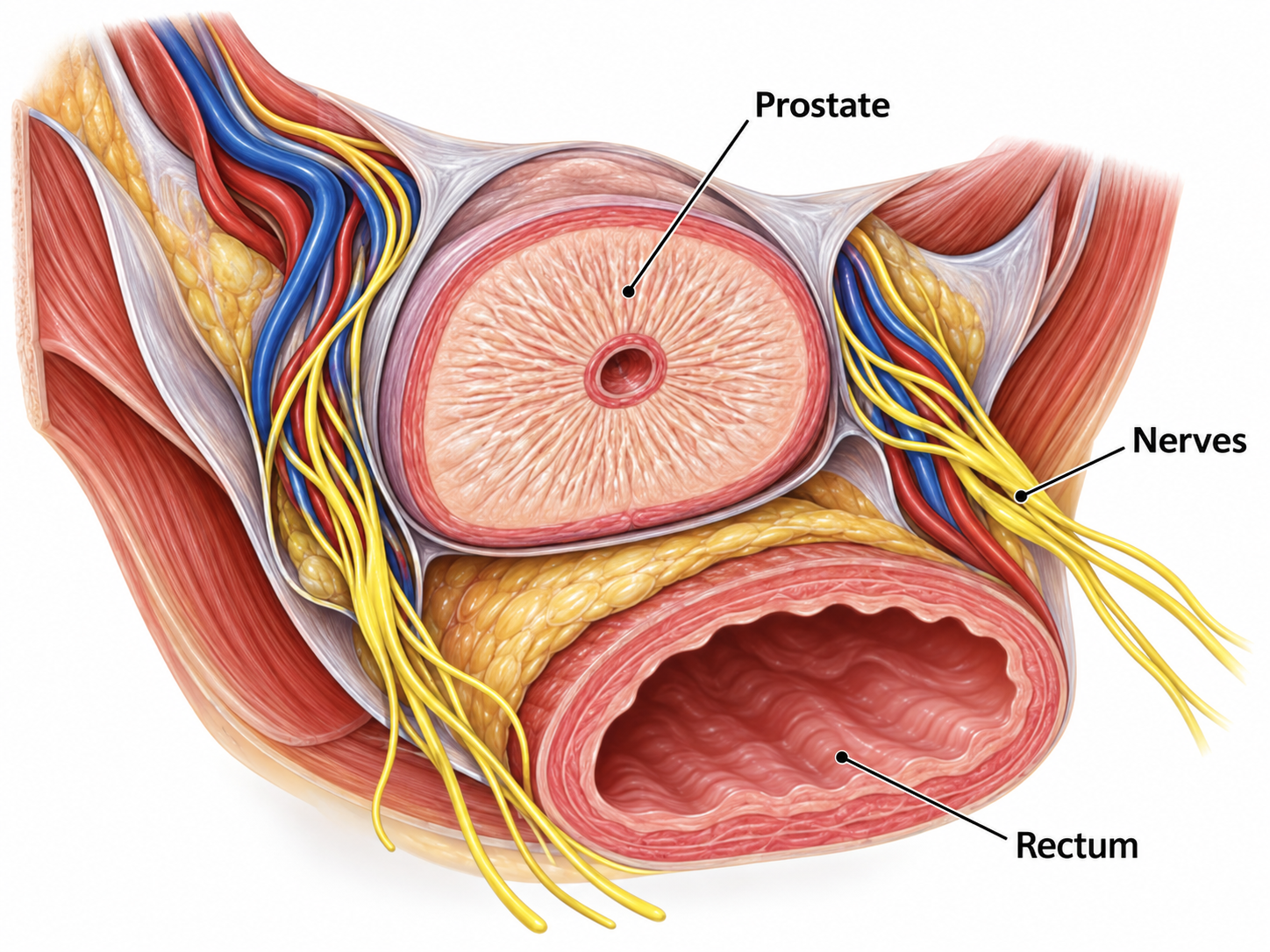
The nerves and blood vessels involved in erectile function lie close to the prostate. Erectile dysfunction after surgery can therefore result from several overlapping factors.
Nerve function
Even when nerves are anatomically preserved, temporary or permanent changes in erectile nerve signalling can occur after surgery.
Reduced spontaneous erections
A prolonged period with fewer erections can contribute to changes in erectile tissue, elasticity and perceived penile dimensions.
Baseline erection quality
Erectile function before prostate cancer treatment influences the likelihood and degree of recovery afterwards.
Extent of nerve sparing
Cancer control takes priority. In some operations one or both neurovascular bundles cannot safely be preserved.
Radiotherapy
Additional pelvic radiotherapy can independently affect erectile function and can influence later surgical planning.
Other sexual changes
Penile dimensions, orgasm, glans filling and urinary leakage during sexual activity can change independently of erection rigidity.
When does a penile implant enter the discussion?
Erectile dysfunction after prostatectomy does not automatically mean that an implant is required. The decision depends on recovery, treatment already tried and what the patient wants from treatment.
Assess the erectile dysfunction
Review erection quality before and after surgery, nerve-sparing status, general health, additional cancer treatment and other changes in sexual function.
Review treatments already tried
This may include appropriately used ED tablets, a vacuum erection device or intracavernosal injection therapy where suitable.
Consider the likelihood of further recovery
Time since prostatectomy matters, but age, baseline erectile function, nerve sparing and the degree of recovery to date also influence the discussion.
Decide whether current treatment still suits you
Some men can produce erections with injections or vacuum devices but find the preparation, discomfort or loss of spontaneity does not suit them long term.
Discuss penile implant surgery
Implant surgery may be reasonable when other treatments are ineffective, unsuitable, poorly tolerated or no longer acceptable after informed discussion.

How long should I wait after prostatectomy?
There is no single mandatory waiting period that is correct for every man.
Some men have a realistic possibility of continued erectile recovery and prefer to continue non-surgical treatment for longer. Others had significant erectile dysfunction before surgery, underwent non-nerve-sparing prostatectomy or have already had an adequate trial of treatment without useful erections.
The important question is therefore not simply how many months have passed. It is whether further useful recovery is reasonably expected and whether current treatment meets the patient's goals.
Implant surgery can be discussed when other therapies are ineffective, unsuitable, poorly tolerated or no longer acceptable after appropriate assessment and counselling.
How does an inflatable penile implant work?
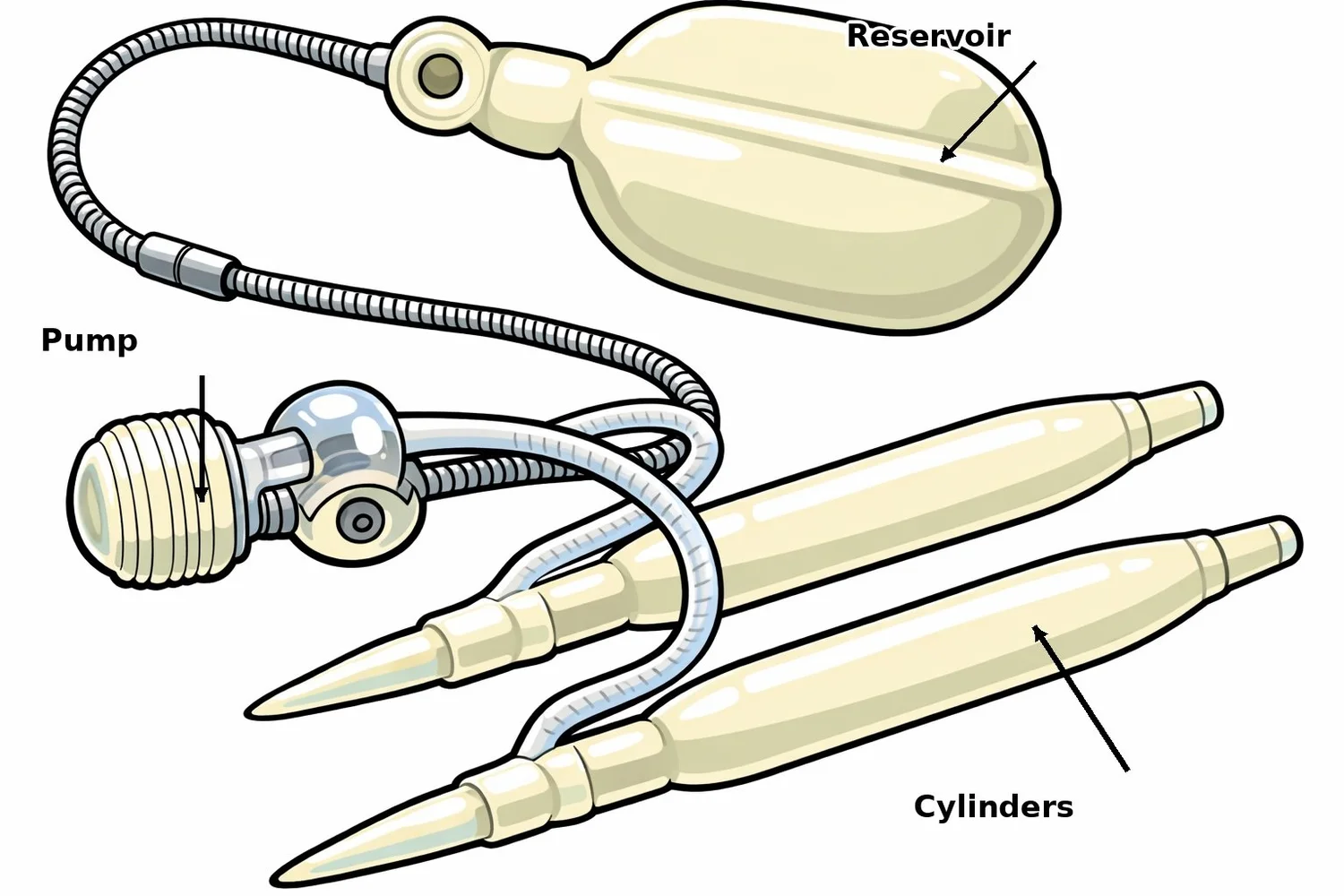
A three-piece inflatable penile implant contains paired cylinders positioned within the erectile chambers, a pump positioned within the scrotum and a fluid reservoir.
Operating the pump transfers fluid into the cylinders to create penile rigidity. The implant can subsequently be deflated when the erection is no longer required.
Because rigidity is created mechanically, the device can function even when the nerve pathways required for natural erections have been significantly affected by prostate surgery.
Cylinders
Positioned within the erectile chambers to provide rigidity.
Scrotal pump
Used to inflate and deflate an inflatable implant.
Reservoir
Stores fluid while the implant is deflated.
Completely implanted
No external component needs to remain attached for intercourse.
Why does previous prostatectomy matter to implant surgery?
Radical prostatectomy changes the anatomy within the pelvis. Implant surgery remains feasible, but previous pelvic treatment is important when planning the procedure.
Reservoir position
Previous pelvic surgery can influence where the fluid reservoir of a three-piece inflatable implant is positioned.
Previous hernia surgery
Inguinal hernia surgery, particularly mesh repair, is relevant because it can alter the usual reservoir pathway.
Pelvic radiotherapy
Previous radiation may affect tissue quality and can influence operative and reconstructive planning.
Urinary continence
Ongoing stress urinary incontinence should be identified because erectile and continence surgery may need to be considered together.
Penile dimensions
Prostate cancer treatment and prolonged erectile dysfunction can already have affected perceived penile dimensions before surgery.
Other pelvic operations
Previous bladder, bowel, vascular or reconstructive surgery should be reviewed as part of preoperative planning.
Previous pelvic surgery can alter the usual retropubic anatomy. Reservoir position can therefore be planned according to the patient's previous operations and current anatomy.
Implant surgery after previous pelvic treatment
The implant itself is only one part of the procedure. Previous surgery, scar tissue, pelvic anatomy and other urinary or penile conditions can influence how the operation is planned.
Particular attention may be required after radiotherapy, inguinal hernia mesh, pelvic surgery, penile fibrosis, Peyronie's disease or previous implantation of another urinary device.
This is one reason a post-prostatectomy implant consultation should consider the original prostate cancer treatment alongside the current erectile problem.
What will a penile implant actually change?
A penile implant has a specific purpose: to provide dependable mechanical penile rigidity. It does not reverse every sexual change caused by prostate cancer treatment.
✓ A penile implant is designed to
- Provide penile rigidity for sexual activity
- Allow an erection to be created when desired
- Work independently of recovery of the erectile nerves
- Reduce dependence on ED tablets or injections
- Remain completely implanted within the body
- Provide a long-term surgical treatment pathway
– A penile implant does not guarantee
- Restoration of penile dimensions from before prostatectomy
- Increased sexual desire
- Normal glans engorgement in every patient
- Restoration of ejaculation after prostatectomy
- Correction of urinary incontinence by itself
- Reversal of pre-existing changes in orgasm or sensation
Orgasm, ejaculation and sensation after prostatectomy
Erectile rigidity is only one component of sexual function. A penile implant does not reverse every change associated with radical prostatectomy.
| Function | What to understand |
|---|---|
| Erection rigidity | This is the principal function treated by penile implant surgery. |
| Orgasm | Many men remain capable of orgasm after prostatectomy, although the sensation or quality may differ. The implant itself does not create orgasm. |
| Ejaculation | Radical prostatectomy removes the prostate and seminal vesicles. Implant surgery therefore does not restore ejaculation of semen. |
| Penile sensation | The implant is not designed to create or increase penile sensation. Pre-existing sensory changes need separate assessment. |
| Glans fullness | The cylinders principally support the penile shaft. The glans remains dependent on remaining natural blood flow and can remain softer than the implanted shaft. |
| Sexual desire | Libido is influenced by hormonal, medical, medication, psychological and relationship factors rather than by the implant itself. |
Will an implant restore the length I had before prostatectomy?
This is one of the most important expectations to discuss before penile implant surgery.
Some men notice penile shortening following radical prostatectomy. Long-standing erectile dysfunction, reduced spontaneous erections, fibrosis and pre-existing penile conditions can also influence perceived penile dimensions.
During implant surgery, the available internal corporal dimensions are measured and appropriately sized cylinders are selected.
The aim is to create a dependable functional erection within the anatomy available at the time of surgery. Expectations regarding length, girth, shape and glans fullness should be discussed before proceeding.
What if I also leak urine after prostatectomy?
Erectile dysfunction and stress urinary incontinence can occur together after radical prostatectomy. Both problems should therefore be considered before implant surgery.
Mild leakage or climacturia
Some men are largely continent during everyday activities but notice leakage during sexual arousal or orgasm. This is often referred to as climacturia.
The degree of bother varies considerably. It is worth discussing before implant surgery rather than assuming that restoring erection rigidity will correct the urinary problem.
More significant stress incontinence
Men who continue to require pads or have significant activity- related leakage may need a dedicated continence assessment.
Penile implant + continence surgery
Depending on the clinical situation, erectile and continence prosthetic surgery can sometimes be performed as separate staged operations or during the same operation in selected patients.
Where an artificial urinary sphincter is being considered, the location of both scrotal pumps, existing scars, previous treatment and future access to each device need careful planning.

Treatment is about more than achieving an erection in a clinic
For many men following prostate cancer treatment, the practical goal is to recover a sexual relationship that feels dependable, manageable and acceptable to both partners.
Some patients are comfortable continuing tablets, injections or a vacuum erection device. Others value greater spontaneity or find repeated preparation increasingly intrusive.
Implant surgery is therefore not simply a question of whether another ED treatment can technically create an erection. How the treatment fits into daily life and intimacy is also relevant.
Inflatable or malleable implant after prostatectomy?
Neither implant design is automatically best for every patient. Anatomy, hand function, previous pelvic treatment and individual priorities can all influence the choice.
Three-piece inflatable implant
Contains paired cylinders, a pump within the scrotum and a fluid reservoir within the pelvis or lower abdomen.
- Inflates when rigidity is desired
- Can be deflated afterwards
- Requires sufficient hand function to operate
- Reservoir planning can be affected by previous pelvic surgery
- Contains additional mechanical components
Malleable penile implant
Contains bendable rods placed within the erectile chambers without a separate inflation pump or fluid reservoir.
- Mechanically simpler design
- Does not require pump squeezing
- Manually positioned for sexual activity
- Remains firm to some degree when not being used
- Concealability differs from an inflatable implant
What information is useful at a post-prostatectomy implant assessment?
Implant assessment involves considerably more than choosing a device. Previous cancer treatment, erectile recovery and urinary function all need to be understood.
- Date and type of radical prostatectomy
- Whether the operation was nerve sparing
- Radiotherapy or other prostate cancer treatment
- Erectile function before prostatectomy
- Current spontaneous or assisted erection quality
- ED tablets and doses previously trialled
- Previous penile injection treatment
- Vacuum erection device experience
- Current urinary pad use
- Climacturia or leakage during sexual activity
- Previous inguinal hernia repair or mesh
- Other pelvic or abdominal operations
- Penile curvature or Peyronie's disease
- Expectations regarding rigidity, dimensions and intimacy
What does recovery generally involve?
Exact postoperative instructions vary according to implant type, anatomy and whether another procedure is performed at the same time.
Healing & swelling
Bruising, tenderness and penile or scrotal swelling are expected initially.
Wound review
Healing, implant position and any symptoms of infection or wound problems are reviewed.
Implant teaching
Patients with an inflatable implant are taught how to locate, inflate and deflate the pump.
Sexual activity
Sexual activity resumes after adequate healing and individual postoperative clearance.
What risks need to be considered?
Penile implant surgery involves placement of an implanted medical device. Potential benefits need to be considered alongside surgical, infectious and mechanical risks.
Infection
Prosthetic infection can require additional treatment and can sometimes require implant removal or replacement.
Mechanical problems
Implant components can eventually develop mechanical problems and may require another operation.
Pain & swelling
Discomfort and swelling are expected during early recovery. Persistent or increasing pain requires assessment.
Positioning problems
Pump, cylinder, tubing or reservoir position can occasionally cause discomfort or functional difficulty.
Erosion or tissue injury
Implant components can rarely threaten or erode surrounding tissue and require further surgery.
Future revision
Implant surgery is a long-term prosthetic pathway and revision or replacement may eventually be required.

Penile implant assessment with Dr Jack Crozier
Dr Jack Crozier is a Brisbane urologist and fellowship-trained andrologist whose subspecialty practice includes erectile dysfunction, penile implant surgery, Peyronie's disease and reconstructive andrology.
His advanced andrology fellowship at University College London Hospitals included penile prosthetic surgery, penile reconstruction and complex andrology.
Following radical prostatectomy, erectile function, previous pelvic surgery, penile dimensions, urinary continence and prosthetic planning can therefore be considered as parts of the same clinical problem.
Penile implant after prostatectomy FAQs
Can a penile implant work if the nerves were removed during prostatectomy?
Yes. A penile implant creates rigidity mechanically and does not require normal erectile nerve function. This is one reason implant surgery can remain an option after non-nerve-sparing prostatectomy.
How long after radical prostatectomy can I have a penile implant?
There is no universal mandatory waiting period. Timing depends on erectile function before surgery, nerve-sparing status, recovery to date, treatments already tried, additional prostate cancer treatment and individual priorities.
Do I have to wait two years before considering an implant?
Not necessarily. Some men reasonably continue to wait for erectile recovery. Others have a low likelihood of useful spontaneous recovery or have already found other treatment unsatisfactory. Timing should therefore be individual.
Can I have a penile implant after robotic prostatectomy?
Yes. Previous robotic prostatectomy does not prevent penile implant surgery. Previous pelvic surgery does, however, need to be considered when planning the procedure and reservoir position.
Can I have an implant if I have also had radiotherapy?
Previous radiotherapy does not automatically exclude penile implant surgery. Radiation history is relevant because it can influence tissue quality and surgical planning.
What if injections work but I do not want to keep using them?
Treatment preference matters. Some men obtain satisfactory erections with injections but dislike the preparation, discomfort, planning or loss of spontaneity. Implant surgery can still be discussed after appropriate counselling about alternatives, risks and limitations.
Will an implant make my penis the same length it was before prostate surgery?
This cannot be guaranteed. Prostatectomy, prolonged erectile dysfunction, reduced spontaneous erections and fibrosis can affect penile dimensions before implant surgery. An implant is primarily intended to provide rigidity rather than enlargement.
Will I still be able to orgasm?
The implant provides erection rigidity rather than orgasm. Many men can still experience orgasm after radical prostatectomy, although prostate cancer treatment can independently change orgasmic sensation.
Will I ejaculate after having a penile implant?
A penile implant does not restore ejaculation after radical prostatectomy. Following removal of the prostate and seminal vesicles, orgasm is generally dry.
Will the head of the penis become hard?
Implant cylinders mainly provide rigidity to the penile shaft. The glans remains dependent on remaining natural blood flow and can therefore remain softer than the implanted shaft.
What if I still leak urine after prostatectomy?
Urinary leakage should be assessed before implant surgery. Climacturia, mild stress leakage and more significant post-prostatectomy incontinence are different problems and may require different treatment.
Can I have both a penile implant and an artificial urinary sphincter?
Selected men require both devices after prostatectomy. Procedures can sometimes be performed separately or during the same operation. The preferred approach depends on the continence problem, anatomy, previous treatment and surgical considerations.
Does a penile implant interfere with PSA monitoring?
Penile implant surgery treats erectile rigidity and does not replace prostate cancer surveillance. PSA monitoring and any additional oncology follow-up should continue according to the patient's prostate cancer follow-up plan.
Is an inflatable implant better after prostatectomy?
No single implant design is best for every patient. Implant selection should consider anatomy, hand function, previous pelvic surgery, scarring, continence surgery and individual preferences.
When should I seek urgent review after implant surgery?
Increasing redness, worsening pain, fever, wound discharge, rapidly increasing swelling, wound breakdown or exposure of an implant component require prompt medical assessment.
Related erectile dysfunction & implant information
Persistent erectile dysfunction after prostatectomy?
A specialist assessment can help clarify whether further erectile recovery is reasonably expected, whether non-surgical treatment still meets your needs, and whether penile implant surgery should form part of the discussion.