

Couple Fertility
Decision Room
Fertility treatment is rarely a decision about one partner alone. Compare the questions that can matter when choosing between natural conception, treatment of a male factor, reproductive surgery, sperm retrieval and IVF/ICSI.
Private by design: no names, dates of birth or identifying information are requested. Answers are processed within this browser and are not submitted to the practice by this tool.

The same male diagnosis can lead to different fertility pathways
A surgically correctable blockage may make reconstruction worth discussing in one couple, while sperm retrieval with IVF/ICSI may fit another couple better because IVF is already required for a separate fertility reason.
Similarly, a potentially reversible male factor may allow time for treatment in one situation but require parallel assisted reproduction planning where reproductive time is more limited.
This Decision Room helps identify those trade-offs without pretending that an online questionnaire can choose treatment.
Male diagnosis
Is sperm production impaired, is there obstruction, or is another potentially reversible male factor present?
Egg-side fertility
Age, ovarian reserve and other known fertility factors can affect the reproductive timeframe.
Family goals
Wanting one pregnancy versus several children can change the value placed on restoring natural fertility.
Treatment preferences
Time, surgery, IVF burden and preference for natural conception are legitimate parts of shared decision-making.
Compare the fertility pathways worth discussing
Seven short questions create a discussion summary. The tool does not rank or select treatment.
What best describes the male fertility situation?
Choose the closest option. The final diagnosis may still require specialist assessment.
How old is the person providing the eggs?
Age does not choose treatment, but it can influence how much time is available to pursue a slower pathway.
What is known about other fertility factors?
This information can influence whether IVF would already be considered independently of the male problem.
How important is time to your fertility plan?
Some male treatments require time for recovery, return of sperm or improvement in semen parameters.
How many future children are you hoping for?
Restoring sperm to the ejaculate may have different value when several pregnancies are desired.
Which considerations matter most to you?
Select all that apply. There is no correct answer.
Your Decision Room
These are pathways and questions worth discussing — not a treatment recommendation.
Your fertility context
The factors entered into this Decision Room.
Pathways that may enter the discussion
Appearance here does not mean a pathway is appropriate or preferable for you.
What could change the decision?
Important information that may alter the balance between pathways.
Questions to take to your fertility team
Consultation summary
Copy this into your notes or bring it to consultation.
Fertility surgery and IVF do not necessarily solve the same problem
Can a correctable male factor be treated?
Selected obstruction, testosterone-related suppression, varicocele or another identifiable male factor may create an opportunity to improve or restore reproductive function.
Explore male fertility treatment →Can available sperm be used with assisted reproduction?
IVF/ICSI can bypass several barriers to natural conception. When sperm are not available in the ejaculate, retrieval may sometimes provide sperm for ICSI.
Surgical sperm retrieval →Which pathway best fits the couple's reproductive timeline?
The technically possible male treatment still needs to be considered alongside egg-side fertility, timing, desired family size and treatment preferences.
Fertility assessment checklist →Reconstruction and sperm retrieval answer different questions
Selected men with reproductive obstruction may have both pathways available for discussion.
Restore the sperm pathway
Microsurgical or selected endoscopic reconstruction aims to allow sperm to return to the ejaculate.
- May provide an opportunity for natural conception if successful
- May be attractive when several pregnancies are desired
- Requires time for recovery and assessment of semen afterwards
- Does not guarantee sperm return or pregnancy
- The appropriate reconstruction depends on the site of obstruction
Retrieve sperm for IVF/ICSI
Sperm may be obtained from the epididymis or testicle and provided to an IVF laboratory for assisted reproduction.
- Bypasses the obstructed reproductive tract
- May align with a pathway where IVF is already required
- Can reduce dependence on waiting for reconstruction to produce sperm
- Requires an assisted-reproduction pathway for the egg provider
- Retrieval technique depends on the underlying male diagnosis

A potentially treatable male problem may still need parallel fertility planning
Some male treatments take time before their effect can be assessed. For example, semen changes after treatment occur over a biological timeframe, and sperm may take time to return after reproductive reconstruction.
Partner age
Age is not a treatment rule, but increasing reproductive age can make avoidable delay more important.
Ovarian / egg-side fertility
A known fertility problem may mean assisted reproduction would be considered even if the male factor were corrected.
Active IVF treatment
Sperm retrieval and freezing decisions may need to be coordinated directly with the IVF and embryology team.
Desired family size
The value of restoring natural fertility can differ when several future pregnancies are desired.
The diagnosis comes before the procedure
Azoospermia
Determine whether the pattern reflects obstruction or substantially reduced sperm production.
Explore →MicroTESE
Microsurgical sperm retrieval in selected men with non-obstructive azoospermia.
Explore →Vasectomy Reversal
Reconstruct the sperm pathway and compare this approach with sperm retrieval plus IVF/ICSI.
Explore →Surgical Sperm Retrieval
PESA, TESA, TESE, MESA and MicroTESE according to the underlying male reproductive diagnosis.
Explore →Varicocele & Fertility
Determine whether a clinically relevant varicocele is likely to contribute to the couple's infertility.
Explore →Fertility After Testosterone
Assess suppression and potential recovery following exogenous testosterone or anabolic-androgenic steroids.
Explore →Couple-focused male fertility assessment
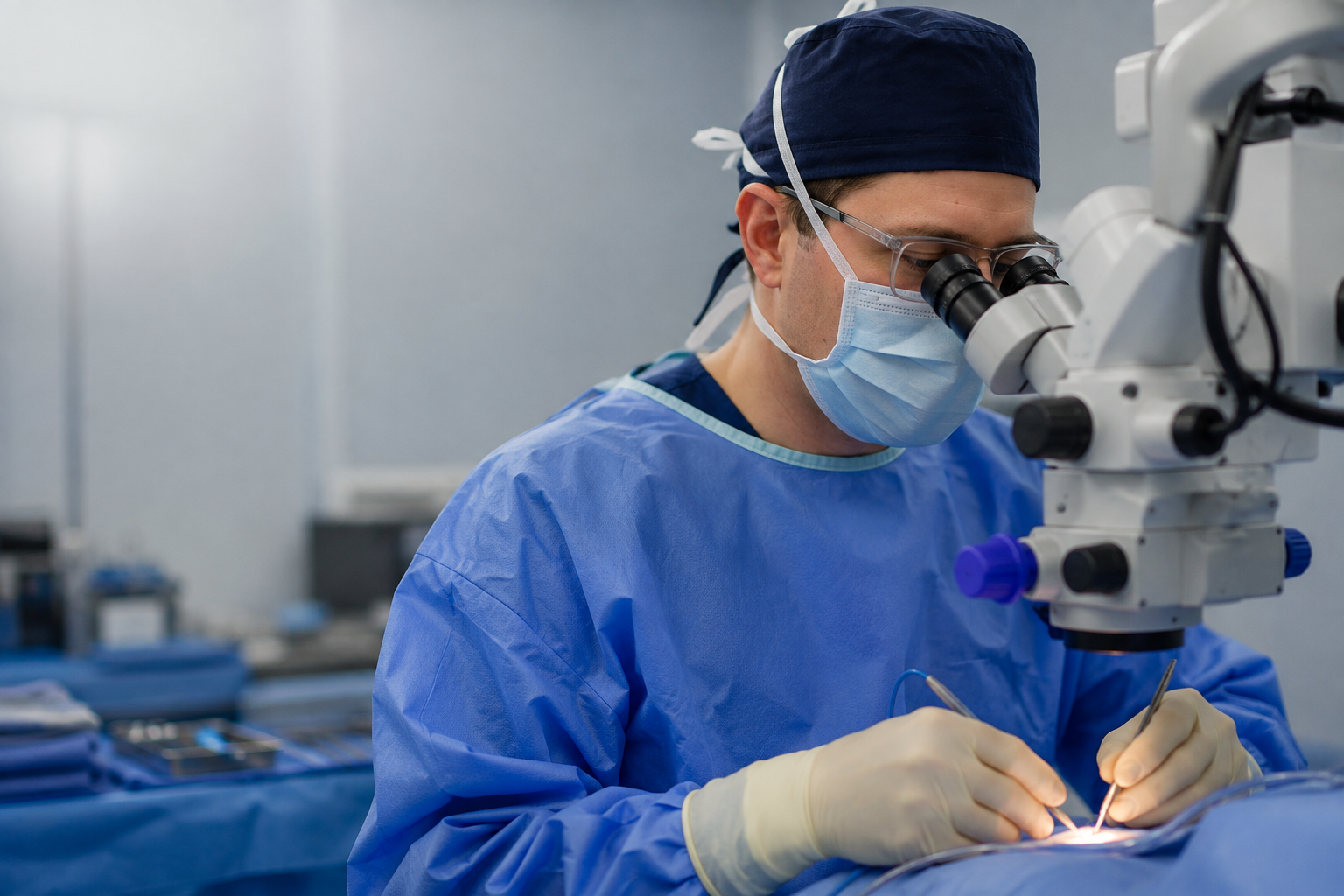
Dr Jack Crozier is a Brisbane urologist and fellowship-trained andrologist with a subspecialty practice in male infertility and reproductive microsurgery.
Male assessment focuses on defining the cause of the reproductive problem before deciding whether observation, treatment of a reversible factor, microsurgical reconstruction, sperm retrieval or assisted reproduction should be considered.
Where IVF/ICSI is part of the pathway, treatment planning can be coordinated with the couple's fertility specialist and embryology laboratory.
Understand the options before choosing the procedure
A male fertility assessment can clarify the male diagnosis and establish which reproductive pathways are technically possible. The final decision can then be made in the context of both partners.