

Klinefelter Syndrome & Fertility
Klinefelter syndrome can significantly reduce sperm production and is an important genetic cause of severe male infertility and non-obstructive azoospermia.
A diagnosis does not necessarily mean that biological paternity is impossible. Fertility assessment can determine whether sperm are present in the semen and whether surgical sperm retrieval such as MicroTESE may be an appropriate option.
What is Klinefelter syndrome?
Klinefelter syndrome is a chromosomal condition affecting males. The most common chromosome pattern is 47,XXY, meaning that an additional X chromosome is present.
Some men have mosaic Klinefelter syndrome, in which only a proportion of cells have the additional X chromosome. The clinical and reproductive effects can therefore vary considerably between individuals.
Klinefelter syndrome may be diagnosed during investigation of:
- azoospermia or severe oligospermia
- small testicular volume
- reduced testosterone
- elevated FSH or LH
- delayed or incomplete pubertal development
- other clinical features prompting chromosome testing
47,XXY
The typical chromosome pattern associated with Klinefelter syndrome.
Why does Klinefelter syndrome affect fertility?
The additional X chromosome can affect the development and function of the seminiferous tubules where sperm are produced.
Sperm production falls
Spermatogenesis is usually substantially impaired and may become limited to very small areas within the testicle.
FSH often rises
The pituitary gland may increase FSH in an attempt to stimulate poorly functioning testicular tissue.
Testosterone can be reduced
Testicular testosterone production can also be affected, although the degree of androgen deficiency varies.
Focal sperm may remain
Azoospermia in the semen does not prove that every part of the testicle contains no sperm production.
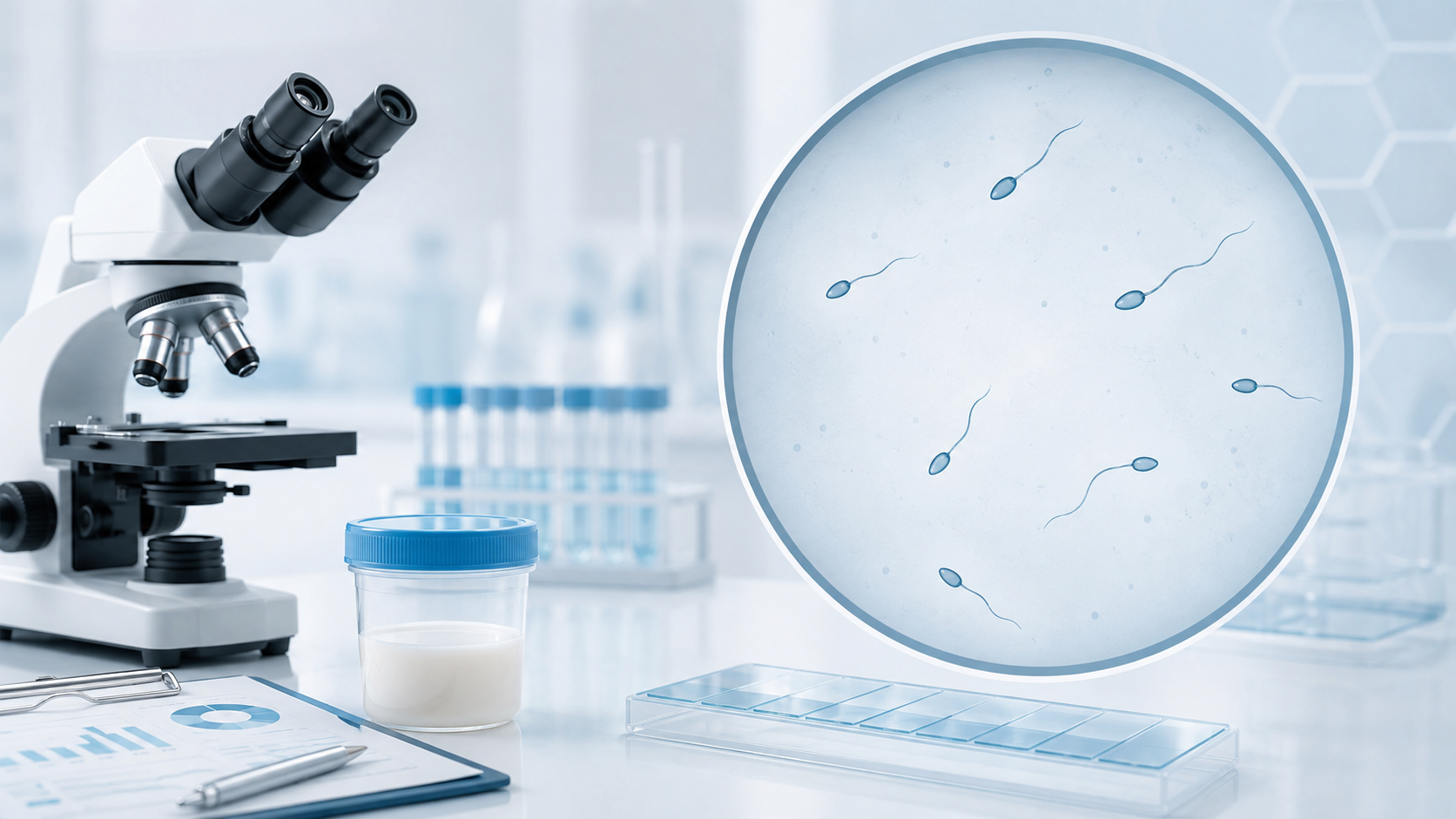
Are any sperm present in the semen?
Semen analysis is an important early step for an adult man with Klinefelter syndrome who is considering biological paternity.
Although many men have azoospermia, sperm may occasionally be identified in the ejaculate. When clinically suitable sperm are present, fertility preservation through cryopreservation may be discussed with the relevant fertility laboratory.
Very low sperm numbers can fluctuate between samples, so the significance of an individual result should be interpreted within the complete fertility assessment.
Semen analysis
Determines whether sperm are present and, if so, their concentration, motility and other laboratory characteristics.
FSH, LH & testosterone
Hormone results help assess testicular function and whether androgen deficiency also requires consideration.
Male fertility examination
Testicular volume, reproductive anatomy and other relevant findings are interpreted alongside laboratory results.
Review the genetic diagnosis
The karyotype is reviewed and additional genetic assessment is considered when clinically indicated.
Review testosterone use
Current or previous testosterone therapy is considered because fertility goals and androgen management may need to be coordinated.
Reproductive timing
The fertility circumstances of both partners influence the timing of sperm retrieval, IVF and fertility-preservation decisions.
Confirm your goals
Clarify whether biological paternity is desired now or may be important in the future.
Assess fertility
Review semen testing, hormones, examination, karyotype and previous treatment.
Preserve sperm
If suitable sperm are present in the ejaculate, cryopreservation may be considered.
Consider MicroTESE
If azoospermia is confirmed, discuss whether microsurgical sperm retrieval is appropriate.
Coordinate fertility care
Integrate sperm retrieval with the couple's IVF/ICSI and longer-term hormone plan.
MicroTESE and Klinefelter syndrome
MicroTESE — microdissection testicular sperm extraction — may be considered in selected men with Klinefelter syndrome and non-obstructive azoospermia.
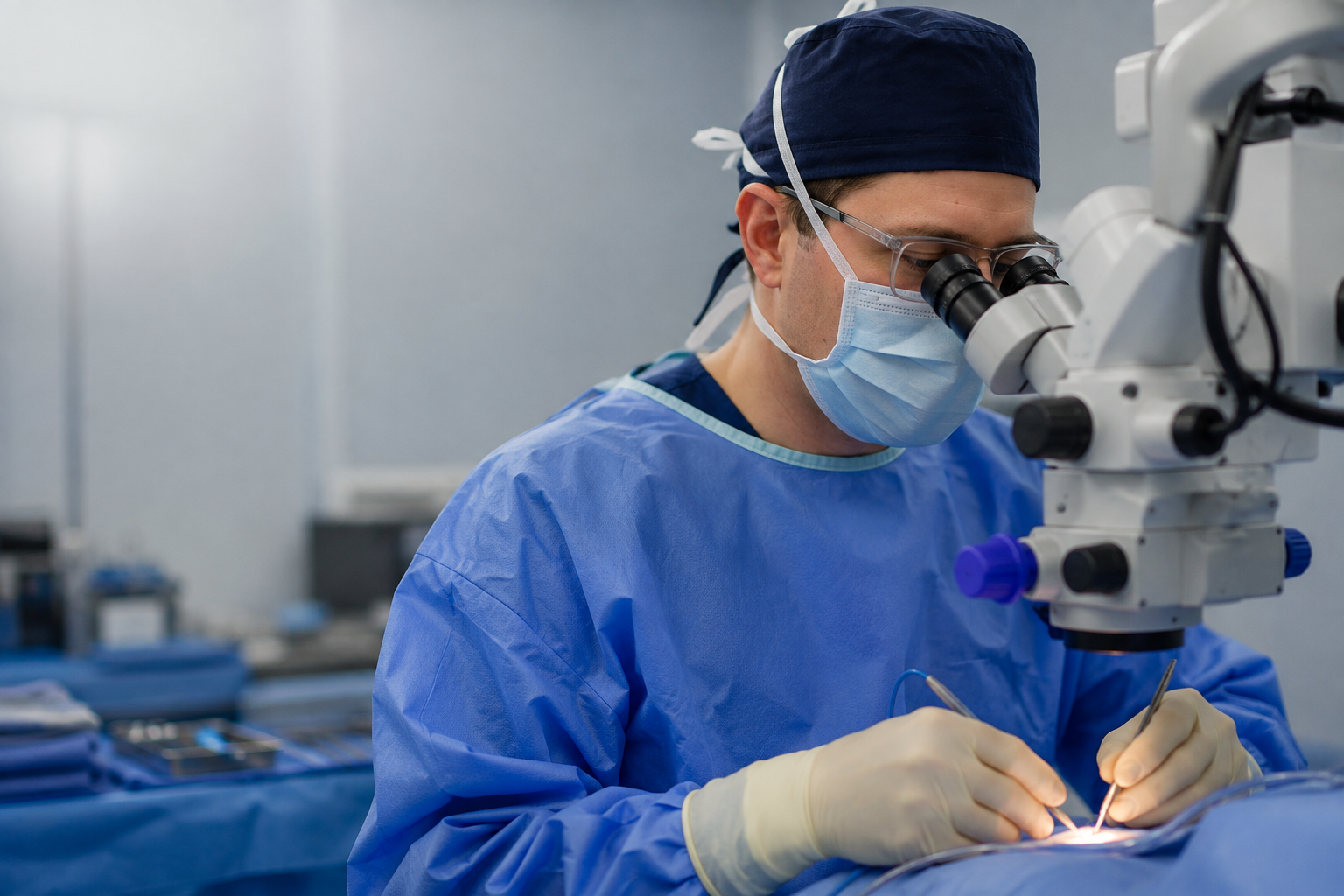
During MicroTESE, the testicular tissue is examined under an operating microscope. The aim is to identify enlarged or more promising seminiferous tubules that may contain focal sperm production while limiting unnecessary tissue removal.
Published series report meaningful sperm retrieval rates in Klinefelter syndrome, but an individual patient's result cannot be predicted with certainty.
FSH reflects impaired testicular function but cannot reliably exclude small focal areas of spermatogenesis.
If sperm are retrieved, fertilisation, embryo development, pregnancy and live birth remain separate stages of treatment.
If you are actively trying to conceive
If azoospermia is confirmed and biological paternity is desired, specialist discussion can determine whether MicroTESE and IVF/ICSI should form part of the current fertility plan.
If parenthood may be several years away
Fertility preservation, the potential timing of sperm retrieval and the need for testosterone treatment should be considered together rather than as unrelated decisions.

What about testosterone treatment?
Testosterone deficiency is common in Klinefelter syndrome and appropriate androgen treatment may be important for bone health, sexual function, body composition and general wellbeing.
However, external testosterone can suppress the hormonal signals required for sperm production. For a man who wishes to pursue fertility, testosterone treatment and reproductive planning therefore need to be considered together.
This does not mean that prescribed testosterone should simply be stopped without medical supervision. The appropriate plan depends on fertility goals, symptoms, hormone results and the wider clinical situation.
Male assessment
Confirm the diagnosis and determine whether surgical retrieval is a reasonable option.
Female assessment
The female partner's fertility circumstances influence treatment timing and IVF planning.
Sperm retrieval
MicroTESE is coordinated with an embryology laboratory capable of examining testicular tissue.
ICSI pathway
If suitable sperm are found, the fertility team determines how they can be incorporated into treatment.
Can Klinefelter syndrome be passed on?
Klinefelter syndrome most commonly occurs as a sporadic chromosome event rather than being passed through a family in a simple inherited pattern.
Men considering IVF/ICSI may nevertheless have questions about chromosome abnormalities, embryo testing and the implications for future children.
Reproductive genetic counselling can help explain the individual karyotype, available evidence and whether any additional testing is relevant to the couple's particular circumstances.
The karyotype is one part of reproductive planning
Decisions about sperm retrieval, IVF, embryo testing and future pregnancy should be based on the couple's complete reproductive and genetic circumstances.
Related male fertility information

Specialist Klinefelter fertility assessment
Dr Jack Crozier is a Brisbane urologist and fellowship-trained andrologist with a subspecialty practice in male reproductive medicine, azoospermia, reproductive microsurgery and surgical sperm retrieval.
Assessment of fertility in Klinefelter syndrome focuses on the individual's reproductive goals, semen findings, hormone status, genetic diagnosis and whether sperm preservation or MicroTESE should be considered.
Where assisted reproduction is required, treatment can be coordinated with the patient's fertility specialist and IVF laboratory.
Can a man with Klinefelter syndrome have a biological child?
Does Klinefelter syndrome always cause azoospermia?
If my semen analysis shows zero sperm, does that mean MicroTESE cannot work?
What is the sperm retrieval rate with MicroTESE in Klinefelter syndrome?
Does a very high FSH mean MicroTESE will fail?
Should MicroTESE be performed as young as possible?
Should testosterone be stopped before MicroTESE?
Should I freeze sperm if sperm are found in my semen?
Do I need genetic counselling before IVF?
If MicroTESE does not find sperm, can it simply be repeated?
Have you been diagnosed with Klinefelter syndrome and want to understand your fertility options?
A specialist assessment can review your semen testing, hormones, genetic diagnosis and fertility goals and determine whether sperm preservation, MicroTESE or another reproductive pathway should be considered.