


Obstructive Azoospermia: Causes, Sperm Retrieval & Reconstruction
Obstructive azoospermia means sperm cannot be detected in the ejaculate because there is a blockage somewhere along the male reproductive tract.
The key questions are where the blockage is, whether it can reasonably be reconstructed, and whether reconstruction or sperm retrieval with IVF/ICSI better suits your fertility plan.
What is obstructive azoospermia?
In obstructive azoospermia, sperm production within the testicles is often relatively preserved, but sperm cannot travel normally into the ejaculate because the reproductive pathway is blocked.
A blockage can occur at several different levels — within the epididymis, vas deferens or ejaculatory ducts.
Some causes are acquired, such as vasectomy, previous surgery, inflammation or injury. Others result from congenital abnormalities of the reproductive tract.
Azoospermia can result from obstruction, reduced sperm production, hormonal suppression, ejaculatory problems or overlapping causes. Establishing the cause is therefore the first step.
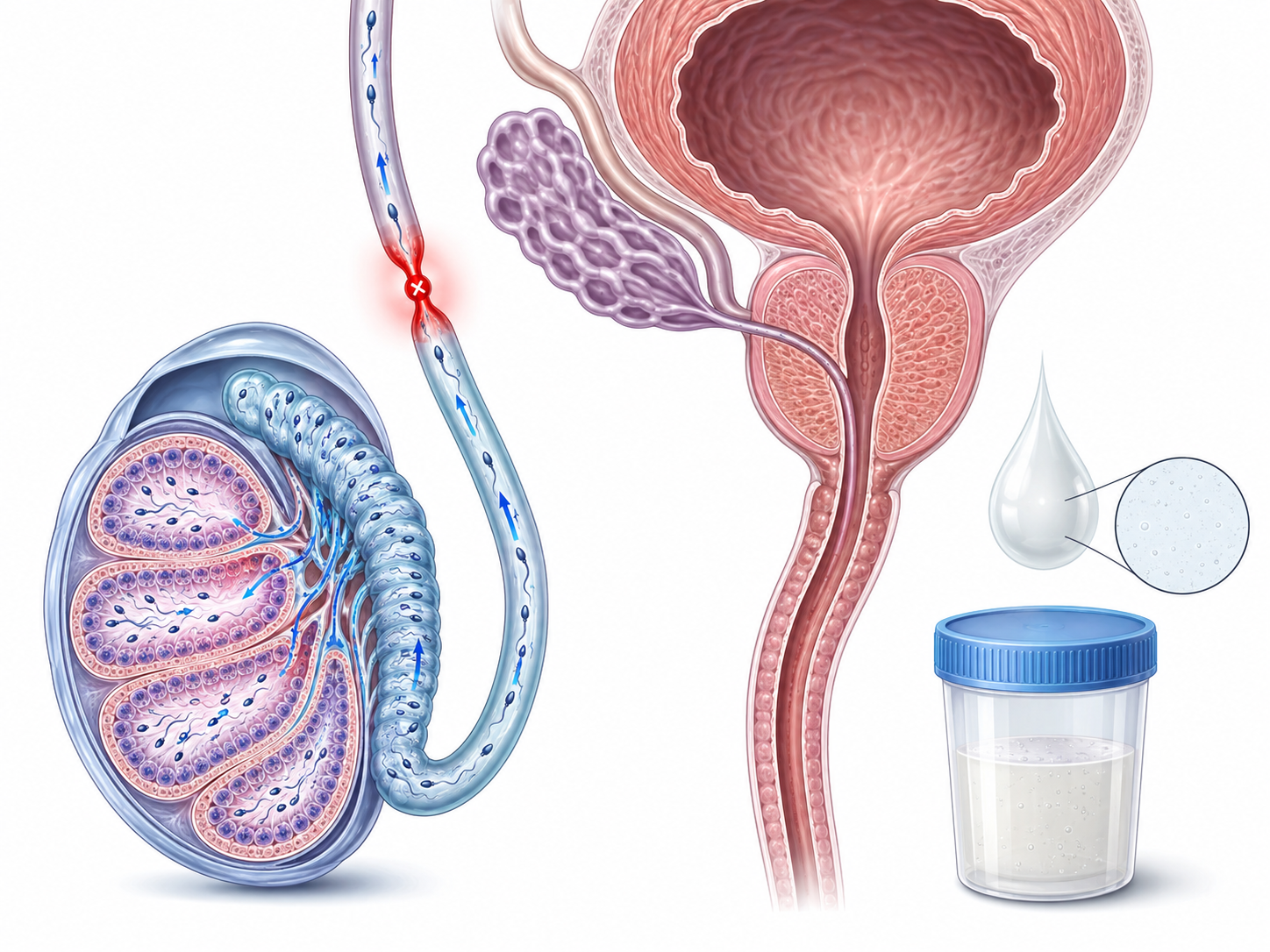
Obstructive or non-obstructive azoospermia?
These conditions can both produce a semen analysis reporting no sperm, but the underlying problem and treatment can be completely different.
Sperm production may be preserved, but the pathway is blocked
Findings that can support this possibility include:
- Previous vasectomy
- Previous groin, scrotal or reproductive surgery
- Relatively preserved testicular size
- FSH that is not markedly elevated
- A full or abnormal epididymis
- Abnormal or absent vas deferens
- Very low-volume acidic semen in selected distal obstructions
No single finding proves obstruction. The overall clinical pattern is what matters.
Sperm production within the testicle is significantly impaired
Possible clues include:
- Reduced testicular volume
- Elevated FSH in primary testicular failure
- Genetic or developmental conditions
- Previous undescended testes
- Previous chemotherapy or radiotherapy
- Other causes of impaired spermatogenesis
When sperm retrieval is appropriate for non-obstructive azoospermia, MicroTESE is generally the preferred surgical approach.
Learn about MicroTESE →Where can the sperm pathway become blocked?
The level and cause of obstruction can determine whether reconstruction, sperm retrieval, endoscopic treatment or another pathway is most appropriate.
Epididymal obstruction
The epididymis is the coiled structure beside the testicle through which sperm mature and travel.
Obstruction may follow inflammation, previous surgery, congenital abnormalities or develop after vasectomy.
Vasal obstruction
The vas deferens carries sperm from the epididymis toward the prostate.
Vasectomy is the most obvious cause, but injury during previous groin or scrotal surgery can also cause obstruction.
Absent or abnormal vas deferens
Some men are born without one or both vas deferens or with other abnormalities of the sperm transport system.
CFTR genetic assessment and counselling may be relevant in this setting.
Ejaculatory ducts
The ejaculatory ducts pass through the prostate and deliver sperm and seminal vesicle fluid into the urethra.
Complete bilateral obstruction can cause azoospermia, particularly when semen volume is very low.
A man with an obstruction after vasectomy does not require the same operation as a man with epididymal obstruction, congenital absence of the vas deferens or ejaculatory duct obstruction.

How is obstructive azoospermia diagnosed?
There is not one blood test, ultrasound or semen measurement that proves obstruction in every patient.
Assessment combines the semen pattern with your fertility history, examination, reproductive hormones and targeted investigations.
Confirm azoospermia
An important zero-sperm result should be appropriately confirmed. Laboratory processing or centrifugation may identify rare sperm in some men.
Review the history
Previous vasectomy, hernia repair, orchidopexy, hydrocele surgery, scrotal surgery, infection or trauma can provide important clues.
Examine the reproductive tract
Testicular size, the epididymis and whether the vas deferens is palpable can help localise the likely problem.
Review reproductive hormones
FSH, LH and testosterone are interpreted together with testicular size and the clinical history. A normal FSH can support obstruction but does not prove it.
Use targeted testing where appropriate
Genetic testing, ultrasound, transrectal ultrasound or pelvic imaging may be appropriate depending on the suspected cause.
Can the semen analysis show where the blockage is?
Semen volume and pH can provide useful clues, but they need to be interpreted according to the location of the suspected obstruction.
Normal-volume azoospermia
A normal semen volume does not exclude obstructive azoospermia.
Men with vasectomy or epididymal obstruction may still produce a normal amount of seminal fluid because most semen volume comes from the prostate and seminal vesicles.
Very low semen volume
Very low volume raises a different set of possibilities, including incomplete collection, retrograde ejaculation, ejaculatory dysfunction, absent seminal vesicles or distal reproductive tract obstruction.
Low volume + acidic pH
A very low-volume acidic ejaculate can increase suspicion for a distal problem such as ejaculatory duct obstruction or congenital absence of the vas deferens with abnormal seminal vesicles.
It does not establish the diagnosis by itself.
Do I need genetic testing or imaging?
CFTR genetic testing
CFTR testing is particularly relevant when one or both vas deferens are absent or structurally abnormal, and can also be appropriate in unexplained obstructive azoospermia.
Depending on the findings, genetic counselling and testing of the reproductive partner may also need to be considered.
Men with structural abnormalities of the vas deferens may also require assessment for associated renal abnormalities.
TRUS, MRI and ultrasound
Imaging is targeted to the clinical question rather than automatically performed in every man.
Transrectal ultrasound or pelvic MRI may be useful when the semen pattern suggests ejaculatory duct obstruction or when the cause of obstructive azoospermia remains unclear.
Scrotal ultrasound may also be useful when examination is limited or there is another testicular or epididymal finding requiring assessment.
Genetic testing is tailored to the clinical pattern. Routine karyotype and Y-chromosome microdeletion testing are not generally required once clearly obstructive azoospermia has been established because sperm production is expected to be present. Unexplained azoospermia requires a broader assessment until the diagnosis is clear.
From a zero sperm count to a treatment plan
Confirm
Confirm the azoospermia pattern and review the semen analysis.
Distinguish
Decide whether obstruction or impaired sperm production is more likely.
Locate
Determine where the blockage is likely to be and why it has occurred.
Choose
Compare reconstruction, sperm retrieval and assisted reproduction according to both partners.
Reconstruct the sperm pathway or bypass the blockage?
Once obstruction has been confirmed, there are often two fundamentally different reproductive strategies. Neither is automatically right for every couple.
Reconstruct the pathway
Surgery aims to restore sperm to the ejaculate.
- Vasovasostomy for suitable vasal obstruction
- Epididymovasostomy for selected epididymal obstruction
- Treatment of selected ejaculatory duct obstruction
- May provide an opportunity for natural conception
- May be attractive when more than one pregnancy is desired
Bypass the blockage
Sperm are retrieved directly and used with IVF/ICSI.
- PESA or MESA from the epididymis
- TESA or TESE from the testicle
- May suit couples already requiring IVF
- May be relevant when reproductive timing is important
- Avoids waiting for sperm to return after reconstruction
Female age, ovarian reserve, duration of infertility, desired family size, previous fertility treatment and the couple's preferences all matter when comparing these pathways.
Can the blockage be repaired?
Selected vasal and epididymal blockages can be approached with microsurgical reconstruction. The operation depends on where the obstruction is located.
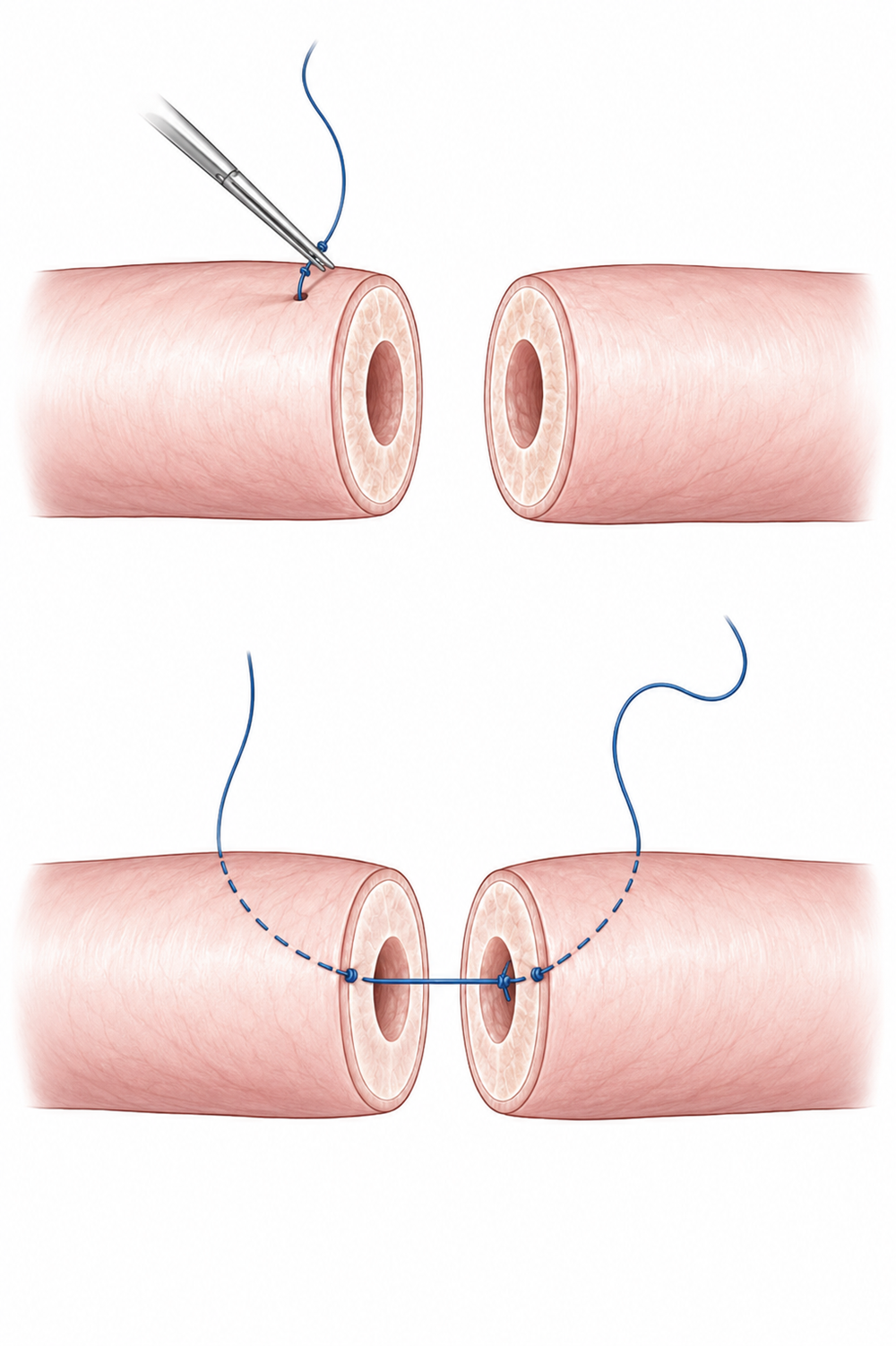
Vasovasostomy
Vasovasostomy reconnects two ends of the vas deferens and is commonly associated with microsurgical vasectomy reversal.
It may also be relevant to selected other vasal obstructions when the anatomy allows reconstruction.
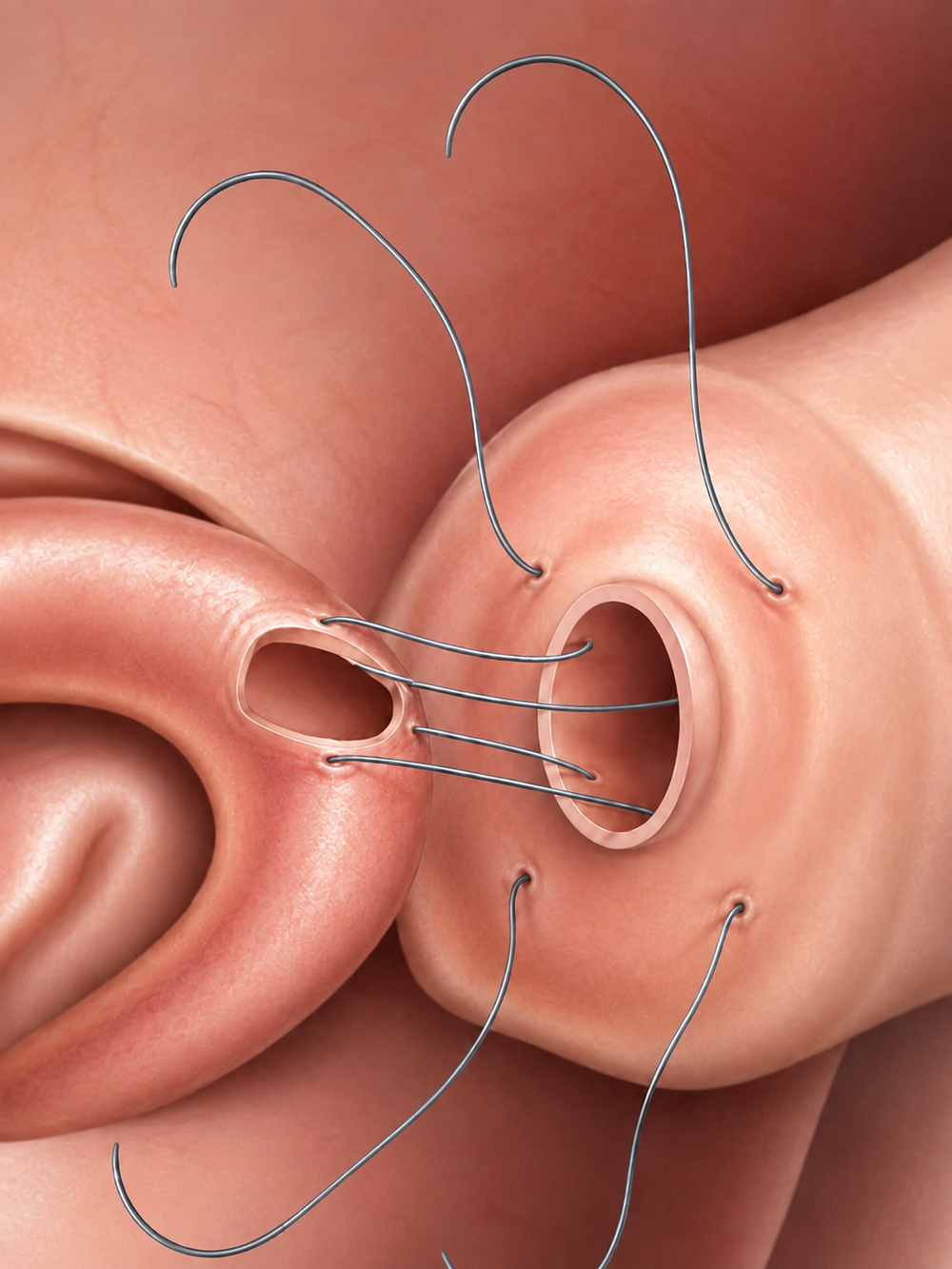
Epididymovasostomy
When the obstruction lies within the epididymis, the vas deferens may need to be connected directly to a suitable epididymal tubule.
This is a more complex microsurgical reconstruction and is appropriate only in selected circumstances.
Why microsurgical technique matters
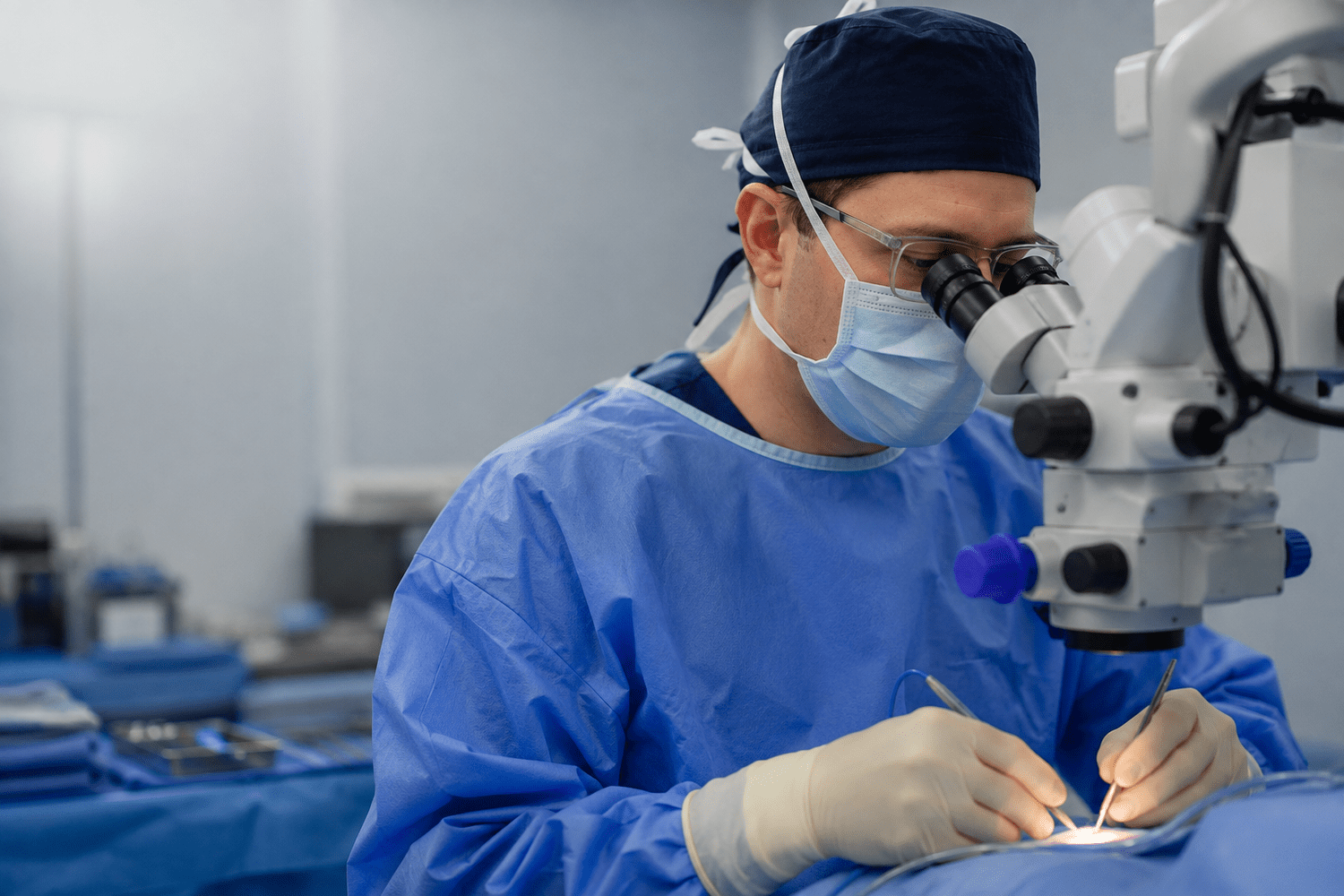
The vas deferens and epididymal tubules are small structures. Reconstructive fertility surgery therefore uses operating microscope magnification and fine microsurgical sutures.
In some operations the exact reconstruction required can only be determined after the reproductive tract is assessed during surgery.
For example, during vasectomy reversal, findings may indicate that a straightforward vasovasostomy is appropriate or that secondary epididymal obstruction requires an epididymovasostomy.

Obstructive azoospermia after vasectomy
Vasectomy deliberately interrupts both vas deferens so sperm can no longer enter the ejaculate.
Sperm production within the testicles usually continues, which means fertility can potentially be approached in two ways:
- microsurgical vasectomy reversal to restore the sperm pathway
- sperm retrieval from the epididymis or testicle for IVF/ICSI
The choice is made as a couple. Female fertility, age, ovarian reserve, reproductive timeframe, desired number of children and treatment preferences should all be considered.
Sperm retrieval for obstructive azoospermia
Because sperm production is generally preserved in pure obstructive azoospermia, sperm may be obtainable from the epididymis or directly from the testicle for use with ICSI.
Epididymal sperm retrieval
Techniques include:
- PESA — percutaneous epididymal sperm aspiration
- MESA — microsurgical epididymal sperm aspiration
These techniques retrieve sperm upstream from a distal obstruction when the epididymis is suitable.
Testicular sperm retrieval
Techniques can include:
- TESA — testicular sperm aspiration
- TESE — testicular sperm extraction
MicroTESE is generally not required for straightforward obstructive azoospermia because it is designed for men with severely impaired sperm production.
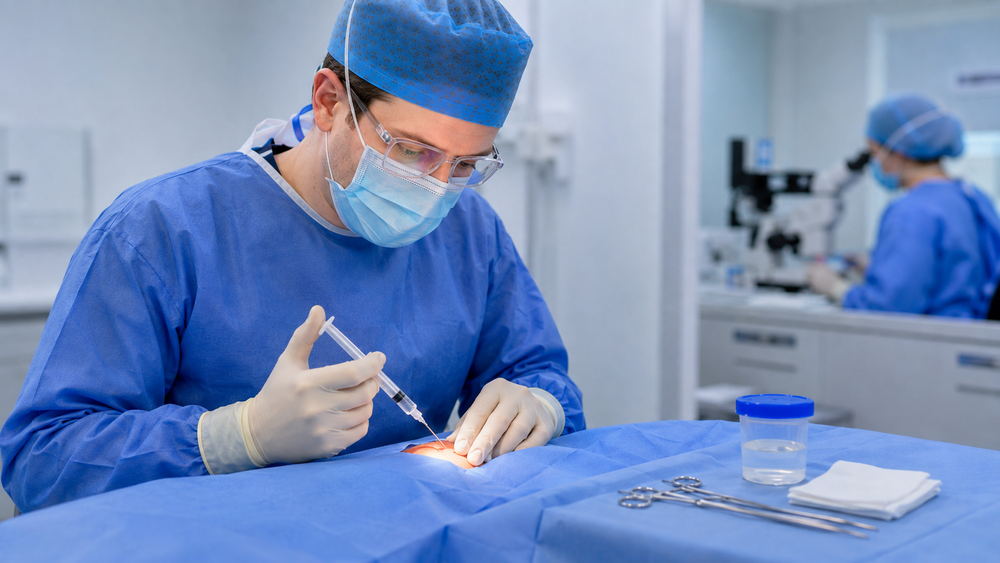
TESA
Percutaneous aspiration of testicular tissue can be used in selected men with obstructive azoospermia.
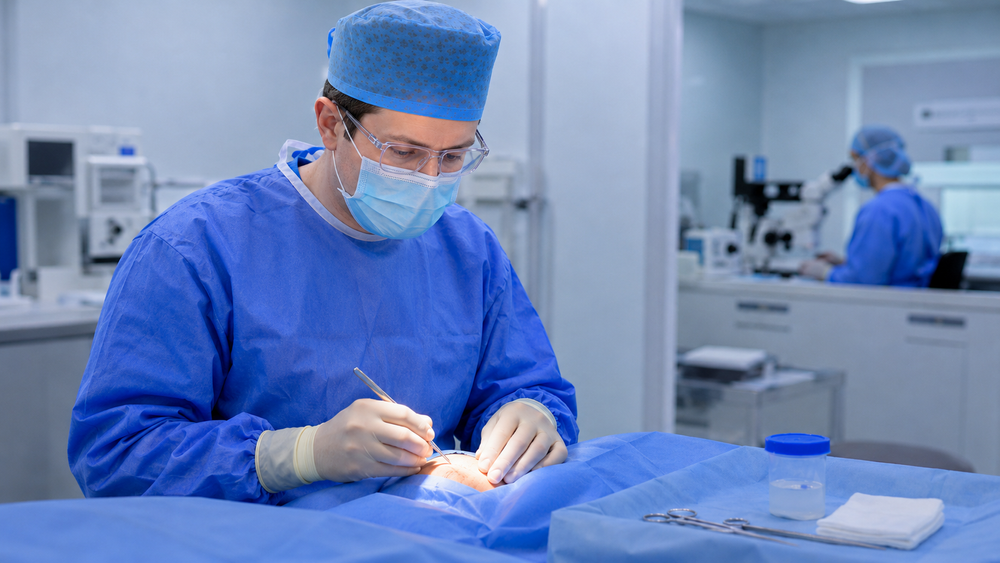
TESE
A small testicular tissue sample is obtained surgically and examined by the fertility laboratory for sperm.
What if the blockage is at the ejaculatory ducts?
Ejaculatory duct obstruction is a specific form of distal obstruction located within the prostate.
Complete bilateral obstruction may produce a characteristic pattern of azoospermia with very low semen volume, and the ejaculate may be acidic because seminal vesicle fluid cannot drain normally.
Low semen volume alone is not enough to diagnose ejaculatory duct obstruction. Other causes such as incomplete collection, retrograde ejaculation and ejaculatory dysfunction need to be considered.
When a genuine surgically treatable ejaculatory duct obstruction is confirmed, TURED may be considered in selected men.
TURED does not treat all obstructive azoospermia
TURED treats obstruction at the ejaculatory ducts.
It does not repair:
- vasectomy
- epididymal obstruction
- vasal obstruction
- congenital absence of the vas deferens
- non-obstructive azoospermia
Correct localisation of the obstruction is therefore essential before treatment is selected.
Do I need a diagnostic testicular biopsy?
Usually not simply to decide whether azoospermia is obstructive or non-obstructive.
In most men, a combination of semen testing, history, examination, reproductive hormone results and targeted investigations can establish the likely diagnosis without performing a separate diagnostic biopsy.
If testicular surgery is required for therapeutic sperm retrieval, tissue assessment may form part of that procedure where clinically appropriate.
Your obstructive azoospermia journey
The objective is to establish the diagnosis before selecting an operation or assisted reproductive pathway.
Confirm the semen finding
Review previous semen analyses and confirm whether true azoospermia is present.
Review your fertility and surgical history
Previous fertility, vasectomy, reproductive surgery, groin operations, infections, injuries and current fertility goals are considered.
Examine and investigate
Testicular findings, epididymides, vas deferens, reproductive hormones and targeted genetic or imaging investigations are reviewed where appropriate.
Locate the likely obstruction
Determine whether the blockage is most likely epididymal, vasal, congenital or distal within the ejaculatory ducts.
Compare the reproductive options
Reconstruction is compared with sperm retrieval and IVF/ICSI where both are reasonable options. The reproductive circumstances of both partners are considered.
Treatment and follow-up
Treatment is coordinated according to the chosen pathway, with semen testing, IVF planning or postoperative fertility follow-up as appropriate.

Dr Jack Crozier
Dr Jack Crozier is a Brisbane urologist and fellowship-trained andrologist with a subspecialty focus on male infertility, azoospermia, reproductive microsurgery and sperm retrieval.
His advanced andrology fellowship at University College London Hospitals included male infertility, sperm retrieval, vasectomy reversal, reproductive microsurgery and complex andrological surgery.
Travelling to Brisbane for obstructive azoospermia assessment?
Men with complex azoospermia may be referred from elsewhere in Queensland, interstate or overseas for reproductive urology assessment.
Where clinically appropriate, previous semen analyses, hormone results, genetic testing, imaging, fertility records and previous operation reports may be reviewed before major travel arrangements are made.
This can help clarify whether further investigation, reproductive tract reconstruction, sperm retrieval or another pathway is likely to require consideration.

Explore related information
Azoospermia
Start with the broader guide to understanding a semen analysis where no sperm have been identified.
Surgical Sperm Retrieval
Compare PESA, MESA, TESA and TESE and understand how surgically retrieved sperm may be used with ICSI.
Vasectomy Reversal
Learn about microsurgical vasovasostomy, epididymovasostomy and fertility planning after vasectomy.
Ejaculatory Duct Obstruction
Understand distal obstruction, diagnosis and when TURED may be considered.
MicroTESE
Learn about microsurgical sperm retrieval for selected men with non-obstructive azoospermia.
Male Infertility & Reproductive Urology
Return to the main male fertility hub to explore assessment, conditions, treatment pathways and patient tools.
Obstructive azoospermia FAQs
Does obstructive azoospermia mean I am not producing sperm?
No. In pure obstructive azoospermia, sperm production is generally preserved but sperm cannot reach the ejaculate. This is fundamentally different from non-obstructive azoospermia, where sperm production within the testicle is significantly impaired.
Can I have obstructive azoospermia with a normal semen volume?
Yes. Vasectomy, epididymal obstruction and some vasal obstructions can occur despite a normal semen volume because sperm make up only a small proportion of the ejaculate. Most semen volume comes from the seminal vesicles and prostate.
Does low semen volume mean I have a blockage?
No. Low semen volume can occur because of incomplete collection, retrograde ejaculation, ejaculatory dysfunction, hormonal factors and other conditions. A very low-volume acidic ejaculate may increase suspicion for distal reproductive tract obstruction, but it does not prove it.
Does a normal FSH prove that my azoospermia is obstructive?
No. A normal FSH can support the possibility that sperm production is relatively preserved, particularly when testicular size is normal, but FSH cannot establish the diagnosis by itself. The whole clinical pattern needs to be considered.
Can high FSH occur with obstructive azoospermia?
Pure obstruction usually occurs with relatively preserved sperm production and often normal reproductive hormones. However, obstruction and impaired testicular function can coexist. A high FSH therefore requires careful interpretation rather than automatically excluding a blockage.
Do I need CFTR genetic testing?
CFTR testing is particularly important when examination shows that one or both vas deferens are absent or structurally abnormal and may also be considered in otherwise unexplained obstructive azoospermia. Genetic counselling and partner testing may be appropriate depending on the result.
Do I need a testicular biopsy to prove there is a blockage?
Usually not. In most men, semen testing, history, examination, reproductive hormones and targeted investigations can distinguish obstruction from impaired sperm production without performing a separate diagnostic testicular biopsy.
Can obstructive azoospermia be cured with surgery?
Some obstructions can be reconstructed or treated surgically, while others cannot. Possible approaches include vasovasostomy, epididymovasostomy or treatment of selected ejaculatory duct obstruction. Successful reconstruction cannot guarantee that sperm will return or that pregnancy will occur.
Is reconstruction better than IVF and ICSI?
Neither pathway is automatically better. Reconstruction may provide an opportunity for natural conception and can be attractive when more than one pregnancy is desired. Sperm retrieval with IVF/ICSI may be more appropriate when IVF is already required, ovarian reserve is limited, reproductive timing is important or assisted reproduction is preferred.
Can sperm usually be retrieved with obstructive azoospermia?
Because sperm production is generally preserved in pure obstructive azoospermia, sperm can often be sought from the epididymis or testicle. However, retrieval cannot be guaranteed in every patient, particularly if obstruction coexists with impaired sperm production or there are other reproductive abnormalities.
Do I need MicroTESE for obstructive azoospermia?
Usually not. MicroTESE is primarily designed for non-obstructive azoospermia, where sperm production is severely impaired and may occur only in small focal areas. Less extensive sperm retrieval techniques are generally considered for straightforward obstructive azoospermia.
Can a vasectomy cause obstructive azoospermia?
Yes. A successful vasectomy is an intentional form of obstructive azoospermia. Sperm production generally continues within the testicle, but sperm cannot travel through the divided vas deferens into the semen.
What is epididymal obstruction?
The epididymis is a small coiled structure beside the testicle through which sperm pass before entering the vas deferens. Scarring or blockage within the epididymis can prevent sperm from entering the vas. Selected cases may be treated with epididymovasostomy or bypassed using surgical sperm retrieval.
What is ejaculatory duct obstruction?
Ejaculatory duct obstruction occurs distally within the prostate. Complete bilateral obstruction can cause obstructive azoospermia and is often associated with very low semen volume. TURED may be considered in selected men when true obstruction has been established.
If reconstruction works, can we conceive naturally?
Restoration of sperm to the ejaculate can create the possibility of natural conception, but pregnancy depends on semen quality after reconstruction and fertility factors affecting both partners. Successful surgery therefore does not guarantee pregnancy.
I live interstate or overseas. Can my assessment start before I travel?
Potentially. Existing semen analyses, reproductive hormone results, genetic testing, imaging, fertility records and previous operative reports may be useful in preliminary treatment planning. Physical examination or additional investigation may still be required before definitive treatment decisions are made.
Have you been told there may be a blockage?
If a semen analysis has shown azoospermia, or you have been told that vasectomy, reproductive tract obstruction or another blockage may be affecting your fertility, specialist assessment can help clarify whether reconstruction, sperm retrieval, IVF/ICSI or another pathway should be considered.
Medical information disclaimer: This page provides general educational information and does not replace individual medical advice, diagnosis or informed consent. Azoospermia can result from obstruction, impaired sperm production, hormonal conditions, ejaculatory disorders, genetic conditions or overlapping factors. The appropriate investigation and treatment pathway depends on the individual's history, examination, semen results, reproductive hormones, relevant genetic or imaging findings and the reproductive circumstances of both partners. Surgical reconstruction, sperm retrieval, return of sperm to the ejaculate, fertilisation, pregnancy and live birth cannot be guaranteed.