

Sperm DNA Fragmentation
A standard semen analysis measures sperm number, movement and appearance. Sperm DNA fragmentation testing looks at something different: the integrity of the DNA carried within sperm.
It is not required for every man being investigated for infertility, but may provide useful additional information in selected fertility situations.
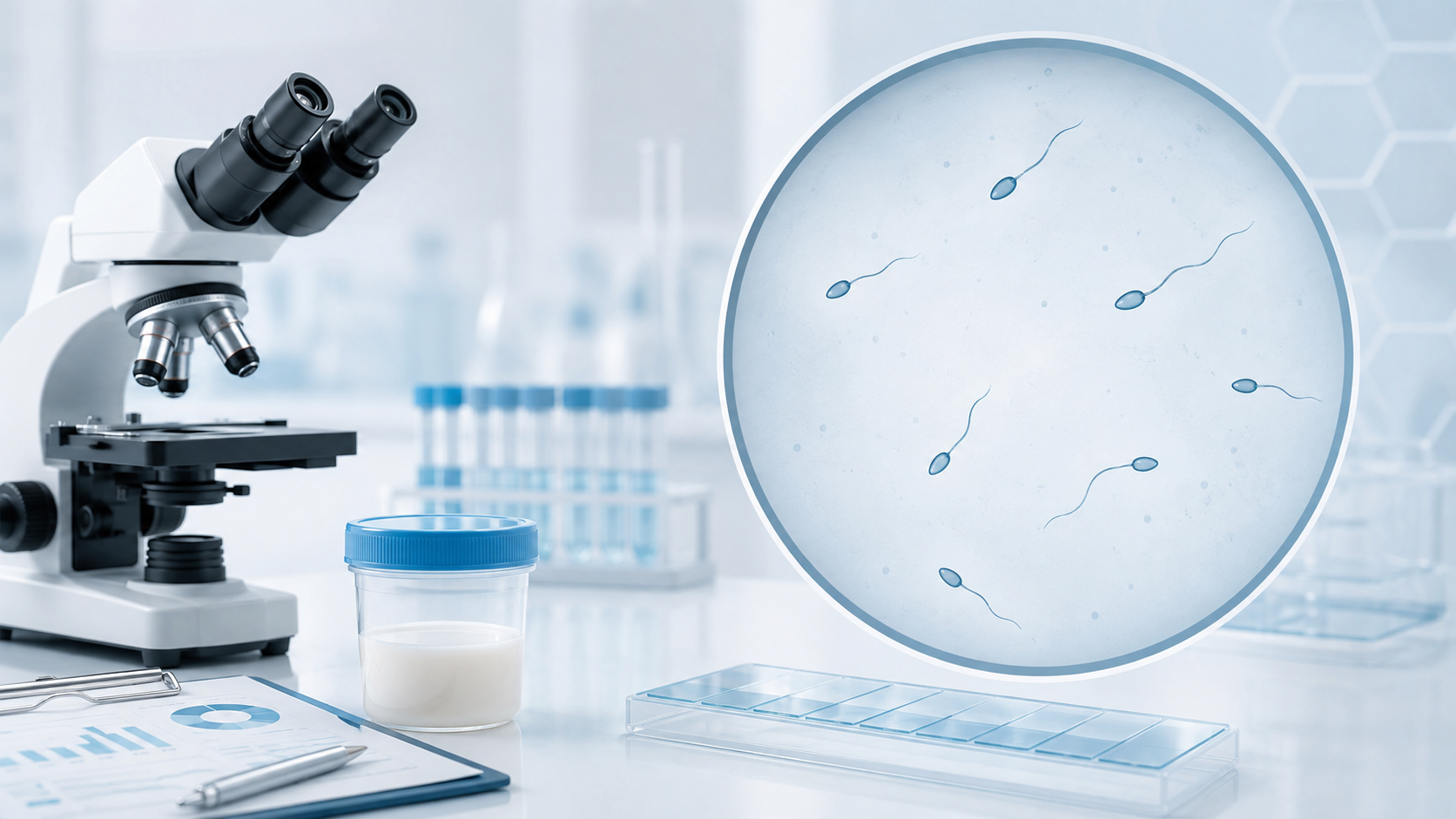
Sperm DNA fragmentation is not a routine first-line fertility test. Its value is greatest when there is a specific clinical question and the result has the potential to influence further assessment or fertility planning.
What is sperm DNA fragmentation?
Sperm carry half of the genetic material required to create an embryo. During normal sperm development, this DNA is packaged very tightly inside the sperm head.
DNA fragmentation refers to breaks or damage within this genetic material. A sperm cell can therefore appear normal under routine laboratory assessment while still having abnormalities of DNA integrity.
Higher levels of sperm DNA fragmentation have been associated with reduced reproductive potential in some populations, including recurrent pregnancy loss, unexplained infertility and poorer outcomes in some assisted reproduction settings.
An association does not mean that sperm DNA fragmentation is the sole explanation for an individual couple's fertility difficulty.
What sperm look like and how many are present
Measures parameters such as semen volume, sperm concentration, total number, motility, morphology and sometimes vitality.
Integrity of genetic material within sperm
Uses specialised laboratory techniques to estimate the proportion or degree of sperm DNA damage within the sample.
Neither test gives a simple fertility score
Fertility depends on multiple male and female factors and cannot be predicted from a single semen or DNA measurement.
When might DNA fragmentation testing be considered?
The question is not simply whether the test is available. The more useful question is whether the result could alter further investigation, counselling or fertility planning.
Recurrent pregnancy loss
Male evaluation, including consideration of sperm DNA fragmentation, may be appropriate when a couple has experienced recurrent miscarriages.
Unsuccessful IVF or ICSI
Testing may be considered after failed assisted reproduction, particularly when the male contribution has not previously been assessed in detail.
Unexplained infertility
A standard semen analysis can sometimes fall within reference ranges even when pregnancy has not occurred. Selected additional male testing may then be discussed.
Clinical varicocele
Varicoceles are associated with increased DNA fragmentation in some men. Testing may occasionally help when deciding whether the varicocele is relevant to a more complex fertility history.
Reproductive treatment planning
In selected couples, the result may contribute to discussion between the male fertility specialist, fertility specialist and embryology laboratory.
Complex male-factor infertility
Additional sperm assessment may sometimes be useful where multiple male fertility factors coexist or previous assessment has not explained the reproductive history.
How is sperm DNA fragmentation measured?
Several laboratory techniques are available. They measure DNA damage in different ways, meaning results and thresholds should be interpreted according to the specific assay used by the laboratory.
Factors associated with increased sperm DNA damage
An elevated result should prompt consideration of the clinical context rather than immediately proceeding to fertility treatment.
Varicocele
A clinically significant varicocele can be associated with oxidative stress and increased sperm DNA fragmentation.
Inflammation or infection
Some genital-tract inflammatory or infectious processes may contribute to increased sperm DNA damage.
Paternal age
DNA fragmentation tends to increase across older male age groups, although age alone does not determine fertility.
Smoking
Smoking and some other environmental or lifestyle exposures may contribute to oxidative sperm damage.
Hormonal factors
Selected reproductive hormonal abnormalities may coexist with impaired sperm production and DNA damage.
Medicines and exposures
Medication, anabolic steroid, testosterone and environmental exposure history should be reviewed during male fertility assessment.
Oxidative stress
Oxidative injury is one proposed pathway through which several different reproductive and health factors can damage sperm DNA.
No clear cause
Sometimes fragmentation remains elevated despite appropriate assessment without a single correctable explanation being identified.

What happens if DNA fragmentation is high?
A high result does not automatically mean IVF, surgery or medication is required. The next step is to determine whether there is an identifiable contributor and whether changing it could meaningfully alter the couple's fertility pathway.
Review the assay used, abstinence period, previous results and why the test was performed.
Review reproductive history, semen analyses, examination, medications, exposures and relevant medical factors.
This may include a clinical varicocele, smoking, selected hormonal issues, infection or other individual factors.
Repeating a test is most useful when the result would actually influence subsequent treatment or fertility planning.
Male treatment decisions need to take account of female fertility, ovarian reserve, reproductive timing and previous ART treatment.
DNA fragmentation is not the same as genetic testing
The word “DNA” can make these investigations sound similar, but they answer very different clinical questions.
Sperm DNA fragmentation
Evaluates damage to the DNA carried within sperm cells in a semen sample. It does not perform a chromosome analysis and does not diagnose a Y-chromosome deletion or CFTR variant.
It is mainly an additional sperm-quality investigation for selected fertility situations.
Male infertility genetic testing
Tests such as karyotype, Y-chromosome microdeletion analysis or CFTR testing investigate specific genetic causes of severe sperm-production problems or reproductive-tract abnormalities.
Explore Male Infertility Genetic Testing →Could the male partner contribute to recurrent pregnancy loss?
Recurrent miscarriage is usually approached as a couple's reproductive problem rather than assuming that the explanation lies with only one partner.
Increased sperm DNA fragmentation has been associated with recurrent pregnancy loss in research studies. This does not mean that an elevated result proves that sperm caused an individual miscarriage.
Where appropriate, male assessment can examine sperm quality, reproductive history, potentially relevant medical factors and whether any correctable male factor is present.
Do not rely on one semen number
A semen analysis may be normal even when additional male assessment is worth considering because of the reproductive history.
Both partners remain important
DNA fragmentation testing should complement—not replace—appropriate assessment of other recognised causes of recurrent pregnancy loss.
What if a varicocele is present?
A varicocele is associated with increased sperm DNA fragmentation in some infertile men. Studies also suggest that fragmentation can improve after appropriately selected varicocele treatment.
This does not mean that every man with elevated DNA fragmentation should undergo varicocele surgery.
The varicocele should be assessed clinically and interpreted alongside semen parameters, fertility history, previous treatment and the reproductive circumstances of both partners.
When might this become particularly relevant?
A clinical varicocele may deserve closer consideration where elevated DNA fragmentation occurs alongside unexplained infertility, recurrent pregnancy loss or previous unsuccessful assisted reproduction.
The potential benefit of treatment needs to be balanced against the couple's reproductive timeframe and whether delaying fertility treatment is reasonable.
A high result does not have one standard treatment
Management should be directed at the underlying clinical situation rather than treating the DNA fragmentation percentage in isolation.
Review modifiable factors
Smoking, relevant exposures, medication history and general reproductive health may be reviewed where appropriate.
Treat a specific cause
A clinically important varicocele, infection, hormonal disorder or another identifiable problem may occasionally provide a specific treatment target.
Allow biological time
Changes affecting sperm production do not necessarily produce an immediate change in semen or DNA-fragmentation results.
Reassess selectively
Repeat semen or DNA-fragmentation testing may be considered when documenting change would influence subsequent decisions.
Coordinate with fertility treatment
Natural conception, IUI, IVF or ICSI decisions depend on the fertility circumstances of both partners rather than DNA fragmentation alone.
Consider advanced options carefully
Use of surgically retrieved testicular sperm for elevated ejaculated DNA fragmentation is a specialised strategy for selected situations. Evidence remains evolving and it is not a routine next step.

Specialist male fertility assessment in Brisbane
Dr Jack Crozier is a Brisbane urologist and fellowship-trained andrologist with a subspecialty practice in male infertility, reproductive medicine and reproductive surgery.
Assessment focuses on identifying the underlying male fertility problem and determining whether additional investigations such as sperm DNA fragmentation testing are likely to contribute useful information.
Sperm DNA fragmentation FAQs
Should every man undergoing infertility testing have sperm DNA fragmentation tested?
Can I have high DNA fragmentation with a normal semen analysis?
What DNA fragmentation percentage is considered high?
Does high sperm DNA fragmentation cause miscarriage?
Can a varicocele increase sperm DNA fragmentation?
Will antioxidants fix high sperm DNA fragmentation?
Does ICSI overcome sperm DNA fragmentation?
Should testicular sperm be used if DNA fragmentation is high?
Is sperm DNA fragmentation testing the same as a genetic test?
Related male fertility information
Has sperm DNA fragmentation been raised during your fertility treatment?
Specialist male fertility assessment can review the result in context, look for relevant male factors and determine whether further investigation or treatment is likely to contribute meaningfully to the couple's fertility plan.
Medical information disclaimer: This page provides general educational information and is not a substitute for individual medical advice, diagnosis or treatment. Sperm DNA fragmentation testing is not appropriate for every patient and cannot independently predict natural conception, fertilisation, embryo development, pregnancy or live birth. Results should be interpreted alongside medical and reproductive history, semen analyses, examination, the laboratory method used and the reproductive circumstances of both partners. No investigation or treatment can guarantee pregnancy or live birth.