

Urine Leakage During Orgasm After Prostatectomy — Climacturia
Climacturia means involuntary urine leakage at the time of orgasm. It is a recognised sexual side effect after radical prostatectomy and can occur even in men who are otherwise reasonably dry during everyday activities.
The amount of leakage and how much it affects intimacy vary considerably. When it becomes bothersome, assessment can help separate isolated climacturia from wider post-prostatectomy urinary incontinence and identify reasonable treatment options.

What is climacturia?
Climacturia is urinary leakage associated with orgasm. It is sometimes called orgasm-associated urinary incontinence.
It is most commonly discussed after radical prostatectomy, although urinary leakage during sexual activity can occur after other prostate cancer treatments as well.
Some men lose only a few drops. Others experience a larger volume of leakage. The amount of urine does not always correspond to the degree of distress: even relatively small leakage can affect confidence, spontaneity and intimacy.
Why can urine leak during orgasm after prostatectomy?
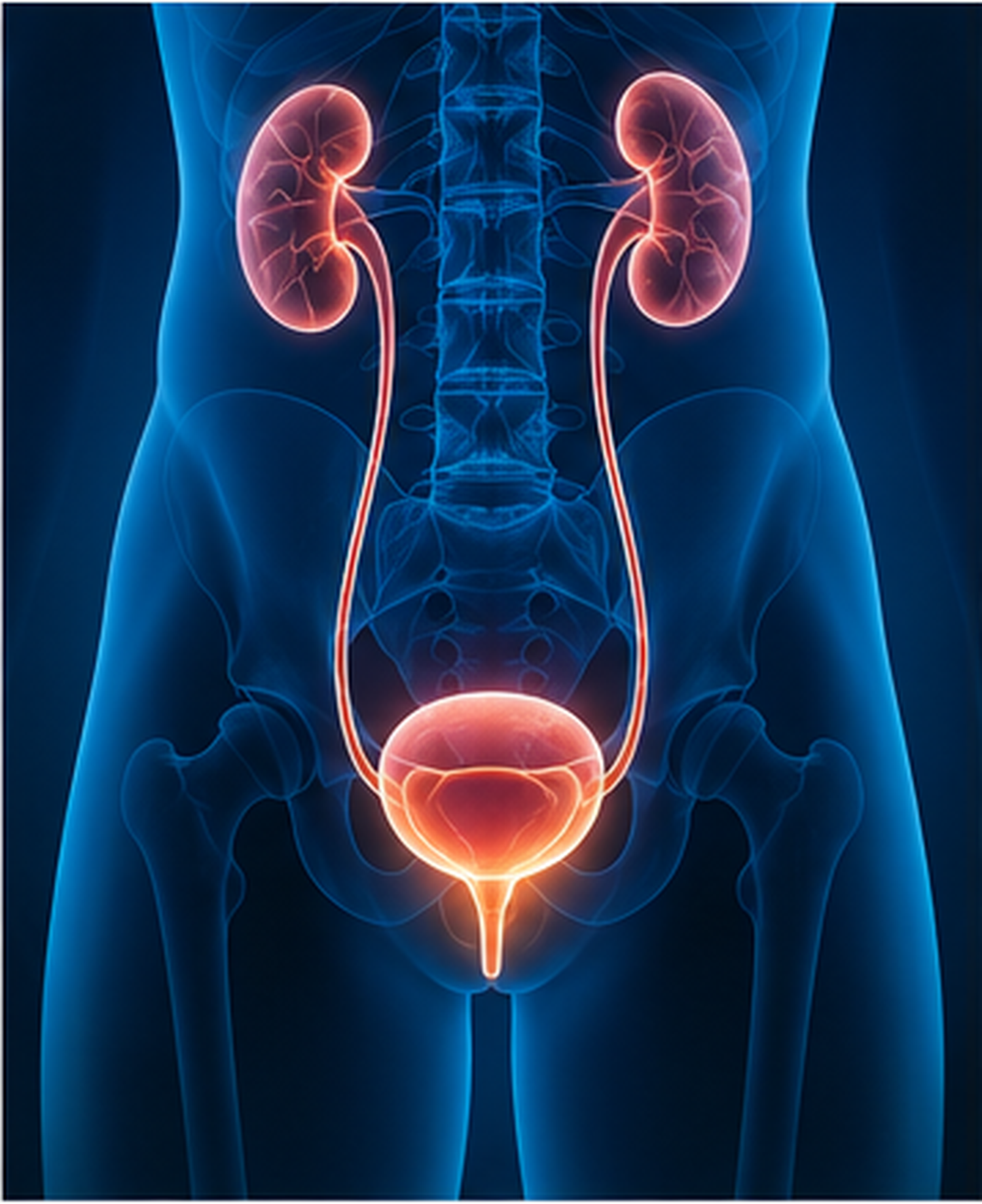
Radical prostatectomy changes the anatomy around the bladder outlet. The prostate and seminal vesicles are removed, the bladder is reconnected to the urethra and the continence mechanism then relies more heavily on the remaining urinary sphincter and pelvic-floor system.
During orgasm there are contractions of the pelvic and urinary structures. If there is insufficient outlet resistance at that moment, urine remaining in the bladder can escape through the urethra.
The exact mechanism is not identical in every man and remains incompletely understood. This is one reason treatment should be based on the overall urinary and sexual pattern rather than the word “climacturia” alone.
Climacturia is different from everyday urinary incontinence
The timing of leakage can change the treatment discussion. Some men have climacturia alone, while others have several continence problems after prostate surgery.
Climacturia
Urine leakage occurs principally at orgasm.
A man may otherwise be dry or nearly dry during normal daily activities.
Arousal incontinence
Leakage occurs with sexual stimulation, foreplay or erection before orgasm itself.
This can coexist with climacturia.
Stress urinary incontinence
Leakage occurs with coughing, standing, exercise, lifting or movement because urinary sphincter resistance is inadequate.
This may require a broader continence assessment.
Why can climacturia affect sexual recovery?
Climacturia does not usually cause physical harm by itself, but it can have a disproportionate effect on confidence, sexual spontaneity and relationships.
Embarrassment
Some men worry about urine leakage enough that they become distracted during sexual activity or avoid orgasm.
Partner concerns
Couples may avoid intimacy because neither partner is sure whether leakage is expected or manageable.
Reduced spontaneity
Planning around bladder emptying, pads or towels can make sex feel less spontaneous.
Erectile dysfunction
Erectile dysfunction and climacturia can occur together after prostatectomy and sometimes need to be considered as parts of the same sexual-rehabilitation problem.
Altered orgasm
Dry orgasm, altered orgasmic sensation and climacturia can occur together following removal of the prostate.
Avoidance of intimacy
A treatable or manageable urinary symptom can become a larger sexual problem when embarrassment leads to avoidance.
What should be assessed?
Many men do not need complex testing. The first step is defining the urinary and sexual pattern clearly.
When does leakage occur?
Leakage only at orgasm is different from leakage during arousal, exercise, coughing or everyday movement.
How much daytime incontinence remains?
Current pad use, activity-related leakage and urinary urgency help determine whether climacturia is isolated or part of broader post-prostatectomy incontinence.
What is the erectile-function situation?
Erectile recovery, use of tablets or injections and whether penile implant surgery is already being considered can materially change the treatment discussion.
How bothersome is it?
Treatment is usually driven by the degree of bother and effect on intimacy rather than the presence of climacturia alone.
Is further continence testing needed?
Additional investigation may be useful when significant stress leakage, urgency, poor bladder emptying, previous radiation or urethral disease is also present.
What can help with climacturia?
Many men begin with practical and pelvic-floor strategies. The appropriate next step depends on severity, erectile function and whether daytime stress incontinence is also present.
Urinating shortly before sexual activity reduces the amount of urine available to leak at orgasm.
Avoiding large fluid intake immediately before sexual activity may help. Deliberate dehydration is not necessary.
Pelvic-floor rehabilitation may improve continence control and is often part of recovery after radical prostatectomy.
Some couples use a condom, towel or other simple containment strategy when leakage is predictable but does not otherwise justify invasive treatment.
A penile loop can reduce urethral leakage during sexual activity in selected men. It should be used appropriately and not left in place for prolonged periods.
Some men find that leakage is easier to manage in positions where pelvic pressure and movement are reduced.
Understanding that the fluid is urine and that climacturia is a recognised postoperative problem can itself reduce anxiety for some couples.
If climacturia remains significantly bothersome despite conservative treatment, the wider continence and erectile situation should be reviewed.
Is there surgery for climacturia?
Surgery is not usually the first treatment for isolated climacturia. It becomes more relevant when there is significant daytime stress incontinence, severe erectile dysfunction or both.
Male continence surgery
Men with persistent stress urinary incontinence may be assessed for continence surgery. Improvement in climacturia can occur when the underlying sphincter-related leakage is treated.
Artificial urinary sphincter
An artificial urinary sphincter is generally considered for significant male stress urinary incontinence rather than isolated climacturia. It can also improve sexual-activity leakage in appropriately selected men.
Penile implant planning
Men with severe erectile dysfunction and bothersome climacturia may need both issues considered before penile prosthesis surgery.
What if I have both climacturia and erectile dysfunction?
Erectile dysfunction and urinary leakage during sexual activity are both recognised consequences of radical prostatectomy. Treating one does not necessarily treat the other.
If erections remain unreliable despite non-surgical treatment, penile implant surgery may enter the discussion. At that point, current urinary continence should also be reviewed because significant stress leakage may influence the operative plan.
In selected men with erectile dysfunction together with climacturia or mild stress leakage, specialised adjunctive continence techniques have been described at the time of penile prosthesis surgery. These are specialised surgical decisions and are not required for every man with climacturia.
When should climacturia be assessed?
It is affecting intimacy
Avoiding sexual activity, orgasm or relationships because of leakage is a reasonable reason to discuss treatment.
Daytime leakage also persists
Regular pad use or leakage with exercise, coughing or movement suggests that the wider continence mechanism also needs assessment.
Erectile dysfunction is also significant
Sexual rehabilitation is easier to plan when erection quality, orgasm, climacturia and urinary continence are considered together.
You are considering an implant
Urinary leakage should be identified before penile implant surgery so that erectile and continence planning are not considered in isolation.
Leakage is worsening
A changing urinary pattern deserves assessment, particularly when urgency, weak stream or other urinary symptoms have developed.
You are unsure what is normal
Climacturia is often not discussed before prostate cancer treatment, and some men are unsure whether the symptom represents a complication that requires investigation.
Find the pathway that fits the wider problem
Climacturia FAQ
What is climacturia?
Climacturia means involuntary urine leakage at orgasm. It is a recognised sexual side effect following radical prostatectomy.
Is urine leakage during orgasm common after prostatectomy?
It is a recognised and not uncommon problem. Published estimates vary considerably between studies, with many series reporting that it affects roughly a third of men after radical prostatectomy.
Can I have climacturia even if I do not wear pads?
Yes. Some men are otherwise continent during everyday activity but still leak urine during sexual arousal or orgasm.
Is climacturia the same as stress incontinence?
No. Stress incontinence usually causes leakage with activity, coughing or movement. Climacturia specifically refers to leakage associated with orgasm, although both problems can occur together.
Does climacturia get better with time?
It can improve as continence recovery progresses after prostatectomy, but persistent climacturia can remain bothersome in some men. Improvement varies between individuals.
Should I empty my bladder before sex?
Emptying the bladder shortly before sexual activity is one of the simplest conservative strategies and may reduce the amount of urine available to leak.
Can pelvic-floor exercises help climacturia?
Pelvic-floor muscle training can form part of post-prostatectomy continence rehabilitation and may improve climacturia in some men. Technique and coordination can be reviewed by an appropriately trained pelvic-floor physiotherapist.
Can a penile loop help?
A variable-tension penile loop has been used as a non-surgical strategy to reduce urine leakage during sexual activity in selected men. It should be fitted and used safely rather than left tightly applied for prolonged periods.
Does a penile implant cure climacturia?
A penile implant is primarily a treatment for erectile rigidity and should not be considered a general continence operation. Climacturia and other urinary leakage should therefore be assessed separately when implant surgery is being considered.
Can continence surgery improve climacturia?
Male continence surgery can improve climacturia in men who also require treatment for stress urinary incontinence. Surgery is generally chosen according to the wider continence problem rather than climacturia alone.
What if I have both erectile dysfunction and climacturia?
Both problems can occur after radical prostatectomy. When erectile dysfunction is severe enough that penile implant surgery is being considered, climacturia and daytime continence should be assessed as part of the same surgical planning discussion.
Is climacturia dangerous?
Climacturia itself is usually primarily a quality-of-life and sexual-function problem. New or changing urinary symptoms, blood in the urine, pain, difficulty passing urine or recurrent infection require separate assessment.
Is urine leakage during sex affecting intimacy?
Climacturia can occur even when everyday continence has largely recovered. Assessment can clarify whether the problem is isolated orgasm-related leakage or part of broader post-prostatectomy incontinence, and whether conservative treatment, continence rehabilitation or another pathway is appropriate.
Medical information: This page provides general educational information and does not diagnose the cause of urinary leakage or recommend a particular treatment for an individual patient. Climacturia, sexual arousal incontinence and everyday urinary incontinence can overlap but may require different assessment and management.
Website appointment requests are not suitable for emergencies. Seek appropriate medical assessment for inability to pass urine, significant bleeding in the urine, fever or severe infection, severe pain or another acute urinary concern.