

Anejaculation & Retrograde Ejaculation
When little or no semen appears during orgasm, the first step is determining where the ejaculate is going and whether ejaculation is occurring at all. Anejaculation, retrograde ejaculation, ejaculatory duct obstruction and azoospermia can appear similar but require very different assessment and fertility pathways.

What is the difference?
Several different conditions can result in little or no visible semen. Distinguishing them is important because the underlying mechanism — and therefore the treatment — can be completely different.
Anejaculation
Semen is not expelled through the urethra. A man may still experience an orgasm, although orgasm and ejaculation can also both be impaired in some conditions.
Retrograde ejaculation
Ejaculatory fluid travels backwards into the bladder rather than forwards through the urethra. Urine may appear cloudy after orgasm and sperm may be identified in a post-ejaculatory urine sample.
Azoospermia
Semen is ejaculated normally but laboratory testing identifies no sperm within it. The problem may relate to sperm production or a blockage rather than ejaculation itself.
What normally happens during ejaculation?
Ejaculation requires coordinated neurological and muscular activity. Problems at different stages can produce very different symptoms.
Emission
Sperm and reproductive fluids are transported into the posterior urethra. This process depends heavily on sympathetic nerve function.
Bladder neck closure
The bladder neck normally closes so ejaculatory fluid travels forwards rather than backwards into the bladder.
Expulsion
Coordinated pelvic and urethral contractions propel the semen out through the urethra.
Anejaculation versus retrograde ejaculation
Anejaculation
Anejaculation means there is failure to expel semen. Depending on the cause, the problem may involve emission, the ejaculatory reflex or both.
- Often associated with neurological disease or spinal cord injury
- Can follow pelvic or retroperitoneal surgery
- Can occur with diabetes-related autonomic nerve dysfunction
- Some medications can interfere with ejaculation
- Orgasm may still be present despite absent semen
- Penile vibratory stimulation or electroejaculation may help selected patients
Retrograde ejaculation
Retrograde ejaculation occurs when ejaculatory fluid enters the bladder because the bladder neck does not close normally during ejaculation.
- May occur after some prostate or bladder-neck procedures
- Can occur with autonomic nerve dysfunction
- Certain medications can alter normal ejaculatory function
- Urine may appear cloudy after orgasm
- Sperm can sometimes be identified in post-ejaculatory urine
- Recovered sperm may be suitable for fertility treatment in selected cases
Why can ejaculation stop or go backwards?
The history often provides important clues. Medication, previous surgery, neurological conditions and the exact experience during orgasm all matter.
Neurological conditions
Spinal cord injury and other neurological conditions can interrupt the pathways required for emission and ejaculation.
Diabetes
Long-standing diabetes can affect the autonomic nerves involved in bladder-neck closure and ejaculation.
Medication
Some alpha-blockers, antidepressants and other medicines can reduce, delay or prevent normal ejaculation.
Prostate or bladder surgery
Procedures involving the prostate or bladder neck can alter normal antegrade ejaculation in some patients.
Pelvic or retroperitoneal surgery
Operations affecting sympathetic nerves can interfere with emission even when erections and orgasm remain possible.
Other causes
Hormonal, functional, psychological and less common neurological or anatomical factors may also need to be considered.
Not every low-volume or “dry” ejaculation is retrograde ejaculation
Low semen volume is a clue, but it is not diagnostic on its own. Several reproductive conditions can produce superficially similar symptoms.
| Condition | What happens? | Useful clue | Possible next assessment |
|---|---|---|---|
| Retrograde ejaculation | Semen travels into the bladder. | Little/no visible semen; sometimes cloudy urine afterwards. | Post-ejaculatory urine assessment. |
| Anejaculation | Ejaculate is not expelled normally. | Orgasm may occur without ejaculation. | Neurological, medication and surgical history; targeted testing. |
| Ejaculatory duct obstruction | Seminal fluid drainage can be obstructed. | Low-volume semen with other characteristic semen findings. | Semen analysis and selected reproductive-tract imaging. |
| Azoospermia | Semen is produced but sperm are not identified. | Ejaculation can appear completely normal. | Repeat semen testing, hormones, examination and targeted investigation. |
| Delayed ejaculation / anorgasmia | Orgasm or ejaculation is substantially delayed or absent. | Difficulty reaching orgasm may be the dominant symptom. | Medication, neurological, sexual and general medical assessment. |

How is the cause investigated?
Investigation is targeted to the clinical situation. Not every patient requires every test.
Clarify exactly what happens
Can you reach orgasm? Is there no semen, a reduced volume or inconsistent ejaculation? Did the problem begin suddenly or after surgery or medication?
Review medical and surgical history
Diabetes, neurological conditions, spinal cord injury, prostate surgery, pelvic surgery and medication exposure can be particularly relevant.
Semen analysis
When a sample can be produced, semen volume, sperm concentration and other parameters can help identify the pattern requiring further investigation.
Post-ejaculatory urine testing
If retrograde ejaculation is suspected, urine collected soon after attempted ejaculation can be examined for sperm.
Additional targeted testing
Hormone testing, ultrasound or further investigation may be appropriate if infertility, obstruction or another reproductive condition is suspected.
What is a post-ejaculatory urine test?
The aim is to determine whether sperm that would normally be present in the ejaculate have instead travelled into the bladder.
Prepare
The laboratory or treating team provides instructions regarding bladder emptying and sample collection.
Attempt ejaculation
Any antegrade semen is collected if present, followed by a urine specimen according to the laboratory protocol.
Laboratory assessment
The urine can be processed and examined for sperm. When fertility treatment is planned, laboratory preparation may differ from purely diagnostic testing.
Can you still have a biological child?
Often the central fertility question is not simply whether visible ejaculation occurs, but whether sperm are being produced and whether they can be obtained in a form suitable for reproductive treatment.
Correct a reversible contributor
Medication or an underlying medical factor may sometimes be modifiable. Treatment depends on the cause and should be individualised.
Recover sperm from urine
In retrograde ejaculation, sperm may sometimes be recovered from post-ejaculatory urine and processed by a fertility laboratory.
Induce ejaculation
Penile vibratory stimulation or electroejaculation can be considered in selected men with neurological anejaculation.
Explore male fertility procedures →Surgical sperm retrieval
If usable sperm cannot be obtained through ejaculation, sperm retrieval directly from the epididymis or testicle may be considered.
Explore sperm retrieval →There is more than one way to obtain sperm
Anejaculation does not necessarily mean sperm production has stopped. In selected patients sperm may be obtained using induced ejaculation, post-ejaculatory urine recovery or direct sperm retrieval.
The least invasive appropriate pathway should generally be considered in the context of the underlying diagnosis and the couple's fertility plan.
Compare sperm retrieval techniques →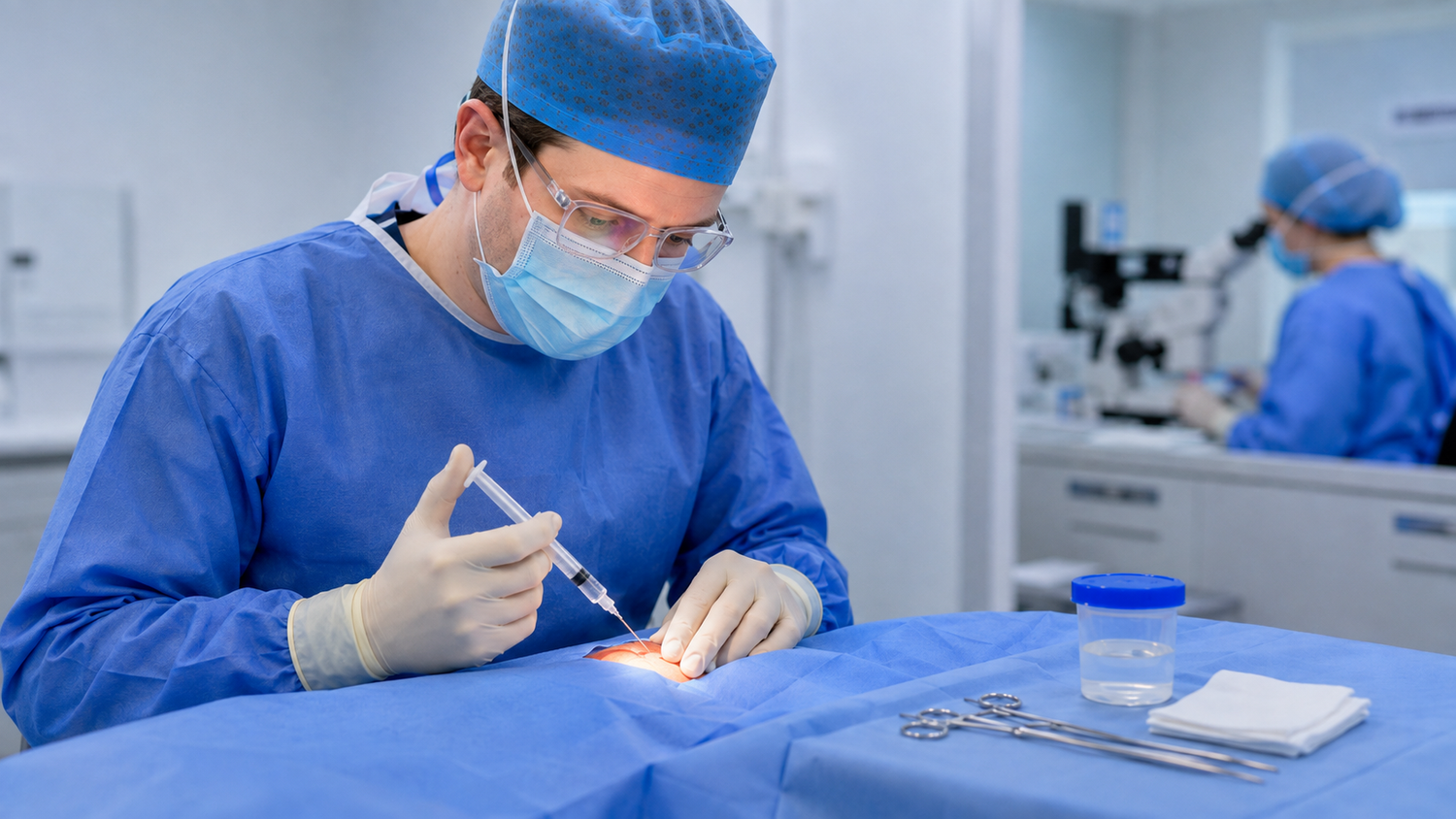
Anejaculation after spinal cord injury
Men with spinal cord injury may continue to produce sperm despite being unable to ejaculate during intercourse or masturbation. Fertility treatment therefore often focuses on safely obtaining sperm.
Penile vibratory stimulation
Vibratory stimulation can trigger the ejaculatory reflex in appropriately selected men and is generally considered before more invasive sperm-recovery techniques when suitable.
- Non-surgical
- May obtain an antegrade ejaculate
- Can sometimes produce retrograde as well as antegrade sperm
- Requires appropriate neurological and safety assessment
Electroejaculation
When vibratory stimulation is unsuccessful or unsuitable, controlled electrical stimulation of the ejaculatory reflex may allow semen to be collected.
- Performed in a specialist setting
- May require sedation or anaesthesia depending on sensation
- Semen can be processed for reproductive treatment
- Retrograde sperm may also need to be recovered
Did it begin after surgery or a new medication?
A clear change from previously normal ejaculation can help identify the likely cause.
- Prostate or bladder-neck procedures can alter ejaculation
- Retroperitoneal or pelvic surgery can affect sympathetic nerves
- Some alpha-blockers can markedly reduce visible ejaculation
- Some antidepressants can delay or prevent ejaculation and orgasm
Conditions that should not be confused
Accurate terminology matters particularly when fertility treatment is being considered.
From symptom to fertility plan
Identify the pattern
Distinguish absent ejaculation, retrograde ejaculation, low semen volume, orgasmic dysfunction and azoospermia.
Establish the likely cause
Review surgery, medication, neurological history, semen results and targeted investigations where appropriate.
Choose the reproductive pathway
Consider reversible causes, sperm recovery, induced ejaculation or surgical sperm retrieval according to the diagnosis and fertility goals.
Related fertility information
These pages cover the investigations and treatment pathways that can overlap with anejaculation and retrograde ejaculation.
Anejaculation & retrograde ejaculation FAQs
Can I have an orgasm without ejaculating semen?
How do I know if semen is going into my bladder?
Does retrograde ejaculation mean I do not produce sperm?
Can diabetes cause retrograde ejaculation?
Can prostate surgery cause a dry orgasm?
Can medications stop ejaculation?
Can retrograde ejaculation be treated with medication?
Can sperm be collected from urine?
What is electroejaculation?
Is anejaculation the same as erectile dysfunction?
Is anejaculation the same as azoospermia?
Can I still become a biological father if I cannot ejaculate?

Dr Jack Crozier
Dr Jack Crozier is a Brisbane urologist and fellowship-trained andrologist with a subspecialty practice in male reproductive medicine, male infertility and reproductive surgery.
His practice includes assessment of ejaculatory dysfunction, azoospermia, reproductive tract obstruction, neurological infertility, sperm retrieval and complex male fertility problems.
No semen, very little semen or difficulty ejaculating?
A specialist reproductive urology assessment can help determine whether the problem relates to retrograde ejaculation, anejaculation, obstruction, medication, neurological dysfunction or another cause — and which fertility pathways are relevant.
Medical information on this page is general educational information and does not replace individual medical assessment, diagnosis or treatment advice. Anejaculation, retrograde ejaculation and low-volume ejaculation have multiple possible causes. Investigation and management depend on medical and surgical history, medications, neurological function, semen findings, fertility goals and the reproductive circumstances of both partners. Medication, induced ejaculation, sperm recovery, surgical sperm retrieval, assisted reproduction, pregnancy and live birth outcomes cannot be guaranteed.