

Varicocele Embolisation
A minimally invasive radiological treatment that closes abnormal testicular veins from inside the venous system, without a groin or scrotal surgical incision.
Embolisation can be an appropriate alternative to microsurgical varicocele repair in selected men with varicocele-related pain, fertility concerns or recurrent varicocele after previous treatment.
Who performs varicocele embolisation?
Varicocele embolisation is an interventional-radiology procedure and is performed by an appropriately trained interventional radiologist. Dr Jack Crozier can assess the varicocele within a male fertility or urological pathway, discuss whether treatment appears appropriate and, where embolisation is selected, coordinate referral to an interventional radiology service.
What is varicocele embolisation?
A varicocele is an enlargement of veins that drain blood from the testicle. It develops when blood does not drain efficiently through the testicular venous system and pools within veins around the testicle.
Varicocele embolisation treats the problem from within the veins. A very thin catheter is passed through the venous system under X-ray guidance until it reaches the abnormal testicular vein.
The abnormal venous pathway is then blocked using an embolisation material such as coils, plugs, medical adhesive or a sclerosant, depending on the interventional radiologist's technique and the venous anatomy.
Blood is subsequently redirected through other healthy venous channels.

Not every varicocele needs treatment
Varicoceles are common and many men with a varicocele have normal testicular function, no significant pain and normal fertility.
Examination matters
A clinically detectable varicocele can have different significance from a small varicocele found only on ultrasound.
Symptoms matter
Persistent typical ache or heaviness may support treatment, but other causes of scrotal pain should be considered first.
Fertility matters
When fertility is the concern, semen results and the reproductive circumstances of both partners should be considered rather than treating an ultrasound finding alone.
Key point: treatment is generally not recommended simply because a small or subclinical varicocele has been identified on an ultrasound.
When might embolisation be considered?
Persistent varicocele pain
Treatment may be considered when a clinically significant varicocele is associated with characteristic persistent ache or heaviness and conservative management has not provided adequate relief.
Male infertility
Selected infertile men with a palpable varicocele and abnormal semen parameters may benefit from varicocele treatment after appropriate assessment.
Recurrent varicocele
Embolisation can be particularly useful when a varicocele persists or returns after previous surgical treatment, depending on the residual venous anatomy.
Avoiding general anaesthetic
Embolisation is commonly performed with local anaesthetic and may therefore appeal to selected patients wishing to avoid conventional surgical anaesthesia.
Avoiding an incision
Access is through a vascular puncture rather than a groin or scrotal incision, which can allow a relatively rapid initial recovery.
Suitable venous anatomy
Successful embolisation requires the interventional radiologist to be able to navigate the venous anatomy and adequately occlude the abnormal refluxing pathways.
How is a varicocele embolisation performed?
The exact technique varies between interventional radiologists, but the principle is to navigate through the venous circulation, identify the refluxing testicular vein and close the abnormal pathway.
Venous access
A small vascular puncture is made, commonly through a vein in the groin, neck or arm depending on the planned approach.
Catheter navigation
A thin catheter and guidewire are advanced through the veins under real-time X-ray guidance.
Venography
Contrast is used to map the abnormal testicular venous drainage and identify refluxing branches.
Embolisation
Appropriate veins are closed using coils, plugs, adhesive, sclerosant or a combination selected by the radiologist.
Recovery
The catheter is removed, pressure is applied to the access site and most patients are monitored before returning home.

Can embolisation improve sperm quality?
Treating a clinically significant varicocele can improve semen parameters in some appropriately selected infertile men. However, treatment does not guarantee that an individual's sperm count or motility will improve.
It also does not guarantee natural conception. Pregnancy depends on factors involving both partners.
The fertility discussion should therefore start with the question of whether the varicocele is likely to be relevant, rather than assuming that every visible varicocele should be embolised or surgically repaired.
Review semen analyses, examination findings and the couple's wider fertility circumstances.
A repeat semen analysis is often the first useful assessment because spermatogenesis takes time.
Further semen testing or fertility-treatment planning can be considered according to the response.
Embolisation vs microsurgical varicocele repair
Both techniques aim to stop abnormal venous reflux, but they approach the problem from different directions. Neither option is automatically the best treatment for every patient.
| Feature | Varicocele Embolisation | Microsurgical Varicocele Repair |
|---|---|---|
| Specialist | Interventional radiologist | Urological surgeon / reproductive microsurgeon |
| Access | Small venous puncture | Small lower-groin incision |
| Guidance | Fluoroscopy, venography and contrast | Direct surgical visualisation with operating microscope |
| Anaesthesia | Commonly local anaesthetic with or without sedation | Commonly general anaesthetic |
| Testicular artery | Not directly dissected | Identified and preserved under magnification |
| Lymphatics | Not directly disrupted | Preserved during microsurgical dissection |
| Radiation | Uses ionising X-ray imaging | No procedural ionising radiation |
| Contrast | Usually required | Not generally required |
| Recurrent varicocele | Can be particularly useful after previous surgery | Repeat microsurgery can also be considered in selected cases |
| Initial recovery | Often relatively rapid | Usually requires a longer period before strenuous activity |
| Technical limitation | Occasionally the target vein cannot be successfully catheterised | Requires surgical dissection and anaesthesia |
For fertility: the most important decision is usually whether treating the varicocele is likely to help at all. Once treatment is justified, embolisation and microsurgical repair can be compared according to anatomy, previous treatment, fertility goals, anaesthetic considerations and patient preference.
Microsurgical varicocele repair
Microsurgical varicocelectomy is the main surgical alternative to embolisation.
Through a small lower-groin incision, an operating microscope is used to identify the spermatic cord structures. Enlarged veins are divided while the testicular artery and lymphatic vessels are preserved.
Microsurgery is commonly used when fertility improvement is the treatment goal and is associated with low recurrence and complication rates when performed using an appropriate microsurgical technique.
Embolisation may nevertheless offer particular advantages for selected men—for example following previous surgery or when avoiding a surgical incision or general anaesthetic is important.
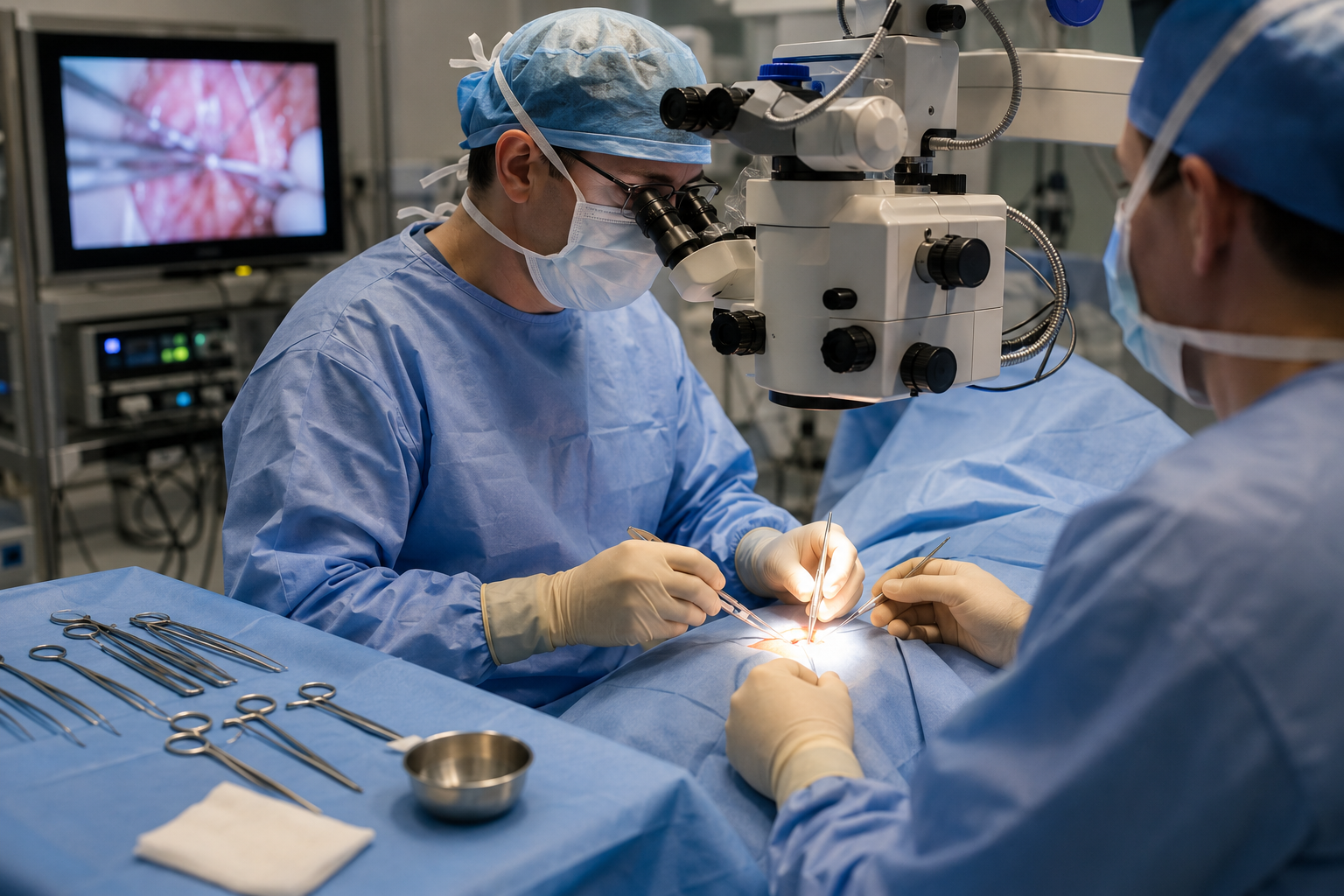
Preparing for varicocele embolisation
Your interventional radiology team will provide the exact preparation instructions. These depend on the planned technique, medications and your medical history.
What is recovery like?
Embolisation usually has a relatively short initial recovery because there is no groin or scrotal surgical incision.
You may experience some tenderness at the venous access site or aching around the treated varicocele for a short period after the procedure.
Possible risks and limitations
Varicocele embolisation is minimally invasive, but it remains a medical procedure and complications can occur.
Bruising or bleeding
Bruising, tenderness or bleeding can occur at the venous puncture site.
Temporary pain
Groin, abdominal, flank or scrotal discomfort can occur while the treated veins thrombose and settle.
Persistence or recurrence
The varicocele may persist or recur if collateral venous pathways remain or subsequently become relevant.
Technical failure
Occasionally the target vein cannot be safely accessed or adequately embolised, requiring another treatment strategy.
Contrast reaction
The procedure commonly uses iodinated contrast, which can rarely cause an allergic-type reaction and may require additional consideration in kidney disease.
Embolisation material migration
Rarely, a coil or other embolisation material can move from its intended position and require further management.
Infection
Infection is uncommon but can occur at the access site or following an invasive vascular procedure.
Radiation exposure
Embolisation uses fluoroscopy and therefore involves a controlled amount of ionising radiation.
Fertility may not improve
Treating the varicocele does not guarantee improved semen parameters, natural pregnancy or success with assisted reproductive treatment.
When might microsurgery be preferred?
Embolisation is a useful option, but some patients may be better suited to microsurgical repair.
Fertility-focused repair
Microsurgical subinguinal varicocelectomy remains a commonly selected approach when repair is being undertaken specifically within a male-fertility pathway.
Unsuitable venous anatomy
If the interventional radiologist cannot safely reach or adequately occlude the abnormal vein, surgical repair may provide an alternative.
Avoiding radiation or contrast
Microsurgery does not require fluoroscopic radiation or iodinated venographic contrast.
Assessment before choosing the procedure
For a fertility-related varicocele, the decision should begin with the reproductive diagnosis rather than with a choice between embolisation and surgery.
Confirm the problem
Review symptoms, examination findings and imaging where clinically indicated to establish whether a significant varicocele is present.
Define the goal
Clarify whether treatment is being considered for pain, fertility, recurrent varicocele or more than one reason.
Compare treatments
Consider observation, embolisation and microsurgical repair according to anatomy, fertility goals and personal preference.
Interventional radiology review
If embolisation is selected, an interventional radiologist assesses technical suitability and provides procedure-specific consent.
Treatment
The selected treatment is performed with an appropriate postoperative and follow-up plan.
Review the outcome
Follow-up assesses symptom response or repeat semen parameters according to the original treatment goal.
Continue exploring your varicocele pathway
Frequently asked questions
Who actually performs varicocele embolisation?
Varicocele embolisation is performed by an interventional radiologist trained in image-guided vascular procedures. A urologist or reproductive-urology specialist may assess whether varicocele treatment is appropriate and discuss embolisation alongside surgical alternatives.
Is varicocele embolisation surgery?
It is an invasive medical procedure but is not conventional open surgery. A catheter is introduced into a vein through a small puncture and guided internally to the abnormal testicular vein.
Is a general anaesthetic required?
Varicocele embolisation is commonly performed using local anaesthetic, sometimes with sedation. The exact approach depends on the patient and the interventional radiology service.
Are coils always used?
No. Different interventional radiologists use different techniques. Treatment may involve coils, vascular plugs, medical adhesive, sclerosant or a combination depending on anatomy and operator preference.
Can I feel the coils afterwards?
The embolisation material is placed within internal veins, not in the superficial scrotum. Patients would not generally be expected to feel the coils directly through the skin.
Does embolisation affect blood supply to the testicle?
Embolisation targets abnormal veins responsible for venous reflux rather than the testicular artery that supplies oxygenated blood to the testicle.
Which is better for fertility—embolisation or microsurgery?
Both approaches can successfully treat a varicocele in selected men. Microsurgical varicocelectomy is commonly used for fertility-related repair, while embolisation provides an effective minimally invasive alternative.
The decision depends on whether treatment is indicated, previous procedures, anatomy, anaesthetic considerations and the reproductive circumstances of both partners.
Is embolisation useful if my varicocele came back after surgery?
Yes, recurrent or persistent varicocele after surgery is one situation in which embolisation can be particularly useful because venography may identify persistent abnormal venous pathways. Technical suitability still needs to be assessed by the interventional radiologist.
How quickly can I return to work?
Initial recovery is often relatively quick, particularly for desk-based work, but the exact timing depends on the access site, whether sedation was used, your occupation and your interventional radiologist's instructions.
How soon will my sperm improve?
Any change in sperm production is not immediate. Because a sperm-production cycle takes approximately three months, semen testing is commonly repeated around this timeframe when fertility is the reason for treatment.
Does embolisation guarantee pregnancy?
No. Varicocele treatment may improve semen parameters in selected men, but neither improvement in sperm quality nor pregnancy can be guaranteed. Fertility outcomes depend on factors involving both partners.
Should an ultrasound-only varicocele be embolised?
Usually not simply because it has been seen on ultrasound. Small subclinical varicoceles without relevant examination findings, symptoms or fertility abnormalities generally do not require treatment.
Should your varicocele be observed, embolised or repaired microsurgically?
Assessment can clarify whether the varicocele is likely to be clinically important and whether treatment is appropriate before comparing embolisation with microsurgical repair.