

Male Sling vs Artificial Urinary Sphincter — Which Continence Surgery Is Right for You?
Male sling surgery and the artificial urinary sphincter are both operations for male stress urinary incontinence, but they work differently and are suited to different patients.
The decision depends particularly on the severity of leakage, previous pelvic radiotherapy, urethral health, bladder function, ability to operate a pump and individual treatment priorities.
What is the main difference?
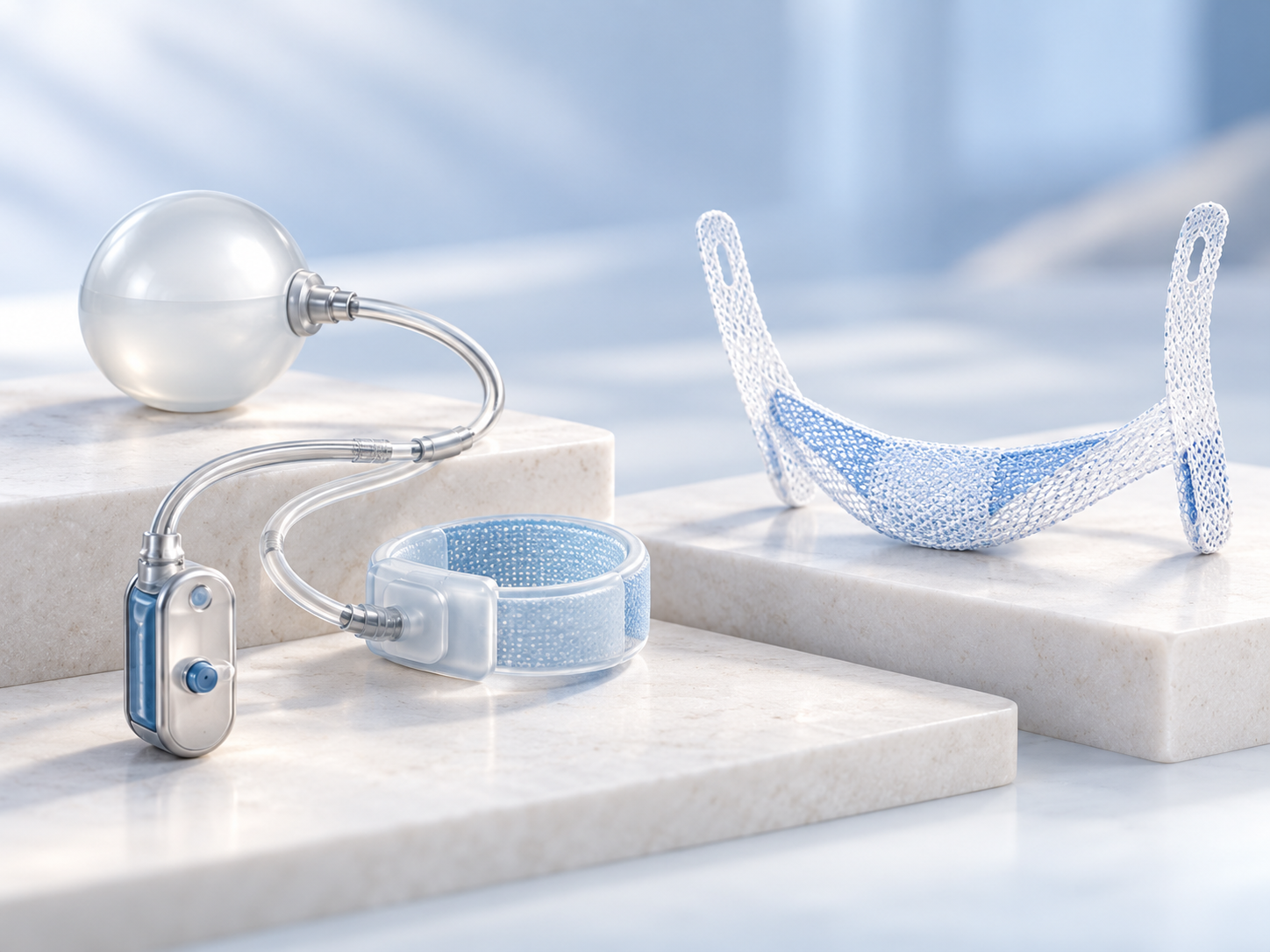
A male sling provides passive support beneath the urethral outlet. It does not normally require the patient to operate a device when passing urine.
An artificial urinary sphincter uses an implanted cuff around the urethra. The cuff is connected to a control pump, usually positioned in the scrotum, which the patient operates when he wants to urinate.
Male sling vs artificial urinary sphincter
These are broad differences rather than rules for every patient. Individual anatomy, previous treatment and urinary function can change the recommendation.
Male Sling
Selected men with mild-to-moderate stress urinary incontinence.
Supports or repositions the urethral outlet and provides passive continence resistance.
No manual pump is normally required for urination.
Generally less suitable because sling failure is more common as leakage severity increases.
Outcomes are generally less favourable after pelvic radiotherapy.
Persistent significant stress incontinence can later be treated with an artificial urinary sphincter in suitable patients.
Artificial Urinary Sphincter
Can be discussed across mild-to-severe stress urinary incontinence and is particularly important for moderate-to-severe leakage.
A fluid-filled cuff provides circumferential urethral compression and is opened temporarily for urination.
The patient needs sufficient hand function and understanding to operate the scrotal pump.
Generally preferred over sling surgery when stress incontinence is severe.
Generally preferred over a sling when surgery is required after pelvic radiotherapy, although radiation can also increase AUS complications.
As a mechanical implant, future revision or replacement can become necessary.

How does leakage severity affect the choice?
Sling surgery generally performs best in appropriately selected men with lower-volume stress urinary leakage.
As the severity of stress incontinence increases, the likelihood that a male sling will provide sufficient continence falls.
For severe stress urinary incontinence, an artificial urinary sphincter is generally the more appropriate operation to discuss.
Which option is more likely to enter the discussion?
Mild-to-moderate stress leakage
Particularly where there has been no pelvic radiotherapy, urethral anatomy is favourable and the patient prefers a passive continence procedure.
Moderate-to-severe stress leakage
AUS becomes increasingly important as the volume and frequency of stress leakage increase.
Previous pelvic radiotherapy
When surgical treatment is required following prostate radiotherapy, AUS is generally preferred over male sling surgery.
Why does radiotherapy change the decision?
Radiotherapy can alter blood supply and tissue quality around the urethra and urinary sphincter.
Male sling outcomes are generally less favourable in men who have previously received pelvic radiation.
When a man with stress urinary incontinence after primary, adjuvant or salvage radiotherapy is considering surgery, an artificial urinary sphincter is generally preferred over a male sling.
Radiation does not make AUS surgery risk-free. Tissue changes can also increase the risk of erosion or other complications, which forms part of individual counselling.
What determines which operation is more suitable?
Confirm stress incontinence
Surgery aimed at the urinary sphincter should be based on a predominantly stress-related leakage pattern.
Determine severity
Pad use, pad saturation, activity-related leakage and, where useful, formal pad-weight testing help define the degree of incontinence.
Review radiation history
Previous prostate or pelvic radiotherapy strongly influences procedure selection.
Assess the urethra
Stricture, bladder-neck narrowing, previous urethral reconstruction or erosion can alter the surgical plan.
Consider pump use
An AUS requires adequate hand function and the ability to understand and operate the control pump.
Discuss priorities
Desired continence, willingness to use a mechanical device, future revision risk and personal preference all matter.

Does an artificial urinary sphincter require hand dexterity?
Yes. An artificial urinary sphincter normally requires the patient to locate and operate a small control pump in the scrotum each time he wants to urinate.
Hand strength, dexterity, sensation and cognitive ability therefore form part of preoperative assessment.
A sling does not require the same manual operation.
No mechanical pump
A sling is a passive implant and does not contain the fluid-filled mechanical components of an AUS.
Persistent or recurrent stress leakage can still occur, and further continence surgery may eventually be needed.
A mechanical prosthesis
An AUS contains implanted mechanical components and should be regarded as a device that may require revision or replacement during a patient's lifetime.
Infection, erosion, urethral tissue changes and mechanical failure are important potential reasons for revision.

What happens if a male sling does not control the leakage?
Persistent or recurrent urinary leakage should first be reassessed to confirm that stress incontinence remains the main problem.
If significant stress urinary incontinence persists after sling surgery, an artificial urinary sphincter is an established next surgical option to discuss.
Previous sling surgery does not automatically prevent subsequent AUS implantation.
Where should you go next?
Not sure what type of leakage you have?
Start with the broader post-prostatectomy incontinence pathway.
Want to understand sling surgery?
Learn how male sling surgery works, assessment, suitability, recovery and risks.
Considering an artificial sphincter?
Learn how AUS implantation works and what living with the device involves.
Male sling vs artificial urinary sphincter FAQ
Which is better: a male sling or artificial urinary sphincter?
Neither operation is better for every man. Male sling surgery is most commonly considered in selected men with mild-to-moderate stress urinary incontinence, while AUS is an important option across a broader range of severity and is generally favoured when leakage is severe.
Is a male sling suitable for severe incontinence?
Male sling surgery is not routinely recommended for severe stress urinary incontinence because failure is more common in this group. An artificial urinary sphincter is generally the more appropriate operation to discuss.
Which operation is preferred after prostate radiotherapy?
When surgical treatment is required for stress urinary incontinence after primary, adjuvant or salvage prostate radiotherapy, an artificial urinary sphincter is generally preferred over a male sling.
Does a male sling require a pump?
No. A male sling provides passive support beneath the urethra and does not normally require the patient to operate a pump when urinating.
Does an artificial urinary sphincter have a pump?
Yes. The patient normally operates a small control pump in the scrotum to temporarily open the urethral cuff when he wants to urinate.
Can an AUS be used for mild incontinence?
An artificial urinary sphincter can be discussed across a range of stress incontinence severity. Whether its benefits justify a mechanical implant in a man with relatively mild leakage depends on individual circumstances and preferences.
Can I have an AUS after a male sling?
Yes. If significant stress urinary incontinence persists or recurs after sling surgery, artificial urinary sphincter implantation can be considered in suitable patients.
Can both operations treat urgency incontinence?
These procedures are primarily designed to treat stress urinary incontinence. Urgency and bladder overactivity may require separate bladder-directed assessment and treatment.
How is the best operation chosen?
The decision considers leakage severity, stress versus urgency symptoms, previous radiotherapy, urethral anatomy, bladder function, previous continence surgery, ability to operate an AUS pump and individual treatment priorities.
Not sure whether a sling or artificial urinary sphincter is the better fit?
The decision starts with confirming stress urinary incontinence and understanding its severity, previous prostate treatment, radiation history, urethral health and bladder function.
From there, the advantages and limitations of a male sling, artificial urinary sphincter and continued conservative management can be considered together.
Medical information: This page provides general educational information and does not recommend a particular continence procedure for an individual patient. Male sling and artificial urinary sphincter suitability depends on the cause and severity of urinary leakage, previous prostate treatment, radiotherapy, urethral anatomy, bladder function, previous continence surgery, general health and individual priorities.
Surgical outcomes and recovery vary. The potential benefits, limitations, complications and alternatives of each procedure should be discussed as part of specialist assessment and informed consent.