

Male Sling Surgery for Urinary Incontinence
A male sling is a continence operation that may help selected men with mild-to-moderate stress urinary leakage, particularly when incontinence persists after prostate surgery.
It is not the right operation for every form of urinary leakage. The pattern and severity of incontinence, previous radiation, urethral health and bladder function all influence whether a sling is reasonable to discuss.

What is a male urinary sling?
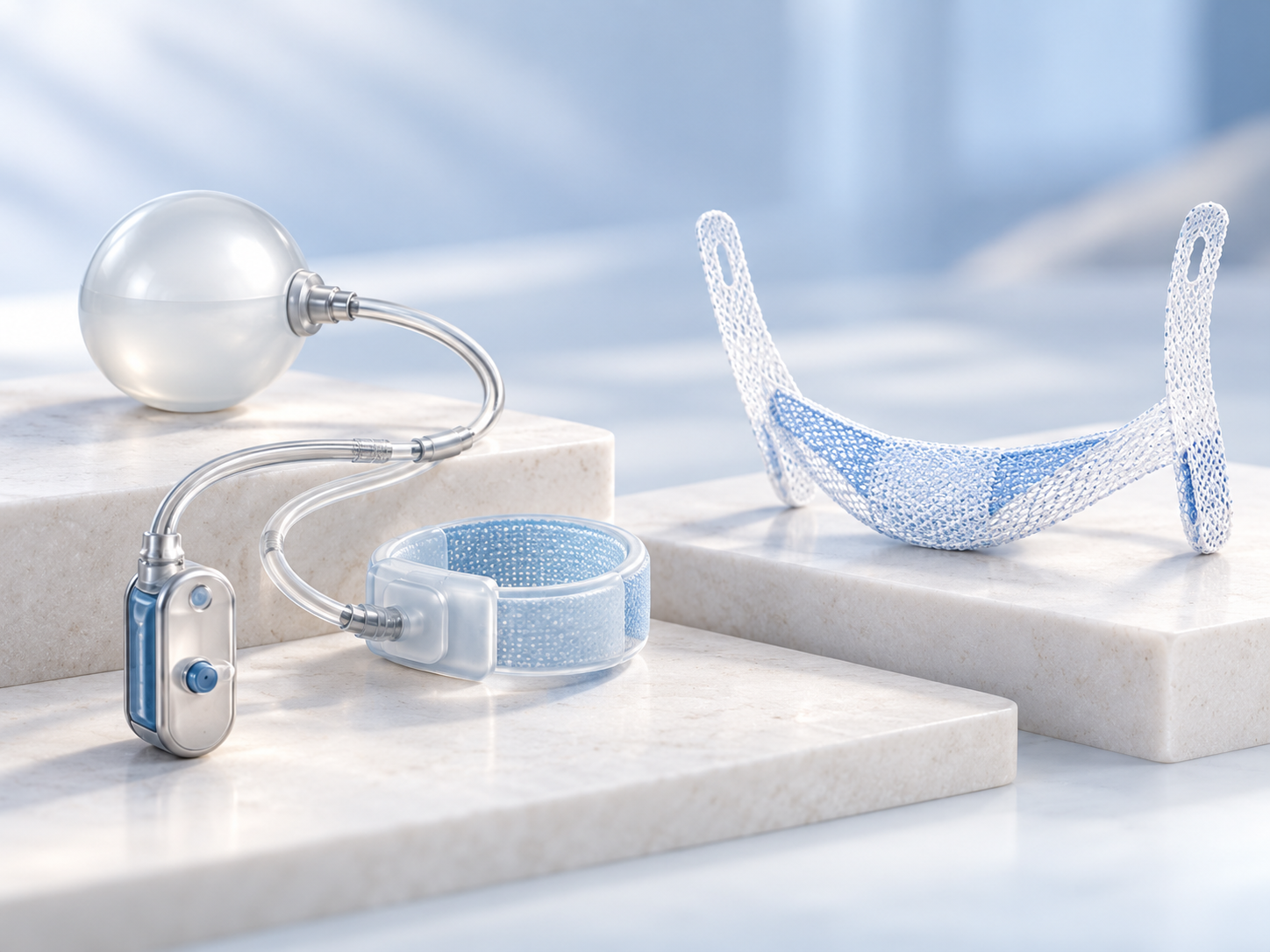
A male sling is an implanted support placed beneath the urethral outlet.
Depending on the sling design and surgical technique, it helps improve continence by supporting, repositioning or providing additional resistance beneath the urethra.
Unlike an artificial urinary sphincter, a sling does not normally require the patient to operate a pump each time they want to pass urine.
Who may be suitable for male sling surgery?
Male sling surgery is generally most useful when the leakage pattern is clearly stress-related and the severity is not extreme.
Mild-to-moderate stress leakage
Leakage occurs mainly with standing, coughing, lifting, walking or exercise rather than from urgency alone.
Recovery has plateaued
Continence has stopped improving despite an appropriate period of recovery and conservative treatment.
Acceptable urethral health
Significant bladder-neck narrowing, urethral stricture or other urethral pathology should be identified before sling surgery.
No severe untreated urgency problem
Significant urgency, poor bladder storage or abnormal emptying may need separate assessment and treatment.
Radiation history considered
Previous pelvic radiotherapy reduces the likelihood that a sling will be the preferred continence operation.
Expectations are realistic
A sling can substantially improve leakage in selected men, but complete dryness cannot be guaranteed.

How is mild or moderate incontinence determined?
There is no single pad number that defines suitability for every patient.
Assessment may consider the number of pads used, how wet they become, when leakage occurs, whether there is night-time leakage and how much incontinence affects everyday activity.
A pad-weight test can provide additional objective information in selected men.
What if I have previously had prostate radiotherapy?
Pelvic radiotherapy can alter blood supply, tissue quality and healing around the urinary sphincter and urethra.
Sling outcomes are generally less favourable after prostate or pelvic radiotherapy.
For men seeking surgery for stress urinary incontinence after primary, adjuvant or salvage radiotherapy, an artificial urinary sphincter will generally be discussed in preference to a male sling.
What assessment is needed before a male sling?
Confirm stress urinary incontinence
The history should establish whether leakage is mainly caused by activity and sphincter weakness rather than urgency or overflow.
Estimate severity
Pad use, leakage pattern and, when useful, pad-weight testing can help define the severity of incontinence.
Review previous treatment
Previous prostate surgery, radiation, urethral procedures and previous continence surgery are important.
Assess the urethra
Cystoscopy is commonly performed before surgical treatment of male stress incontinence to assess the urethra and bladder neck.
Consider bladder testing
Urodynamic testing is not required for every patient, but may be useful when the diagnosis is unclear, urgency is significant or bladder emptying is abnormal.
Compare surgical options
Sling surgery should be discussed alongside the artificial urinary sphincter and other reasonable management options.
What happens during male sling surgery?
The exact technique varies according to the sling system and individual anatomy, but the general surgical principles are similar.
Anaesthesia
Sling placement is performed in an operating theatre under anaesthesia.
Urethral exposure
The relevant segment of urethra is approached through a small perineal incision.
Sling positioning
The sling is positioned beneath the urethra to provide support, repositioning or controlled resistance.
Continence mechanism
The sling provides passive support rather than relying on a manually operated pump.
Early bladder emptying
Bladder emptying is checked after surgery. A urinary catheter may occasionally be required for longer if temporary retention occurs.
Follow-up
Healing, urinary flow, residual leakage and any new urinary symptoms are reviewed after surgery.
Recovery after male sling surgery
Bruising, swelling and perineal discomfort are expected to varying degrees during early recovery.
Patients are usually asked to avoid activities that place excessive strain across the operative area while the sling and surrounding tissues heal.
The exact timing for driving, work, exercise, lifting and sexual activity depends on the operation, early recovery and individual circumstances.

Perineal swelling, bruising and discomfort gradually settle.
Urinary flow and the ability to empty the bladder are monitored.
Activity increases as healing progresses and according to postoperative advice.
Residual leakage is assessed once postoperative swelling and healing have settled.
What are the possible risks of a male sling?
All continence surgery involves potential complications. Individual risk depends on previous prostate treatment, radiation, urethral surgery, bladder function and other health factors.
Temporary urinary retention
Some men temporarily have difficulty emptying the bladder and may require catheter drainage.
Perineal discomfort
Pain, pressure, altered sensation or numbness can occur during healing and occasionally persist.
Persistent leakage
A sling may improve leakage without producing complete continence.
Recurrent leakage
Continence can worsen again over time and further assessment may be needed.
Infection or wound problems
Infection, bleeding and wound complications are possible after any implanted sling procedure.
Sling erosion or removal
Erosion is uncommon but can require sling removal and further reconstructive management.

What are the alternatives to a male sling?
Surgery is not the only management option for male urinary leakage.
Pelvic-floor rehabilitation
Pelvic-floor training remains part of conservative management, particularly during post-prostatectomy recovery.
Continence products
Pads and other containment strategies may remain reasonable depending on bother and preference.
Artificial urinary sphincter
AUS may be considered across a broader range of stress incontinence severity and is particularly relevant in severe leakage and after radiotherapy.
Treat bladder symptoms
Urgency, frequency or poor bladder storage may require treatment independently of stress continence surgery.
Male sling or artificial urinary sphincter?
Neither operation is automatically better for every man. The correct discussion depends on leakage severity, radiation, urethral anatomy, bladder function and personal preferences.
Male sling
Artificial urinary sphincter
What happens if urinary leakage continues after a sling?
Persistent leakage does not automatically mean that the sling itself is the only problem.
The continence pattern should be reassessed to determine whether residual stress incontinence, bladder urgency, poor emptying or another issue is present.
When significant stress urinary incontinence persists or returns after male sling surgery, an artificial urinary sphincter may become the next surgical option to discuss.
Related information
Male sling surgery FAQ
What is male sling surgery?
A male sling is an implanted support placed beneath the urethra to improve urinary continence in selected men with stress urinary incontinence.
Who is most suitable for a male sling?
Sling surgery is most commonly discussed in selected men with mild-to-moderate stress urinary incontinence, particularly after prostate surgery.
Can a male sling treat severe urinary incontinence?
Sling outcomes are generally less favourable in severe stress urinary incontinence. An artificial urinary sphincter is usually a more important option to discuss in this situation.
Does a male sling have a pump?
No. A sling provides passive urethral support and does not normally require a pump to be operated before urination.
Can I have a male sling after radiotherapy?
Previous pelvic radiotherapy is associated with less favourable sling outcomes. For men seeking surgery for stress urinary incontinence after prostate radiotherapy, an artificial urinary sphincter will generally be preferred over a sling.
Do I need cystoscopy before male sling surgery?
Assessment of the urethra and bladder neck with cystoscopy is commonly recommended before surgical treatment for post-prostate-treatment stress urinary incontinence.
Do I need urodynamics before a sling?
Not every patient requires urodynamic testing. It may be useful when the cause of leakage is uncertain, urgency is prominent, bladder emptying is abnormal or the result may change counselling.
Can I still need pads after male sling surgery?
Yes. Sling surgery can improve stress urinary leakage without necessarily producing complete dryness in every patient.
What happens if the sling does not control the leakage?
Persistent or recurrent leakage should be reassessed. If significant stress urinary incontinence remains, an artificial urinary sphincter may be discussed.
Is a male sling better than an artificial urinary sphincter?
Neither procedure is better for every man. A sling is commonly considered for selected mild-to-moderate stress incontinence, whereas an artificial urinary sphincter is an important option across a broader range of severity and is usually favoured in severe leakage or after radiotherapy.
Could a male sling be appropriate for your urinary leakage?
The important first step is confirming that the leakage is stress urinary incontinence and understanding its severity, previous prostate treatment, urethral health and bladder function.
Assessment can then clarify whether continued conservative treatment, male sling surgery, an artificial urinary sphincter or another pathway is reasonable to discuss.
Medical information: This page provides general educational information and does not recommend male sling surgery for an individual patient. Suitability depends on the cause and severity of urinary leakage, previous prostate treatment, pelvic radiotherapy, urethral anatomy, bladder function, previous continence surgery, general health and individual priorities.
Surgical outcomes and recovery vary. Individual risks, alternatives and expected outcomes are discussed as part of specialist assessment and informed consent.