

Vasectomy Reversal for International Patients
Microsurgical fertility assessment for couples considering vasectomy reversal in Australia, including comparison with sperm retrieval and IVF/ICSI before major travel arrangements are made.
You do not need to book flights before making contact. The first step is to decide whether reconstruction is the most appropriate fertility pathway for you as a couple.
A vasectomy does not necessarily close the door to biological children
Vasectomy reversal reconnects the male reproductive tract so that sperm may return to the semen and natural conception may again become possible.
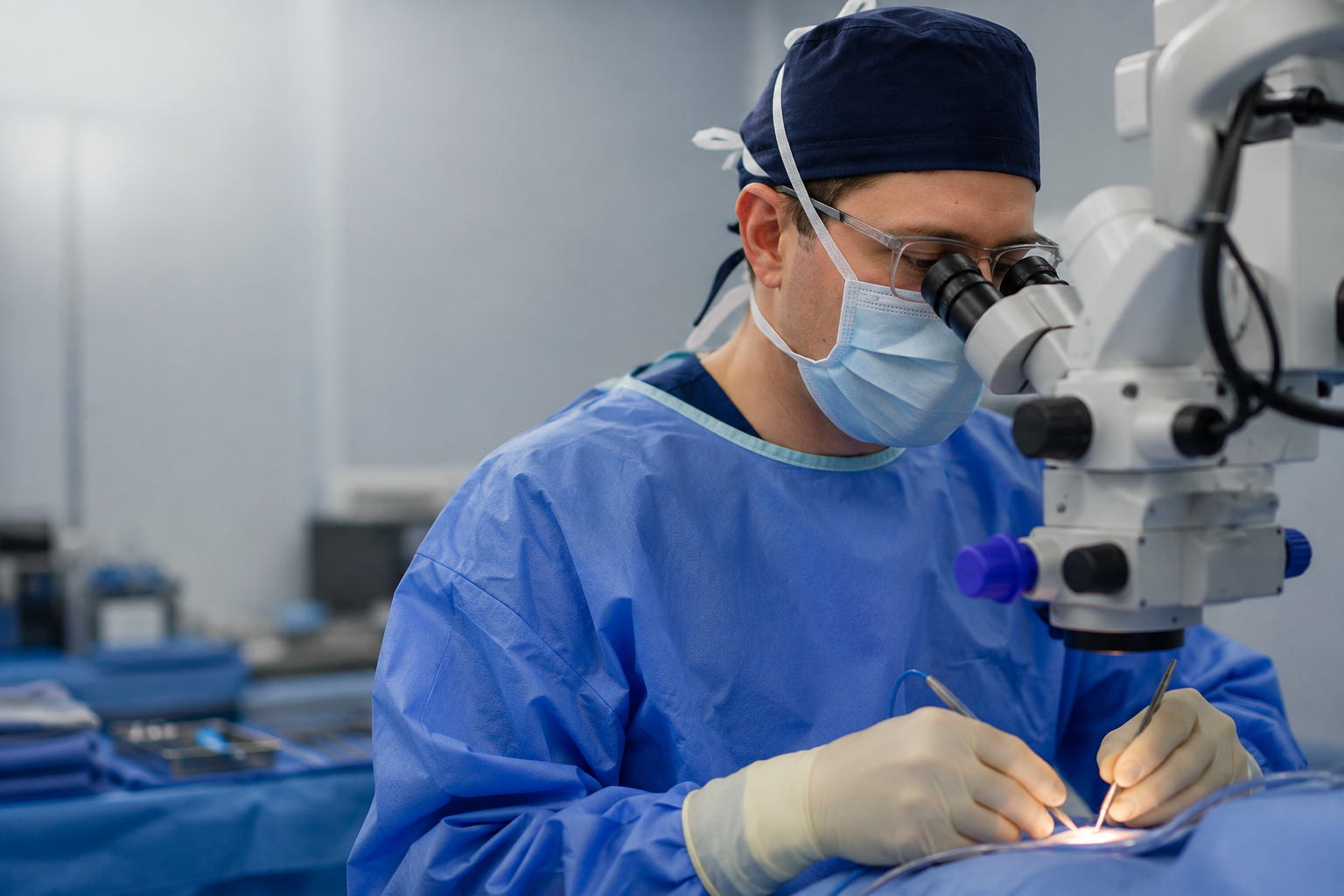
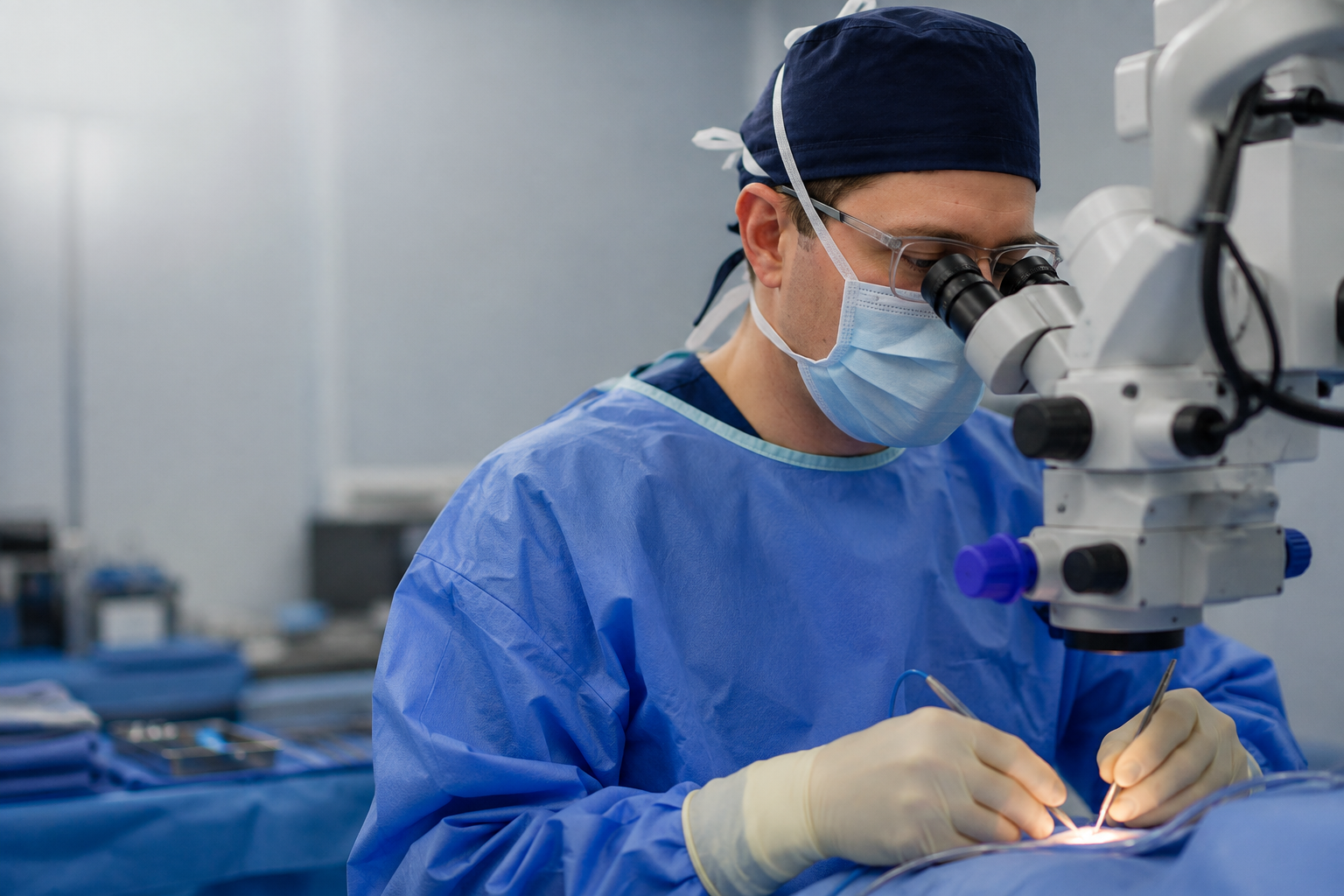
The operation is performed using microsurgical techniques. In some men the two divided ends of the vas deferens can be reconnected directly. In others, a secondary blockage within the epididymis means a more complex reconstruction may be required.
For international patients, the first decision is not simply “Can the vasectomy be reversed?” It is whether reversal or sperm retrieval with IVF/ICSI provides the more appropriate fertility pathway for the couple.

The best fertility pathway depends on more than the vasectomy
A technically successful reversal restores a pathway for sperm. It cannot by itself guarantee pregnancy.
The fertility circumstances of both partners should therefore be considered before deciding between reconstruction and assisted reproduction.
Vasectomy reversal or sperm retrieval + IVF/ICSI?
Neither pathway is automatically better. The aim is to choose the route that fits the couple’s reproductive circumstances and priorities.
Microsurgical vasectomy reversal
The blocked reproductive tract is reconstructed so sperm may return to the semen and natural conception may potentially occur.
Sperm retrieval + IVF/ICSI
Sperm are retrieved directly from the epididymis or testicle and used with assisted reproductive treatment while the vasectomy remains in place.
Vasovasostomy or epididymovasostomy?
The exact reconstruction sometimes cannot be determined with certainty until the reproductive tract is assessed during surgery.
Vasovasostomy
Vasovasostomy reconnects the two divided ends of the vas deferens at the previous vasectomy site.
This is generally appropriate when the testicular side of the vas appears to remain in continuity with a patent epididymal system.
Epididymovasostomy
If a second obstruction has developed within the epididymis, the vas may need to be connected directly to an epididymal tubule beyond the blockage.
This is a more technically complex microsurgical reconstruction and sperm may take longer to return to the semen.
The surgeon assesses fluid from the testicular end of the vas deferens and the operative findings. These findings help determine whether a direct vasovasostomy or an epididymal bypass is the appropriate reconstruction on each side.

What information is useful?
Many patients will not have extensive records from their original vasectomy. That does not prevent an assessment.
From your first enquiry to semen testing at home
Much of the fertility planning can begin before travel. The exact surgical reconstruction is then determined by the operative findings.
Start an international enquiry
Tell the rooms where you live, when your vasectomy was performed and whether you are currently planning pregnancy with a partner.
Assess the couple’s fertility pathway
Previous fertility, reproductive goals and relevant partner fertility factors are considered before assuming reversal is the preferred option.
Compare reversal with IVF/ICSI
The advantages and limitations of microsurgical reconstruction versus sperm retrieval and assisted reproduction can be discussed.
Plan the Brisbane visit
Consultation, examination, surgery and the expected early postoperative review can be planned before major non-refundable travel arrangements.
Microsurgical reconstruction
Each side is assessed during surgery and reconstructed with vasovasostomy or epididymovasostomy according to the operative findings.
Early recovery in Brisbane
Wound care, swelling, activity restrictions and return-travel timing are discussed according to your individual recovery.
Semen testing after returning home
Follow-up semen analyses determine whether sperm have returned to the ejaculate and guide the next stage of fertility planning.
Why microsurgical technique matters
Vasectomy reversal involves reconstructing structures with very small internal diameters. Magnification helps identify the tissues and place fine sutures accurately.
An important part of vasectomy-reversal surgery is being prepared for both forms of reconstruction rather than assuming every patient will require only a vasovasostomy.
Surgery is only the beginning of the fertility pathway
Follow-up focuses on healing and determining whether sperm have returned to the semen.
Follow postoperative instructions regarding activity, lifting, exercise and sexual activity while the microsurgical repair heals.
Semen testing after surgery helps determine whether the reconstructed pathway is patent.
Return of sperm does not guarantee natural pregnancy and should be interpreted alongside the couple’s wider fertility circumstances.
The timing, type of reconstruction and subsequent semen results can guide whether observation, further reconstruction or IVF/ICSI is considered.
Plan around the medical pathway before booking inflexible travel
International patients need to allow for consultation, examination, surgery and appropriate early recovery before returning home.
Decide whether reversal remains the preferred option compared with IVF/ICSI before committing to surgery.
Previous vasectomy sites, testes, epididymides and other relevant findings can be assessed before surgery.
Epididymovasostomy may be required even when vasovasostomy was initially anticipated.
Follow-up semen analyses can generally be arranged after returning home, with results reviewed as part of ongoing fertility planning.
There is no single return-travel timeframe that applies to every patient. Your itinerary should reflect the operation performed, individual recovery and postoperative review requirements.

What should you understand before reversal?
Vasectomy reversal aims to restore continuity of the reproductive tract. Neither return of sperm nor pregnancy can be guaranteed.
A reconstruction may remain blocked or later narrow despite microsurgical repair.
Even when sperm return to the semen, conception depends on fertility factors affecting both partners.
The final operation can be more complex than anticipated before surgery.
Scrotal bruising and swelling can occur, with more significant bleeding being an recognised surgical complication.
Infection, wound complications and ongoing discomfort are possible after scrotal surgery.
IVF/ICSI or another fertility strategy may still be considered if sperm do not return or pregnancy does not occur.

Dr Jack Crozier
Dr Jack Crozier is a Brisbane urologist and fellowship-trained andrologist with a subspecialty practice in male reproductive medicine and reproductive microsurgery.
His advanced andrology fellowship experience at University College London Hospitals included male infertility, microsurgical reconstruction, surgical sperm retrieval and complex andrological surgery.
Vasectomy-reversal assessment is approached as a couple’s fertility decision, with reconstruction considered alongside sperm retrieval and assisted reproduction where relevant.
Are you the patient or the referring fertility specialist?
International couples can contact the practice directly. Overseas fertility specialists and urologists can use the clinician referral pathway.
Begin assessment before arranging major travel
Tell the rooms where you live, when the vasectomy was performed, whether you have children already and whether your partner has had any fertility assessment.
Refer an international patient
Clinicians can refer patients requiring microsurgical fertility reconstruction or a specialist opinion regarding vasectomy reversal versus sperm retrieval and IVF/ICSI.
Explore the decision in more detail
Questions couples commonly ask before travelling
Can I begin the assessment before travelling to Australia?
Where clinically appropriate and permitted, much of the initial fertility discussion can occur before travel. Your vasectomy history, previous fertility, reproductive goals and relevant partner fertility information can be reviewed first. Physical examination is still generally required before definitive surgery.
Can a vasectomy still be reversed after many years?
There is no single number of years after which reversal becomes impossible. A longer obstructive interval can influence the chance that epididymal obstruction has developed and therefore the type of reconstruction required.
How do you know whether I need vasovasostomy or epididymovasostomy?
The final decision is often made during surgery. The appearance of fluid from the testicular end of the vas deferens and the operative findings help determine whether a direct vas-to-vas connection or an epididymal bypass is appropriate.
Can one side require vasovasostomy and the other epididymovasostomy?
Yes. Each side is assessed separately and the required reconstruction can differ between the two sides.
Is vasectomy reversal better than IVF/ICSI?
Not for every couple. Reversal may be attractive when natural conception is desired and female fertility is favourable. Sperm retrieval with IVF/ICSI may be preferable when IVF is already required, reproductive time is limited or the couple prefers assisted reproduction.
Why does my partner’s age matter if I am the one who had the vasectomy?
Reversal aims to restore sperm to the semen, but pregnancy still depends on both partners. Female reproductive age and ovarian reserve can influence how much time is available for natural conception and whether IVF/ICSI should be considered instead.
Should my partner have fertility testing first?
Not every partner requires extensive investigation, but relevant fertility assessment can be valuable when there is increased reproductive age, irregular cycles, previous fertility difficulty, known gynaecological problems or another reason to suspect reduced fertility.
Should sperm be frozen during the reversal as a backup?
In selected situations, sperm retrieval and cryopreservation at the time of reconstruction may be discussed as a potential backup for future IVF/ICSI. It is not necessary or appropriate for every patient and requires appropriate laboratory arrangements.
How quickly do sperm return after reversal?
Timing varies. Sperm may return over the following months after a vasovasostomy, while epididymal reconstruction can take longer. Follow-up semen analyses are used rather than assuming a fixed timeframe.
Does sperm returning mean we will definitely conceive naturally?
No. Return of sperm is described as patency of the reconstruction. Pregnancy depends on sperm quality, frequency and timing of intercourse and the fertility circumstances of both partners.
What happens if sperm do not return?
The type of reconstruction, timing of semen testing and other findings can be reviewed. Depending on the situation, options may include further observation, repeat reconstruction or sperm retrieval with IVF/ICSI.
Can semen testing be performed in my home country?
Usually this can be arranged locally where a suitable laboratory is available. Results can then form part of postoperative follow-up.
How long should I remain in Brisbane?
There is no single timeframe for every international patient. Appropriate timing depends on your surgery, recovery and planned postoperative review. Your expected stay should be clarified before booking inflexible return travel.
Can my fertility specialist at home remain involved?
Yes. Where appropriate, postoperative semen results and ongoing fertility planning can be coordinated with the couple’s local fertility specialist, IVF clinic, urologist or general practitioner.
Considering vasectomy reversal in Australia?
Begin by comparing reconstruction with IVF/ICSI using your vasectomy history, your partner’s fertility circumstances and your goals as a couple. The Brisbane treatment pathway can then be planned before major travel arrangements are made.
Medical information disclaimer: This page provides general educational and travel-planning information and does not replace individual medical advice, fertility assessment or informed consent. Vasectomy reversal cannot guarantee return of sperm, natural pregnancy or live birth. The type of reconstruction required may only become clear during surgery and may include vasovasostomy, epididymovasostomy or different procedures on each side. Potential risks include bleeding, haematoma, infection, wound problems, pain, unsuccessful reconstruction, later re-obstruction and the possibility that assisted reproductive treatment may still be required. Fertility outcomes depend on factors affecting both partners. Suitability for consultation, telehealth, surgery and international travel depends on individual clinical circumstances and applicable professional, legal and administrative requirements. Patients should seek appropriate local medical care for urgent or unexpected postoperative concerns.