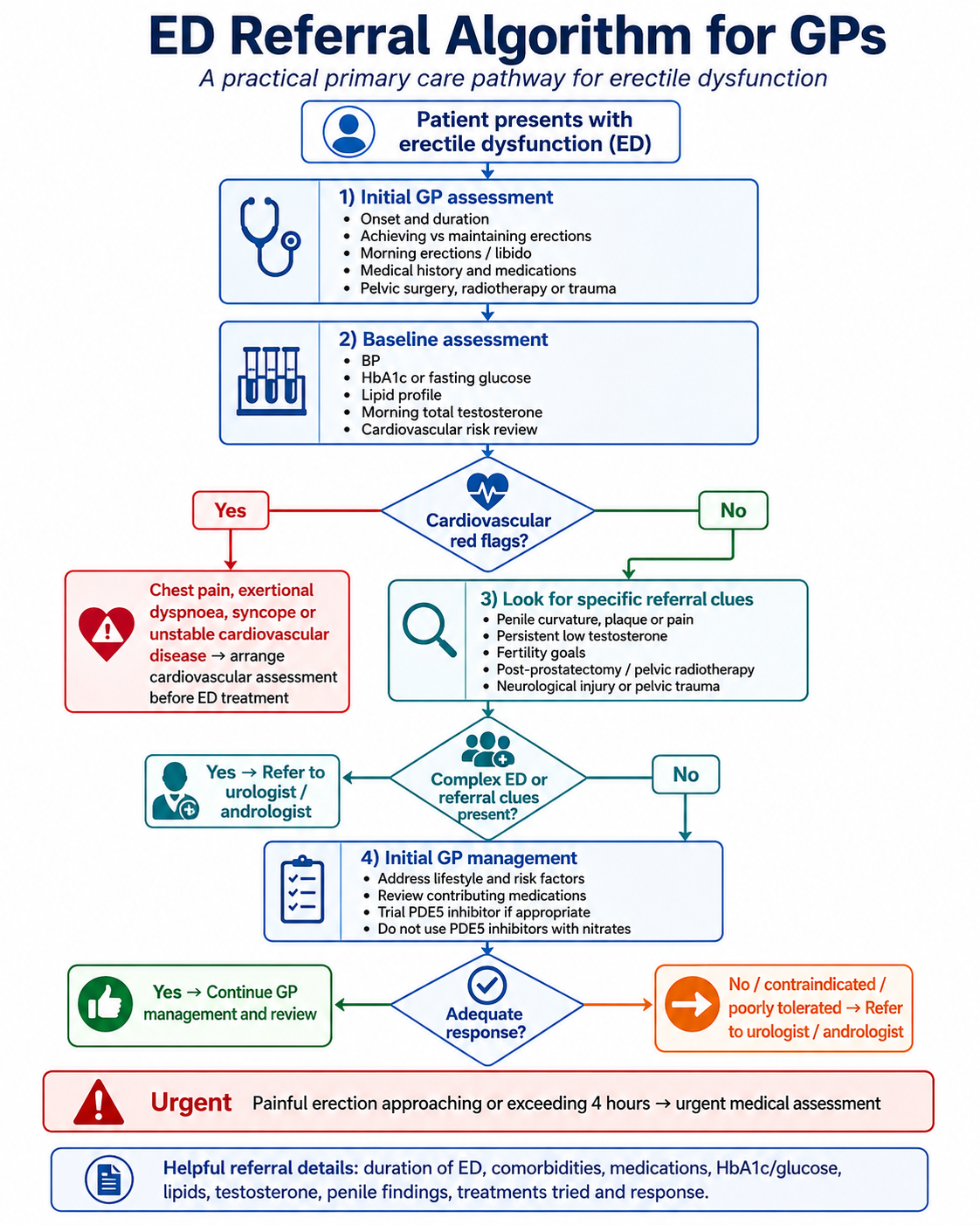
ED Referral Algorithm for GPs
Erectile dysfunction (ED) is common and may be an early marker of cardiovascular, metabolic or endocrine disease.[1–4] Most men can undergo initial assessment and first-line management in general practice, with referral when ED is complex or does not respond to treatment.
The 60-Second ED Assessment
1. Confirm the problem
Ask briefly about:
onset: sudden or gradual
achieving versus maintaining erections
morning erections
libido
ejaculation/orgasm
psychological or relationship factors
pelvic surgery, radiotherapy or trauma.
Review diabetes, hypertension, dyslipidaemia, cardiovascular disease, obesity, smoking, neurological disease and medications that may contribute.[1,2]
Patient information: Erectile Dysfunction.
2. Check cardiovascular and metabolic risk
ED and cardiovascular disease share common vascular risk factors, and ED can precede clinically apparent cardiovascular disease.[3,4]
Consider:
BP
HbA1c or fasting glucose
lipid profile
smoking and weight
cardiovascular symptoms.
Chest pain, unexplained exertional dyspnoea, syncope or unstable cardiovascular disease → cardiovascular assessment before ED treatment.[3]
3. Check testosterone
Obtain a morning total testosterone as part of the baseline assessment.[1,2]
If low, repeat and investigate further as clinically appropriate.
Ask about fertility plans before prescribing testosterone, as exogenous testosterone can suppress spermatogenesis.
4. Look for penile pathology
Ask about:
penile curvature
palpable plaque
penile pain
shortening
hourglass deformity.
These features may suggest Peyronie’s disease and are reasonable indications for specialist assessment.
Patient information: Peyronie’s Disease.
Initial GP Management
Address modifiable contributors where appropriate:
smoking
obesity/inactivity
diabetes control
cardiovascular risk factors
contributing medications.
PDE5 inhibitors are commonly used as first-line pharmacological therapy in suitable patients.[1,2]
Before declaring treatment failure, check dose, timing, sexual stimulation and adequate treatment attempts.
Important: PDE5 inhibitors are contraindicated with nitrate therapy.[1]
When Should I Refer?
Refer routinely if:
Treatment failure
inadequate response despite an appropriate PDE5 inhibitor trial
PDE5 inhibitors are contraindicated or poorly tolerated
patient wants to consider injections, vacuum therapy or other options.
Complex ED
ED after radical prostatectomy
pelvic radiotherapy
neurological injury
pelvic trauma
lifelong or unexplained ED in a younger patient.
Penile abnormality
curvature
plaque
shortening
hourglass deformity.
Hormonal/fertility considerations
persistent testosterone deficiency
complex endocrine findings
fertility goals affecting hormonal treatment.
Considering surgery
persistent ED despite appropriate non-surgical management
patient wishes to discuss penile implant surgery.
For patients who have failed tablets: ED Treatment Pathway.
For selected patients considering surgery: Penile Implant Surgery.
Urgent Referral
A painful erection approaching or exceeding four hours requires urgent medical assessment rather than routine outpatient referral.
What Should I Include in the Referral?
A useful ED referral can be brief:
ED duration + relevant comorbidities + medications + testosterone/HbA1c/lipids + penile findings + treatments tried and response.
Previous pelvic surgery or radiotherapy and current fertility goals are particularly useful to include.
Referral Pathway
Patients can be assessed from Brisbane and regional Queensland, as well as interstate and overseas.
Interstate & International Patient Information
References
European Association of Urology. EAU Guidelines on Sexual and Reproductive Health. Arnhem: EAU Guidelines Office; 2026.
Burnett AL, Nehra A, Breau RH, et al. Erectile dysfunction: AUA guideline. J Urol. 2018;200(3):633–641.
Köhler TS, Kloner RA, Rosen RC, et al. The Princeton IV Consensus Recommendations for the Management of Erectile Dysfunction and Cardiovascular Disease. Mayo Clin Proc. 2024;99(9):1500–1517.
Banks E, Joshy G, Abhayaratna WP, et al. Erectile dysfunction severity as a risk marker for cardiovascular disease hospitalisation and all-cause mortality. PLoS Med. 2013;10(1):e1001372.
Lowy M, Ramanathan V. Erectile dysfunction: causes, assessment and management options. Aust Prescr. 2022;45(5):159–161.
Salonia A, Capogrosso P, Boeri L, et al. European Association of Urology Guidelines on Male Sexual and Reproductive Health: 2025 update. Eur Urol. 2025;88(1):76–102.
Medical disclaimer
This content is intended for general professional education and does not replace individual clinical assessment or current guideline review. Management should be individualised according to the patient's medical history, cardiovascular status, medications, fertility goals and treatment preferences.